
Fluoride Facts
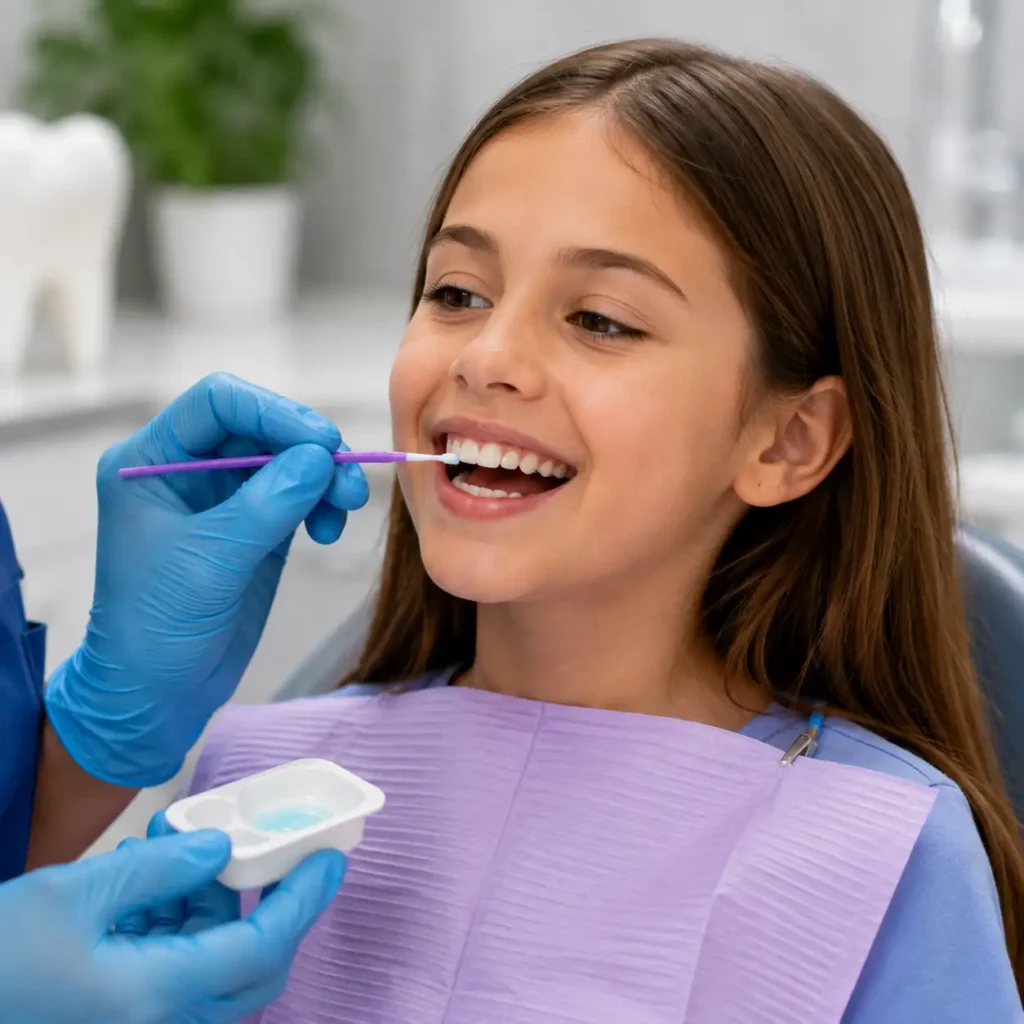
If your teeth are at higher risk of cavities, we can use fluoride treatment to help strengthen and protect them. We first check your teeth and cavity risk, then recommend treatment based on your dental needs.
San Tan Valley (480) 457-1977
Gilbert (480) 963-9900
Mesa (480) 830-3344
What Is Fluoride?
Fluoride is a mineral found naturally in water, soil, and rocks. Some foods and drinks contain it too. It is also added to many toothpastes because it helps protect teeth from decay.
Fluoride works on enamel, the hard outer layer of your teeth. Its benefits continue after your adult teeth have grown in.
How Does Fluoride Help Your Teeth?
Your enamel loses and gains minerals throughout the day. Fluoride helps keep this balance in favor of stronger teeth.
Fluoride Helps Strengthen Tooth Enamel
Fluoride supports the return of minerals to weakened enamel. This process is called remineralization. It makes the tooth surface more resistant to acids in your mouth.
Fluoride Helps Protect Against Cavities
Bacteria in your mouth use sugars to make acids that attack your teeth. Fluoride helps reduce the damage these acids cause. It supports daily brushing and cleaning between your teeth, but does not replace either habit.
Fluoride Can Help With Early Tooth Decay
Very early decay can sometimes be reversed before a hole forms in your tooth. Fluoride helps this repair process. Once a hole has formed, fluoride cannot rebuild the missing tooth structure. We need to check the tooth and explain what care it needs.
Where Does Fluoride Come From?
Drinking Water
Water can contain natural fluoride. Some public water systems adjust the amount to help prevent cavities, but not every community does this. Check your water supplier’s report to learn about your supply.
Fluoride Toothpaste
Toothpaste brings fluoride into contact with your teeth as you brush. Check the label because some toothpastes do not contain it. Use the amount advised for your age and spit out the toothpaste after brushing.
Mouth Rinses
Some mouth rinses contain fluoride for added cavity protection. Others focus on fresh breath and contain none. A rinse is not needed by everyone, so ask us whether one fits your care. Follow its directions and avoid swallowing it.
Professional Fluoride Treatment
Professional fluoride products provide a stronger concentration than regular toothpaste. We apply fluoride to your teeth when it is suitable for your needs. Our Professional Fluoride Treatment page explains this care.
Is Fluoride Safe?
Fluoride toothpaste and other dental products are considered safe and effective when used as directed. The amount, product strength, and how you use it matter. Using more than advised does not mean better protection.
Keep toothpaste and rinses out of young children’s reach. Help children brush and learn to spit rather than swallow.
Questions About Fluoride Exposure
Questions about swallowing fluoride over time are different from using it on your teeth. A National Toxicology Program review linked higher fluoride exposure with lower IQ in children. It found insufficient evidence to determine effects at 0.7 milligrams per liter in drinking water. An association does not prove cause and effect, and research continues.
Fluoride for Children and Adults
Fluoride for Children
Children need help choosing and using dental products as their teeth develop. Ask us about toothpaste use for your child’s age. We can also discuss the water your family drinks and any other fluoride sources.
Fluoride for Adults
Adults can benefit too. Dry mouth, exposed tooth roots, or a history of cavities can increase the need for added protection. Your needs can change, so mention new medicines or changes in your mouth during your visit.
Do You Need Extra Fluoride?
Extra fluoride is not an automatic part of everyone’s care. We review your teeth, cavity history, and daily habits before recommending it. Tell us which toothpaste you use and whether you mainly drink tap, bottled, or filtered water. Do not start fluoride supplements on your own. We can discuss whether additional care is appropriate for you or your child.
CDC website provides information on community water fluoridation
People seeking information on whether their water system is fluoridated can now find out by visiting a new website at the Centers for Disease Control and Prevention (CDC). The new feature, “My Water`s Fluoride,” allows consumers in participating states to check out basic information about their water system, including the number of people served by the system and the target fluoridation level.
Optimal levels recommended by the U.S. Public Health Service and CDC for drinking water range from 0.7 parts per million (ppm) for warmer climates, to 1.2 ppm for cooler climates accounting for the tendency to drink more water in warmer climates. States that are currently participating include Arizona, Colorado, Delaware, Florida, Georgia, Illinois, Indiana, Iowa, Maine, Massachusetts, Michigan, Minnesota, Nebraska, New Hampshire, Nevada, North Dakota, Oklahoma, Pennsylvania and Wisconsin.
Frequently Asked Questions
Is fluoride good for your teeth?
Yes. Used appropriately, fluoride helps enamel resist acid damage and supports cavity prevention.
Does fluoride prevent cavities?
It lowers your risk, but does not guarantee that you will stay cavity free. Brushing, cleaning between teeth, and limiting frequent sugary snacks still matter.
Is fluoride in toothpaste safe?
Yes, when used as directed. Use the advised amount, spit it out, and supervise young children when brushing.
Does bottled water contain fluoride?
Some do, but the amount varies. Check the label or contact the manufacturer instead of assuming it matches tap water.
Can adults benefit from fluoride?
Yes. Fluoride helps protect adult teeth, including when dry mouth or past decay increases cavity risk.
What is dental fluorosis?
It is a change in enamel caused by excess fluoride intake while teeth develop. It often appears as white markings.
Can you get too much fluoride?
Yes. Total intake and the amount swallowed matter. Follow product directions and check with us before adding fluoride products.
Have Questions About Fluoride?
If these fluoride facts leave you wondering what suits your family, bring your questions to your next visit. At Ocotillo Trails Family Dentistry, we can review your routine and explain whether additional fluoride care could help.
This page provides general education and does not replace advice based on your dental needs.
Kind words from our patients
“The dentist explained how fluoride helps strengthen tooth enamel and protect against cavities. I appreciated how simple and useful the information was.”
“I had questions about fluoride and whether it was right for me. The team explained the benefits clearly and helped me understand its role in preventing decay.”
“They made fluoride care easy to understand and explained how it can support stronger teeth. The visit was informative, comfortable, and never felt rushed.”
Neighborhoods We Serve
Ocotillo Trails Family Dentistry is proud to welcome patients from San Tan Valley and the surrounding communities, including:
Driving Directions to Our San Tan Valley Dental Office
Visiting Ocotillo Trails Family Dentistry for fluoride and preventive dental guidance? Find us at 40815 N Ironwood Rd #102, San Tan Valley, AZ 85140. Travel on N Ironwood Road toward E Ocotillo Road, enter the property, and continue to Suite 102.