
Choosing a Toothbrush That Fits Your Needs
Choose a toothbrush with soft bristles, a comfortable head size, and a handle you can control easily. Both manual and electric options can work well. The right fit should help you reach all tooth surfaces without forceful brushing. At Ocotillo Trails Family Dentistry in San Tan Valley, we welcome questions about your daily brushing routine. This guide explains which features to compare before buying a new toothbrush.
San Tan Valley (480) 457-1977
Gilbert (480) 963-9900
Mesa (480) 830-3344
What Our Patients Say


 Trustindex verifies that the original source of the review is Google.
 Trustindex verifies that the original source of the review is Google.
 Trustindex verifies that the original source of the review is Google.
 Trustindex verifies that the original source of the review is Google.
 Trustindex verifies that the original source of the review is Google.
What to Look for in a Toothbrush
Start with comfort, access, and control. A brush should fit your mouth and feel manageable in your hand. Consider these features before choosing a brand or design.
Soft Bristles
A soft-bristled toothbrush is the recommended choice for daily brushing. Firmer bristles do not automatically clean better and can damage gums and enamel, especially when combined with heavy pressure. Choose a toothbrush with soft bristles and use a gentle touch. Even a soft brush should not be used to scrub aggressively.
A Comfortable Brush-Head Size
The brush head should fit comfortably and allow you to reach your back teeth. If it feels bulky or difficult to move, consider a smaller head. There is no single size that suits every adult. Choose based on access and comfort rather than assuming a larger head cleans more effectively.
A Handle You Can Control
Look for a handle that feels secure without requiring a tight grip. Consider its thickness, weight, and surface, especially if your hands become tired while brushing. An electric toothbrush may help if limited hand movement makes a manual brush difficult to use. Check that its buttons are easy to reach and operate.
ADA Seal of Acceptance
The American Dental Association’s Seal of Acceptance shows that a product meets its requirements for safety and effectiveness. Check the specific toothbrush model, rather than assuming every product from the same brand carries the Seal.
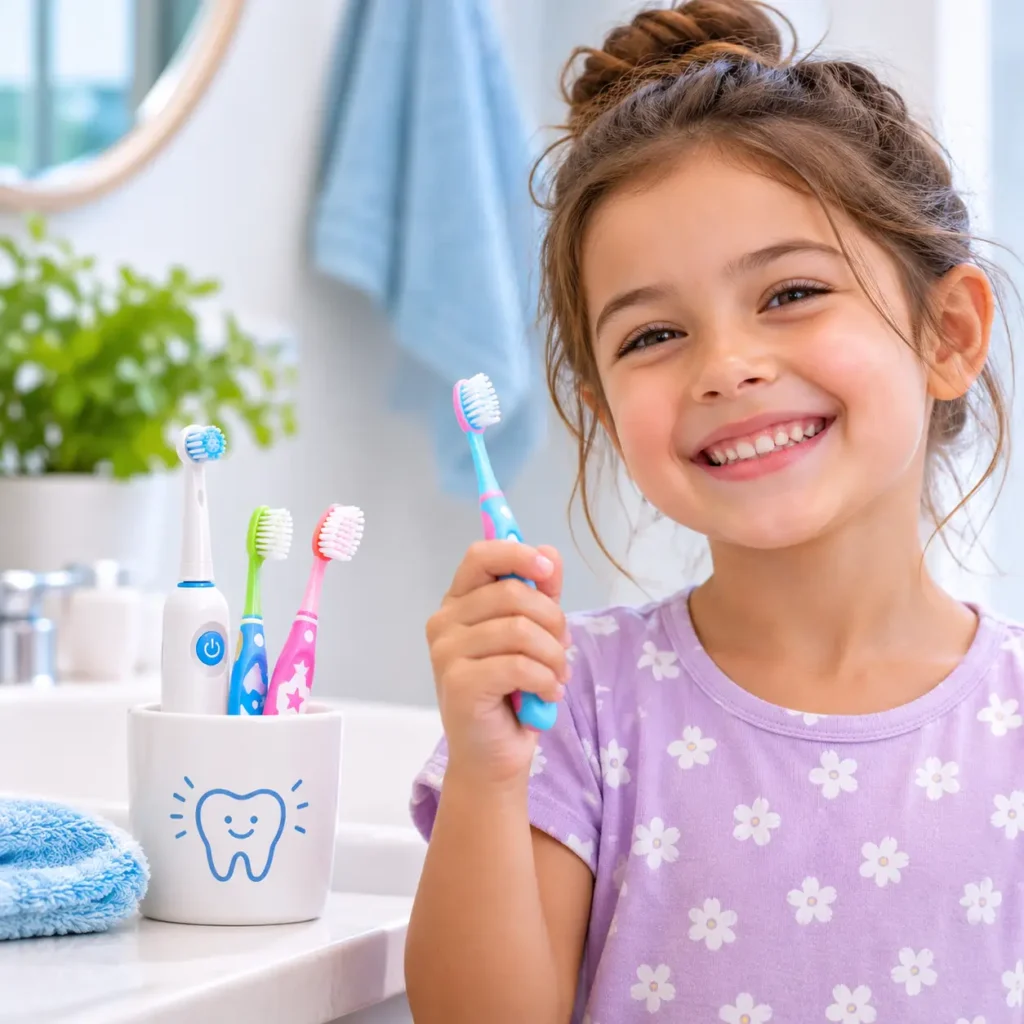
Choosing a Toothbrush for Children
A children’s toothbrush should have soft bristles and a head small enough to reach comfortably around the mouth. Choose a handle that works for both your child and the adult helping with brushing.
Use the package’s age guidance as a starting point, while checking the actual fit. Children still need help or supervision as they develop the coordination to brush thoroughly. An electric toothbrush does not remove that need. Letting your child choose a color or design can make the purchase more enjoyable. Keep comfort and suitability ahead of appearance.
Manual and Electric Toothbrushes
Both manual and electric toothbrushes can clean your teeth well. With an electric toothbrush, the motor moves the bristles while you guide the head from tooth to tooth. Our team recommends this option if brushing by hand is difficult. A timer can help you brush for two minutes, and some models alert you if you press too hard. Before choosing one, check how it charges or which batteries it takes. If it uses replacement heads, check their price and availability.
A manual toothbrush gives you control over each brushing stroke. Choose soft, rounded bristles, a head small enough to reach your back teeth, and a handle that feels comfortable in your hand. A manual brush packs easily and needs no charger, making it a practical choice for travel or as a backup. When the bristles wear out, you usually replace the whole brush.
Which Electric Toothbrush Features Are Useful?
Useful features should address a difficulty in your routine. Compare what each model does before paying for extra settings.
- A brushing timer: Helps you keep track of the recommended two-minute brushing time.
- A pressure sensor: Provides an alert when you press too firmly, depending on the model.
- Suitable replacement heads: Check the available sizes, bristle softness, price, and compatibility.
- Simple controls: Choose buttons and settings you can understand and use comfortably.
- Practical charging: Check the charging method, battery life, and whether the required accessories are included.
More brushing modes do not automatically make a brush a better fit. Focus on features you expect to use regularly.
When to Replace and How to Store Your Toothbrush
Replace your toothbrush or electric brush head about every three to four months, or sooner if the bristles become frayed. Check the bristles regularly rather than relying only on a calendar.
After brushing, rinse away toothpaste and debris. Store the brush upright and let it air-dry. A toothbrush with a cover can be convenient for travel. However, avoid routinely sealing a damp brush inside a closed container. Allow it to dry when possible before packing it.
Get Help Finding a Comfortable Toothbrush
Tell us if your brush feels too large, is difficult to grip, or leaves certain areas hard to reach. Bring its name or a photo to your next appointment so we can discuss what is causing difficulty. Our team at Ocotillo Trails Family Dentistry can help you review your brushing routine.
Frequently Asked Question
Does a more expensive toothbrush clean better?
Not necessarily. A higher price may reflect extra settings, accessories, or connected features. Consider what those features add to your routine, along with the ongoing cost of replacement heads.
How can I tell if my toothbrush head is too large?
It may be too large if you struggle to move it behind your back teeth or reach their outer surfaces comfortably. Try a smaller head that gives you easier access without forcing the brush into position.
Can adults use a children’s toothbrush?
Yes, if its head and handle allow comfortable, thorough cleaning. A smaller head may suit an adult with limited space in their mouth. Choose soft bristles and make sure the shorter handle still gives you enough reach and control.
Should I choose a harder toothbrush if my teeth do not feel clean?
No. Harder bristles can irritate gums and damage teeth, especially with heavy pressure. Keep a soft brush and review your technique instead. If your teeth still feel rough after cleaning, ask our team to check the area.
What if an electric toothbrush feels uncomfortable?
You can use a manual toothbrush if you find the vibration unpleasant. Both types can clean effectively when used correctly. If brushing causes pain rather than an unfamiliar sensation, tell our team instead of trying to push through it.
Should I change my toothbrush if my gums bleed?
Check whether your brush has firm or worn bristles and whether you are pressing too hard. A soft brush and gentle pressure may help, but repeated bleeding needs an assessment. Changing brushes alone may not address the cause.
Neighborhoods We Serve
Ocotillo Trails Family Dentistry is proud to welcome patients from San Tan Valley and the surrounding communities, including:
Driving Directions to Our San Tan Valley Dental Office
Coming to our office for a toothbrush and preventive care guidance? Ocotillo Trails Family Dentistry is at 40815 N Ironwood Rd #102, San Tan Valley, AZ 85140. Travel along N Ironwood Road toward E Ocotillo Road and continue into the property to Suite 102.