Bulimia Nervosa and Your Oral Health
Bulimia nervosa is an eating disorder involving cycles of binge eating followed by purging, and it can have a significant effect on your teeth and mouth. Frequent exposure to stomach acid can wear away tooth enamel, increase sensitivity, and raise the risk of cavities and gum problems. Ocotillo Trails Family Dentistry offers gentle, non-judgmental dental care to help protect your smile alongside your broader care team.
San Tan Valley (480) 457-1977
Gilbert (480) 963-9900
Mesa (480) 830-3344
Why It Affects Your Teeth
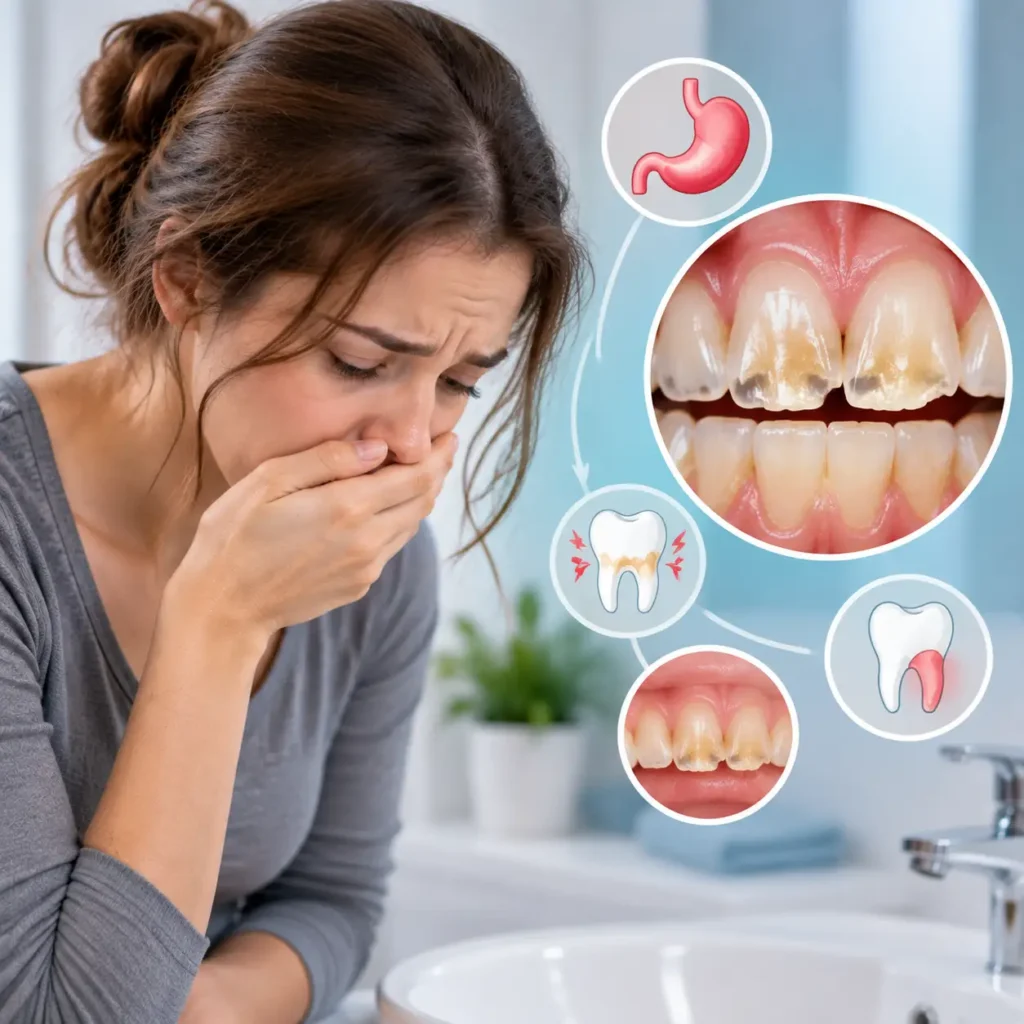
Purging by vomiting exposes the teeth to stomach acid, which is far more acidic than anything else the mouth normally encounters. Over time and with repeated exposure, this acid softens and gradually erodes tooth enamel—the hard outer layer that protects teeth from damage.
Once enamel is worn away, it doesn’t grow back, which is why early awareness and gentle dental care matter.
Other factors connected to bulimia can add to the effect on oral health, including frequent dry mouth, which reduces saliva’s natural ability to neutralize acid and protect teeth, and nutritional changes that can affect gum health.
Signs a Dentist May Notice
Changes to the Teeth
- Tooth erosion, especially on the back (inner) surface of the upper front teeth
- Teeth that look thin, translucent, or discolored at the edges
- Increased tooth sensitivity to hot, cold, or sweet foods
- More frequent cavities
Other Signs
- Dry mouth
- Swelling in the salivary glands, which can make the cheeks or jaw area appear puffy
- Redness or irritation of the throat or soft palate
- Sores or calluses on the knuckles or back of the hand
These signs vary widely from person to person, and none of them alone confirms bulimia. Noticing them is often what allows a dentist to gently check in and, when appropriate, encourage a conversation with a doctor or mental health professional.
Is This Serious?
Bulimia nervosa is a serious condition that can affect both physical and mental health, and its effects reach well beyond the mouth—including heart, digestive, and electrolyte complications.
Seek medical care right away if you or someone you know is experiencing chest pain, fainting, dizziness, heart palpitations, or shortness of breath.
If you’re having thoughts of suicide, help is available 24/7—call or text 988 (Suicide & Crisis Lifeline). For eating-disorder-specific support, the National Alliance for Eating Disorders offers a helpline and can help connect you with treatment options.
From a dental standpoint, ongoing acid exposure can lead to permanent enamel loss over time, so the sooner it’s addressed, the more of the natural tooth structure can be protected.
How Dental Care Can Help
Oral Care Tips
Can Help Protect Your Teeth
- Rinse your mouth with water, or a small amount of baking soda dissolved in water, right after vomiting—this helps neutralize acid
- Wait about 30–60 minutes before brushing your teeth after vomiting, to give enamel time to reharden
- Use a soft-bristled toothbrush and a fluoride toothpaste
- Chew sugar-free gum to help stimulate saliva if your mouth feels dry
- Keep up with regular dental checkups, even if it feels difficult to talk about
Avoid
- Brushing immediately after vomiting, which can spread acid and wear away softened enamel faster
- Skipping dental visits out of worry about judgment—our team’s focus is your health, not your habits
Ways Dental Care Can Support You
1. Monitor Enamel and Sensitivity
2. Strengthen Remaining Enamel
3. Safer Daily-Care Guidance
4. Treat Dental Problems
How We Can Help
Related Reading
Medically Reviewed Information
Medically reviewed by Dr. Matthew Roper, DDS. Last updated September 11, 2026.
Dr. Roper is a licensed general dentist who earned his Doctorate of Dental Medicine from A.T. Still University in Mesa.
This information is for educational purposes and does not replace a professional diagnosis or treatment. If you or someone you know is struggling with an eating disorder, please reach out to a doctor, mental health professional, or the National Alliance for Eating Disorders helpline for support.
Frequently Asked Questions
How does bulimia affect your teeth?
Can a dentist tell if someone has bulimia?
What can help protect teeth if someone is still purging?
Can dental damage from bulimia be reversed?
Should I tell my dentist if I'm struggling with bulimia?
Neighborhoods We Serve
Ocotillo Trails Family Dentistry is proud to welcome patients from San Tan Valley and the surrounding communities, including:
Driving Directions to Our San Tan Valley Dental Office
Visiting us for oral health concerns related to bulimia nervosa? Find Ocotillo Trails Family Dentistry at 40815 N Ironwood Rd #102, San Tan Valley, AZ 85140. Take N Ironwood Road toward E Ocotillo Road, enter the property, and continue to Suite 102.