
Dental Plaque: What It Is and How to Remove It
Dental plaque is a sticky film of bacteria that forms on your teeth every day everyone gets it, and that's normal. The problem isn't plaque itself, it's what happens when it's not removed regularly: it can lead to cavities, gum disease, and bad breath. Ocotillo Trails Family Dentistry helps patients in San Tan Valley, Gilbert, and Mesa stay ahead of plaque buildup with routine cleanings and exams.
San Tan Valley (480) 457-1977
Gilbert (480) 963-9900
Mesa (480) 830-3344
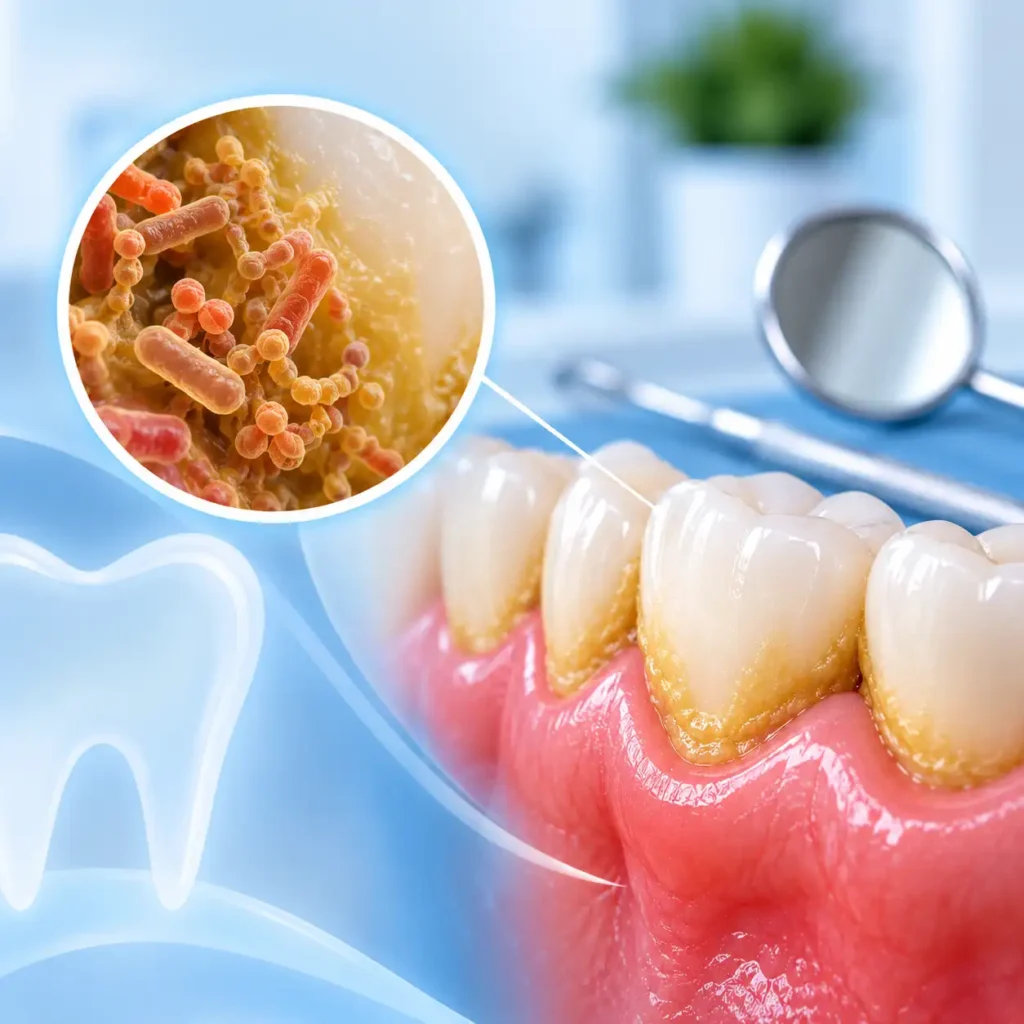
What Causes Dental Plaque
Where Plaque Forms
Supragingival Plaque
Subgingival Plaque
Symptoms of Plaque Buildup
- A fuzzy or “fuzzy-sweater” feeling on your teeth when you run your tongue over them
- A soft, white-to-pale-yellow film along the gumline
- Bad breath that doesn’t improve with brushing
- Red, swollen gums that bleed when you brush or floss
- Tooth staining, especially near the gumline
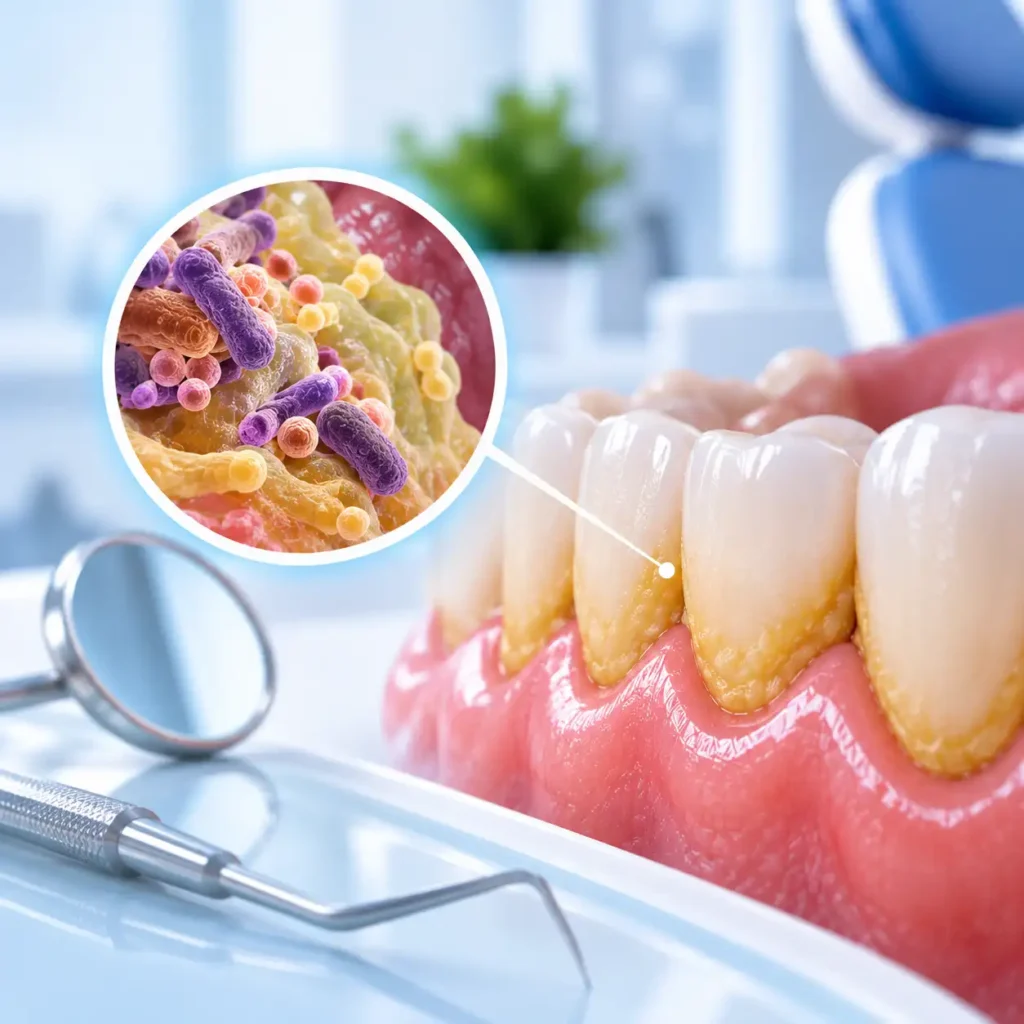
Plaque vs. Tartar
Plaque is a soft, sticky film that forms every day and can be removed at home through consistent brushing and flossing.
If plaque isn’t removed, it can harden into tartar—also called calculus—within a day or two.
Once Plaque Becomes Tartar
Once plaque has hardened into tartar, brushing and flossing can no longer remove it—only a dentist or hygienist can.
Tartar often starts white or pale yellow, but over time it can darken from coffee, tea, red wine, or tobacco use.
Home care alone won’t remove tartar; that part requires a professional cleaning.
What Happens If Plaque Isn't Removed
Common Plaque-Related Problems
- Cavities and tooth decay
- Gingivitis and more advanced gum disease
- Persistent bad breath
More Advanced Problems
How It's Diagnosed
Plaque-Disclosing Tools
Dental Plaque Removal and Prevention at Home
1. Brush Thoroughly
2. Clean Between Teeth
3. Rinse and Limit Plaque Fuel
4. Keep Regular Cleanings
How We Remove Plaque and Tartar
Related Reading
Medically Reviewed Information
Medically reviewed by Dr. Matthew Roper, DDS. Last updated September 27, 2026.
Dr. Roper is a licensed general dentist who earned his Doctorate of Dental Medicine from A.T. Still University in Mesa.
This information is for educational purposes and does not replace a professional diagnosis.
Frequently Asked Questions
Can you remove plaque at home?
What's the difference between plaque and tartar?
Can dental plaque cause bad breath?
How often should I get my teeth cleaned to remove plaque?
Neighborhoods We Serve
Ocotillo Trails Family Dentistry is proud to welcome patients from San Tan Valley and the surrounding communities, including:
Driving Directions to Our San Tan Valley Dental Office
Coming to our office for help with dental plaque? Ocotillo Trails Family Dentistry is located at 40815 N Ironwood Rd #102, San Tan Valley, AZ 85140. Follow N Ironwood Road toward E Ocotillo Road, enter the property, and continue to Suite 102.