Cavities and Tooth Decay
A cavity is a hole in a tooth caused by tooth decay and the gradual breakdown of enamel by acid-producing bacteria. It's one of the most common dental problems at any age, and it doesn't reverse on its own once a true hole has formed. Ocotillo Trails Family Dentistry helps patients in San Tan Valley, Gilbert, and Mesa catch and treat tooth decay early, before it becomes a bigger problem.
San Tan Valley (480) 457-1977
Gilbert (480) 963-9900
Mesa (480) 830-3344
Cavity vs. Tooth Decay: What's the Difference?
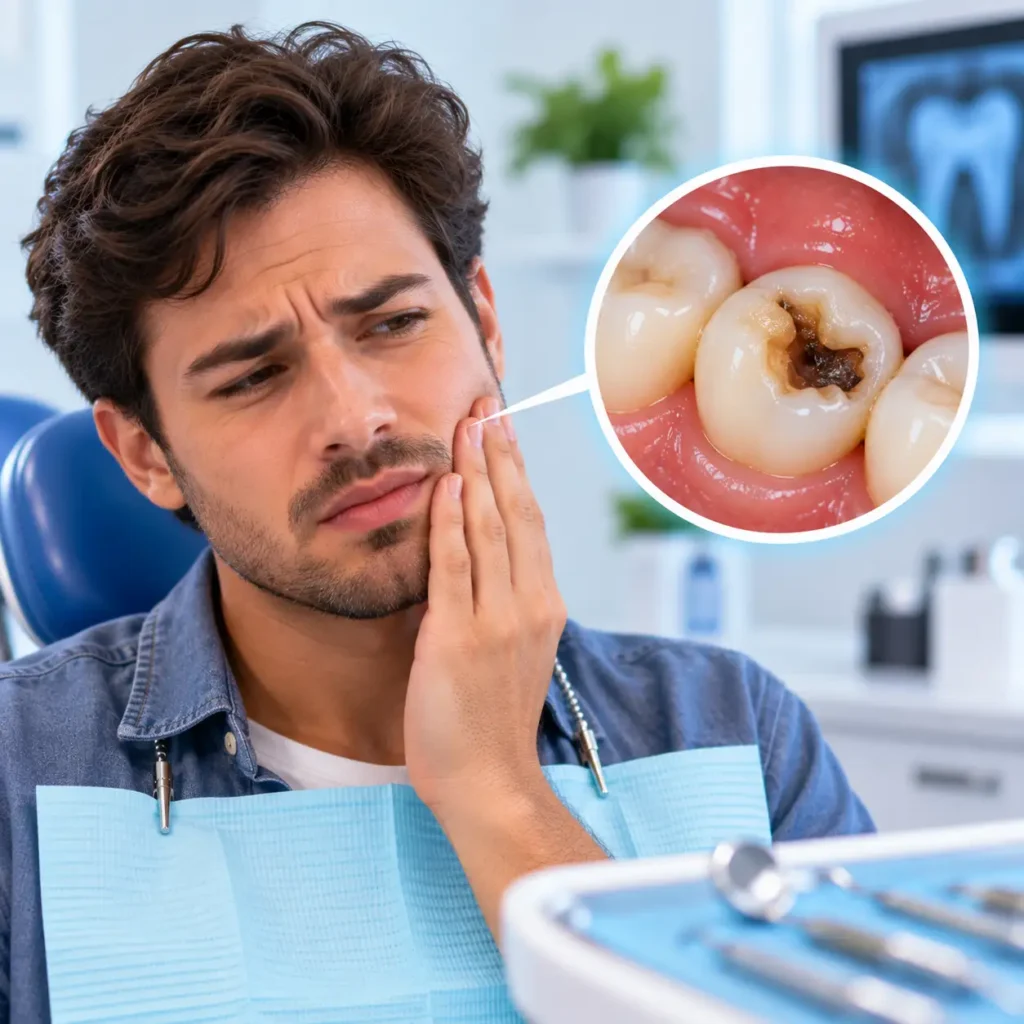
These terms are often used interchangeably, and for good reason: a cavity is simply what tooth decay looks like once it’s progressed far enough to create a hole.
Tooth decay describes the ongoing process—acid gradually wears down the tooth. A cavity is the visible result of that process.
That’s why treating tooth decay early, before a cavity fully forms, can sometimes mean avoiding a filling altogether.
Baby Bottle Tooth Decay
Baby bottle tooth decay is caused by sugary substances in breast milk and some juices, which combine with saliva to form pools inside the baby’s mouth.
If left untreated, this can lead to premature decay of your baby’s future primary teeth, which can later hamper the proper formation of permanent teeth.
One of the best ways to avoid baby bottle tooth decay is to not allow your baby to nurse on a bottle while going to sleep. Encouraging your toddler to drink from a cup as early as possible will also help stave off the problems associated with baby bottle tooth decay.
How Tooth Decay Develops
1–2. Plaque and Acid
Plaque forms. A sticky film of bacteria builds up on your teeth, especially after eating sugary or starchy foods.
Bacteria produce acid. The bacteria in plaque feed on sugar and starch and release acid as a byproduct.
3–4. Enamel Breakdown and Spread
Acid wears down enamel. Over time, this acid erodes the tooth’s hard outer layer, creating small openings that grow into cavities if untreated.
Decay spreads inward. Left alone, decay can progress from enamel into the softer dentin layer beneath it, and eventually to the tooth’s inner pulp, where the nerve lives.
Risk Factors
Certain things make cavities more likely:
- Frequent snacking or sipping sugary or acidic drinks throughout the day
- Not brushing and flossing consistently
- Dry mouth, which reduces saliva’s natural protective effect
- Worn or aging fillings and dental work
- Acid reflux (GERD), which exposes teeth to stomach acid
- A history of purging behaviors, which similarly exposes teeth to stomach acid
- Age: Cavities are especially common in children and teens, and risk rises again in older adults due to gum recession and dry mouth from medications
- Not getting enough fluoride
Symptoms and Stages of Tooth Decay
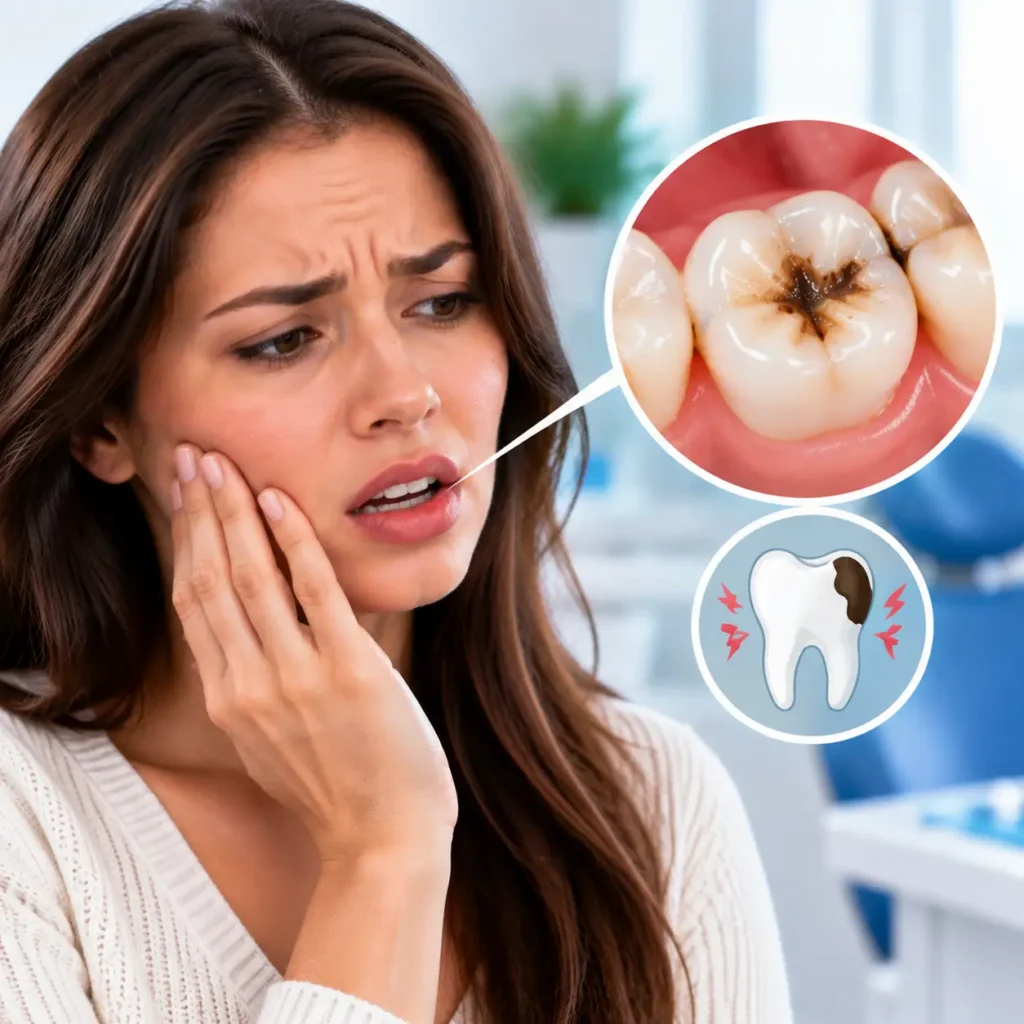
Early tooth decay often causes no symptoms at all, which is why regular checkups matter. As decay progresses, it generally follows a few recognizable stages:
- Early demineralization: Small white or chalky spots appear on the enamel; often no pain yet
- Enamel breakdown: A visible hole may form; spots can turn light brown
- Dentin decay: Decay reaches the softer layer beneath enamel; sensitivity to hot, cold, or sweets often begins here
Later Stages and Warning Signs
- Pulp involvement: Decay reaches the tooth’s nerve; this stage usually causes real pain, along with possible gum swelling
- Abscess: Untreated decay can lead to a tooth abscess, a more serious infection that needs prompt treatment
Common symptoms: Toothache, sensitivity to hot, cold, or sweets, visible holes or pits, and brown, black, or white staining on a tooth.
What Happens If Left Untreated
How It's Diagnosed
Treatment Options
1. Fluoride Treatment
2. Fillings
3. Crowns
4. Root Canal Therapy
5. Extraction
Prevention and Home Care
Can Help Prevent Cavities
- Brush twice a day with fluoride toothpaste, and floss daily
- Limit snacking and sipping sugary or acidic drinks throughout the day
- Drink fluoridated tap water when possible
- Ask your dentist about dental sealants, especially for children
- Keep up with regular dental checkups and cleanings
Can Cavities Be Reversed Naturally?
The very earliest stage of decay—before an actual hole forms—can sometimes be remineralized with fluoride and improved oral hygiene.
Once a true cavity exists, no natural remedy reverses it; it needs a filling or other professional treatment. Waiting and hoping a hole will heal on its own typically allows the decay to spread further.
How We Treat Cavities
Related Reading
Medically Reviewed Information
Medically reviewed by Dr. Matthew Roper, DDS. Last updated September 17, 2026.
Dr. Roper is a licensed general dentist who earned his Doctorate of Dental Medicine from A.T. Still University in Mesa.
This information is for educational purposes and does not replace a professional diagnosis.
Frequently Asked Questions
Can a cavity heal on its own?
Are cavities contagious?
What's the best toothpaste for preventing cavities?
What happens if a cavity is left untreated?
Are cavities more common in older adults and seniors?
Neighborhoods We Serve
Ocotillo Trails Family Dentistry is proud to welcome patients from San Tan Valley and the surrounding communities, including:
Driving Directions to Our San Tan Valley Dental Office
Visiting Ocotillo Trails Family Dentistry for cavities or tooth decay? Find us at 40815 N Ironwood Rd #102, San Tan Valley, AZ 85140. Travel along N Ironwood Road toward E Ocotillo Road, enter the property, and continue to Suite 102.