What Are Jaw Disorders?
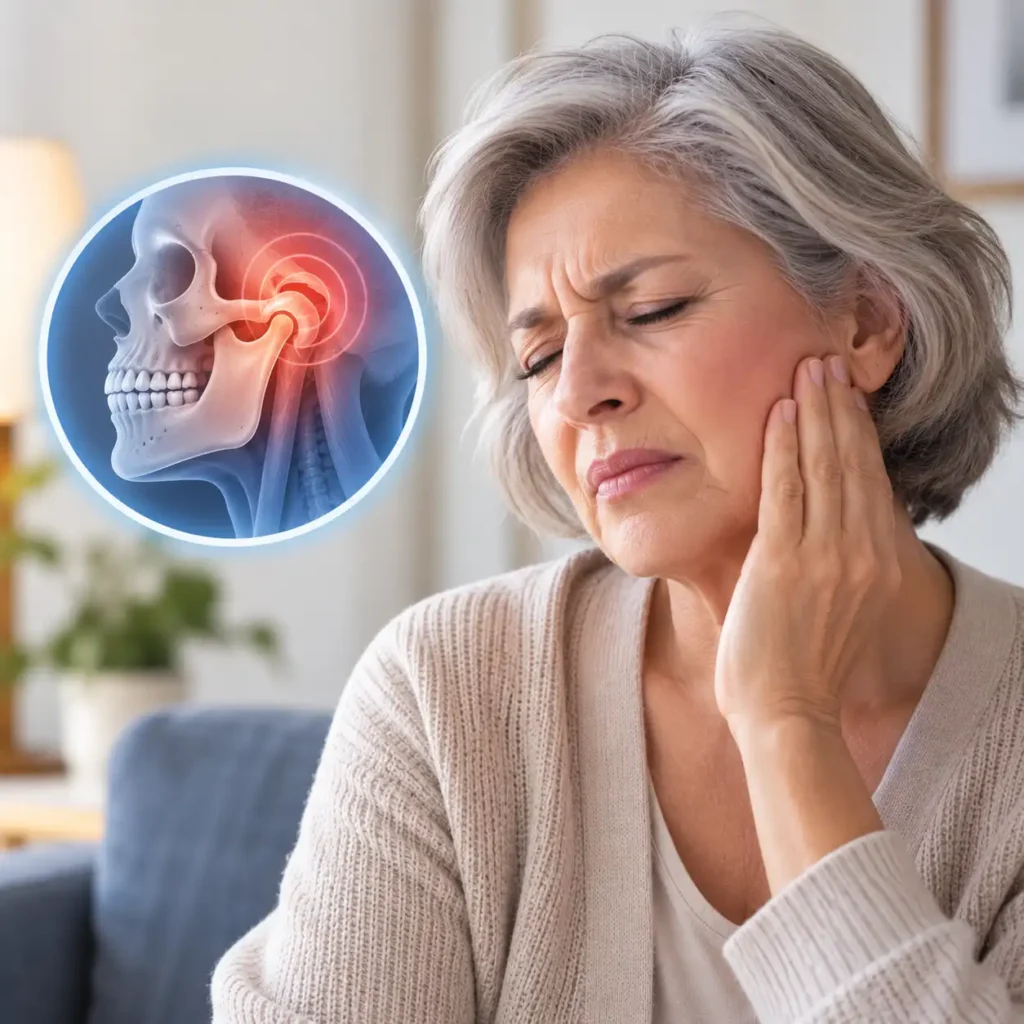
"Jaw disorder" is a broad term covering several different conditions that affect the jaw, its joints, or the surrounding muscles. By far the most common is TMJ disorder (also called TMD), which affects the joints connecting your jaw to your skull. This page focuses mainly on TMJ/TMD, since that's what most people mean when searching "jaw disorder" but a few other, less common jaw conditions are worth knowing about too.
San Tan Valley (480) 457-1977
Gilbert (480) 963-9900
Mesa (480) 830-3344
Types of Jaw Disorders
While TMJ/TMD is the most common by far, “jaw disorder” can also refer to:
- Jaw dislocation: When the jawbone is forced out of its normal position, often from trauma or an unusually wide yawn
- Jaw fracture: A broken jawbone, usually from an injury or impact
- Jaw misalignment (malocclusion): When the upper and lower teeth or jaws don’t line up properly
- Jaw tumors or cysts: Rare growths in the jawbone, which can be benign or, less commonly, cancerous
These are distinct conditions with different causes and treatments. The rest of this page focuses on TMJ/TMD specifically, since it’s the condition most people are asking about.
What Is TMJ Disorder (TMD)?
The Temporomandibular Joints
How Common Is TMD?
Causes and Risk Factors
The exact cause of TMD can be hard to pin down, and it’s often a mix of factors:
- Teeth grinding or clenching (bruxism)—one of the most common contributors
- Jaw injury, such as a blow or impact to the jaw
- Arthritis in the jaw joint
- A misaligned bite
- Stress, which often shows up as jaw tension or clenching
- Habits such as chewing gum frequently, nail biting, or resting your chin on your hand
Symptoms of TMJ Disorder
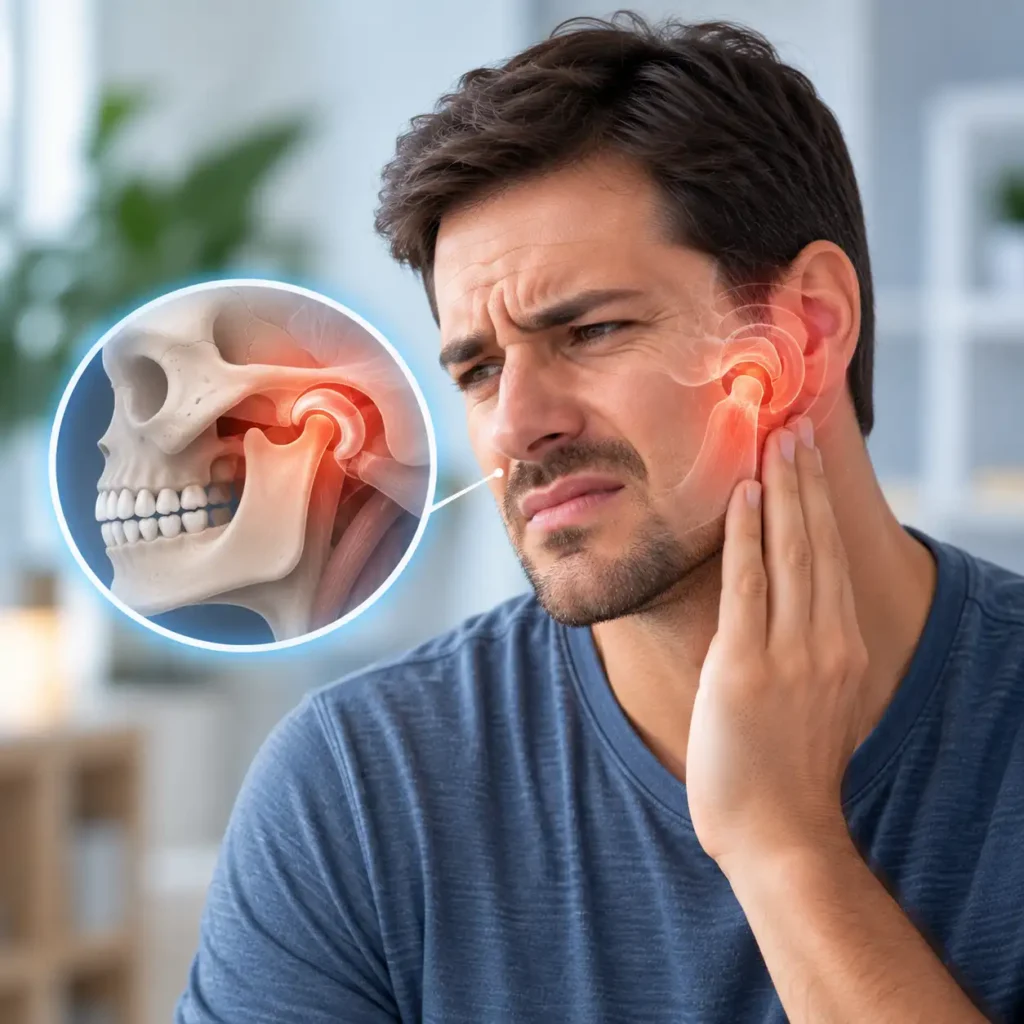
- Jaw or face pain, often near the ear
- Clicking, popping, or grating sounds when opening or closing your mouth
- Headaches, sometimes mistaken for tension headaches or migraines
- Jaw stiffness or locking, making it hard to fully open or close your mouth
Pain Beyond the Jaw
- Earache-like pain that isn’t actually an ear problem
- Neck or shoulder pain
- Tooth pain that occurs along with jaw tenderness
A Simple Self-Care Tip: Jaw Rest Position
Lips Together, Teeth Apart
Build Awareness During the Day
Is This Serious?
What Happens If Left Untreated
What You Can Do at Home
1. Practice the Jaw Rest Position
2. Rest the Jaw During Flare-Ups
3. Relax Tense Muscles
4. Notice Repetitive Habits
How It's Diagnosed
Jaw and Joint Examination
Dental Imaging
How We Treat Jaw and TMJ Symptoms
Related Reading
Medically Reviewed Information
Medically reviewed by Dr. Matthew Roper, DDS. Last updated October 3, 2026.
Dr. Roper is a licensed general dentist who earned his Doctorate of Dental Medicine from A.T. Still University in Mesa.
This information is for educational purposes and does not replace a professional diagnosis.
Frequently Asked Questions
Is TMJ disorder the same as a jaw disorder?
Does jaw clicking always mean I need treatment?
Can stress cause jaw pain?
What's the “teeth apart” trick for jaw pain?
Neighborhoods We Serve
Ocotillo Trails Family Dentistry is proud to welcome patients from San Tan Valley and the surrounding communities, including:
Driving Directions to Our San Tan Valley Dental Office
Visiting our office for a jaw disorder? Ocotillo Trails Family Dentistry is located at 40815 N Ironwood Rd #102, San Tan Valley, AZ 85140. Follow N Ironwood Road toward E Ocotillo Road, enter the property, and continue to Suite 102.