
Toothache: Causes, Relief & When to See a Dentist
A toothache is pain in or around a tooth, and it can range from a mild, passing annoyance to a sign of a real dental problem that needs treatment. Some toothaches ease on their own within a day or two; others point to something like a cavity, cracked tooth, or infection that won't get better without care. Ocotillo Trails Family Dentistry sees toothache patients in San Tan Valley, Gilbert, and Mesa, often the same day.
San Tan Valley (480) 457-1977
Gilbert (480) 963-9900
Mesa (480) 830-3344
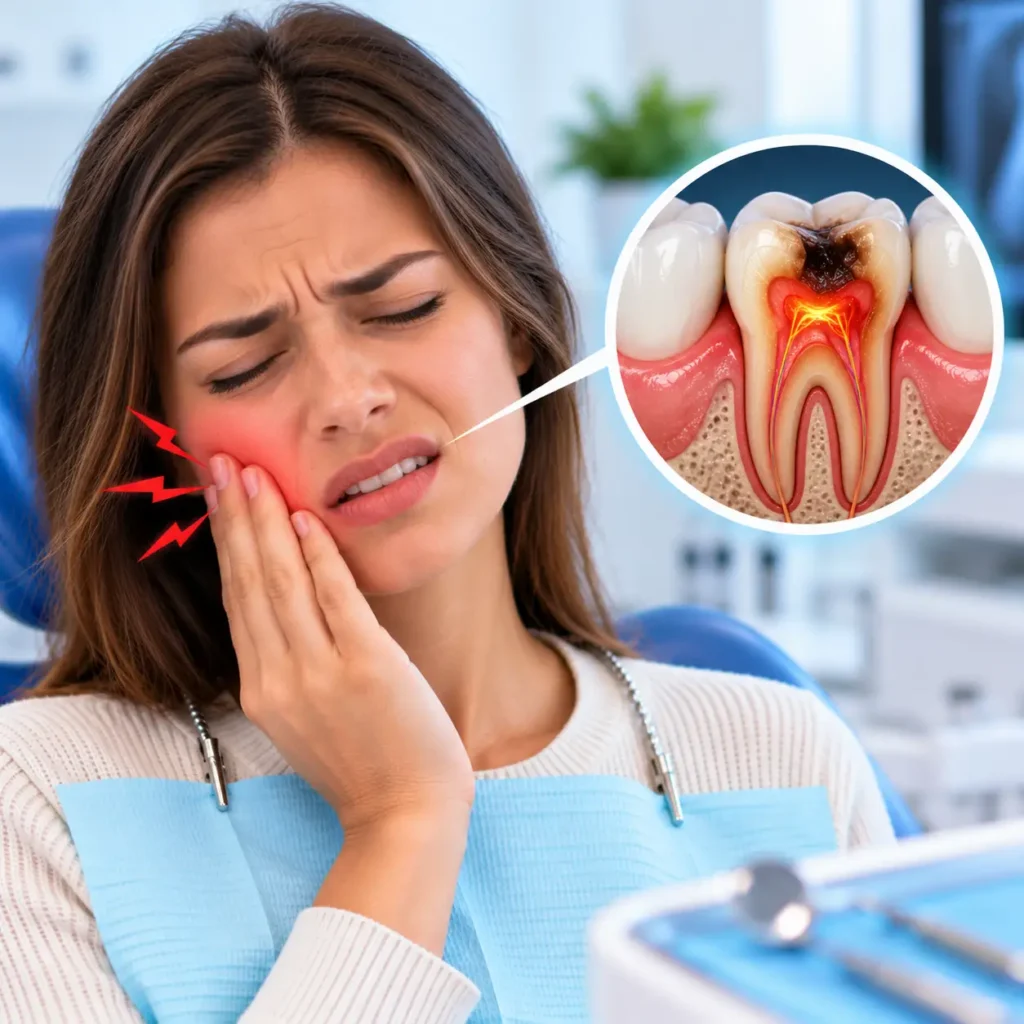
Is This a Dental Emergency?
Most toothaches can wait for a same-day or next-day dental appointment. Go to the emergency room right away if your tooth pain comes with:
- Swelling below your eye or a knot forming on your jaw
- Fever over 101°F
- Unbearable pain that doesn’t improve with pain medication
- Bleeding that won’t stop with pressure
- Difficulty breathing or swallowing
These can be signs that an infection is spreading beyond the tooth, and they need immediate attention rather than a wait-and-see approach. For everything short of these signs, call our office. We can often see toothache patients the same day.
What to Do Right Now for Toothache Relief
Rinse and Manage Pain
- Rinse with warm salt water. Mix about half a teaspoon of salt into 8 ounces of warm water and swish for 30 seconds. This can reduce inflammation and ease pain.
- Take an over-the-counter pain reliever, such as acetaminophen or ibuprofen, following the package directions.
Cold Compress and Food Choices
- Apply a cold compress to the outside of your cheek near the painful area for about 15–20 minutes at a time.
- Avoid chewing on the painful side, and steer clear of very hot, cold, or sugary foods and drinks, which can make pain worse.
Worth knowing: These steps can offer real toothache relief for mild pain, but they don’t treat whatever is actually causing it. If pain keeps coming back or doesn’t fully go away, that’s a sign it’s time to be seen rather than a sign to try a stronger home remedy.
What Could Be Causing Your Toothache
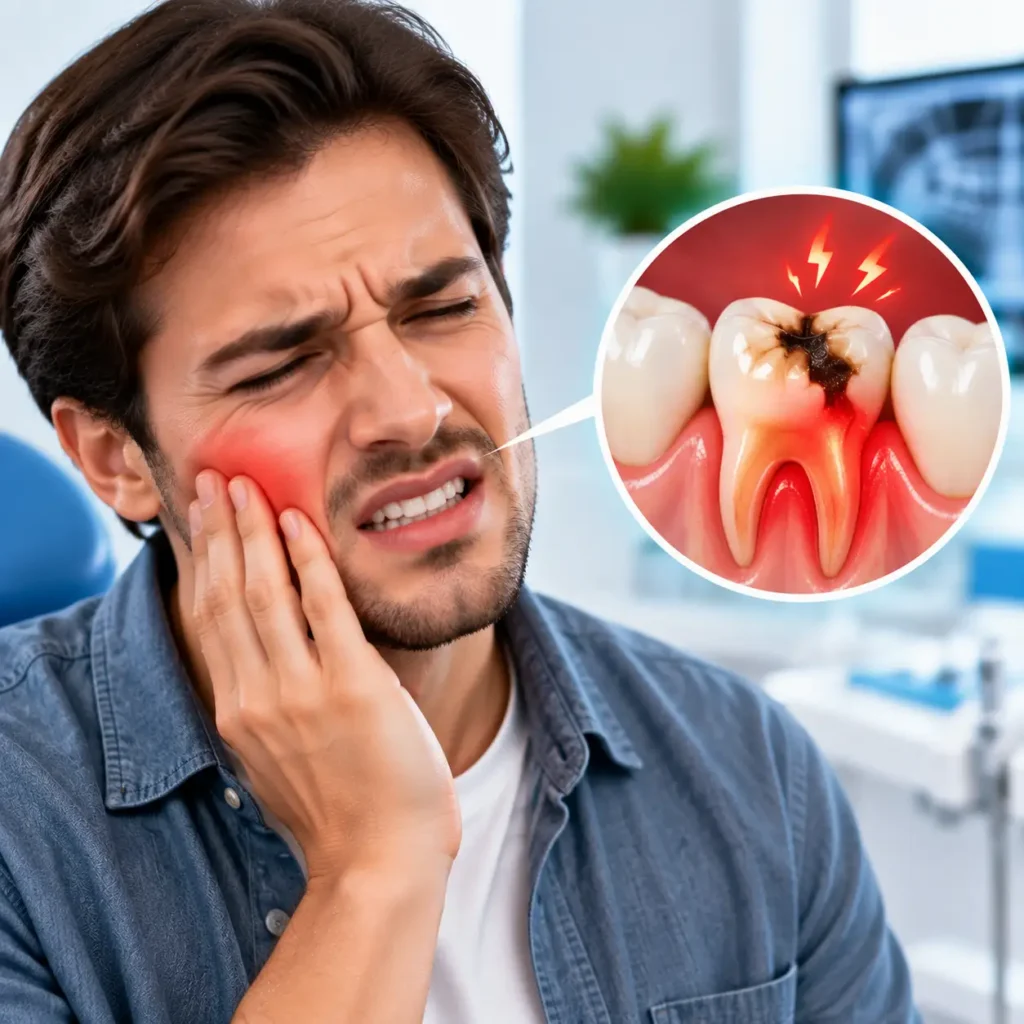
Toothaches have a range of possible causes, including:
- Cavities and tooth decay—one of the most common causes of tooth pain
- A cracked or fractured tooth
- A damaged filling or crown
- Gum disease
- An abscessed tooth—an infection that needs prompt treatment
- Teeth grinding or clenching, which can cause aching or soreness over time
Because these have different treatments, a dentist’s exam is really the only way to know for sure which one applies to you. Our Cavities and Tooth Decay, Gum Disease, and Abscessed Tooth pages go into more detail on each of these individually.
Not Always a Tooth Problem
What Happens If Left Untreated
What Your Pain Might Be Telling You
Pain Patterns and Possible Clues
Dull, persistent ache: May suggest a possible infection or teeth grinding.
Sharp, sudden pain: May suggest a cavity or cracked tooth.
Throbbing, severe pain: May suggest an infection that has reached the tooth’s inner pulp.
Sensitivity to hot or cold that fades quickly: May suggest worn enamel or a smaller cavity.
Treatment Options
1. Fillings
2. Crowns
3. Root Canal Therapy
4. Extraction
5. Antibiotics
How It's Diagnosed
Symptoms and Dental Exam
Dental X-Rays
How We Treat Toothaches
Related Reading
Medically Reviewed Information
Medically reviewed by Dr. Matthew Roper, DDS. Last updated September 19, 2026.
Dr. Roper is a licensed general dentist who earned his Doctorate of Dental Medicine from A.T. Still University in Mesa.
This information is for educational purposes and does not replace a professional diagnosis.
Frequently Asked Questions
Can a toothache go away on its own?
Sometimes mild, temporary gum irritation clears up in a day or two. But pain coming from the tooth itself usually means there’s an underlying issue that needs treatment, even if the pain comes and goes.
How long does a toothache last?
It depends entirely on the cause. Minor gum irritation typically resolves within a day or two. Pain from a cavity or infection tends to persist or recur until it’s treated.
Can a toothache cause a headache or ear pain?
Yes, tooth pain can radiate to nearby areas, and the reverse is also true: sinus issues or ear infections can sometimes feel like a toothache. An exam can help sort out where the pain is actually coming from.
Is it safe to take pain medication for a toothache while I wait for my appointment?
Over-the-counter pain relievers like acetaminophen or ibuprofen are generally fine for short-term use as directed, but they only manage the pain—they don’t treat the cause, so it’s still important to be seen.
When should I go to the ER instead of waiting for a dentist?
If you have facial swelling, a fever over 101°F, unbearable pain that medication doesn’t touch, or trouble breathing or swallowing, see the emergency guidance above.
Neighborhoods We Serve
Ocotillo Trails Family Dentistry is proud to welcome patients from San Tan Valley and the surrounding communities, including:
Driving Directions to Our San Tan Valley Dental Office
Coming to Ocotillo Trails Family Dentistry for a toothache? Our office is located at 40815 N Ironwood Rd #102, San Tan Valley, AZ 85140. Take N Ironwood Road toward E Ocotillo Road, enter the property, and continue to Suite 102.