
What Is a Canker Sore?
A canker sore is a small, painful ulcer that forms inside the mouth usually on the inner cheek, lips, tongue, or gums. They're extremely common, not contagious, and typically heal on their own within one to two weeks. Ocotillo Trails Family Dentistry helps patients in San Tan Valley, Gilbert, and Mesa understand what's causing recurring or persistent mouth sores.
San Tan Valley (480) 457-1977
Gilbert (480) 963-9900
Mesa (480) 830-3344
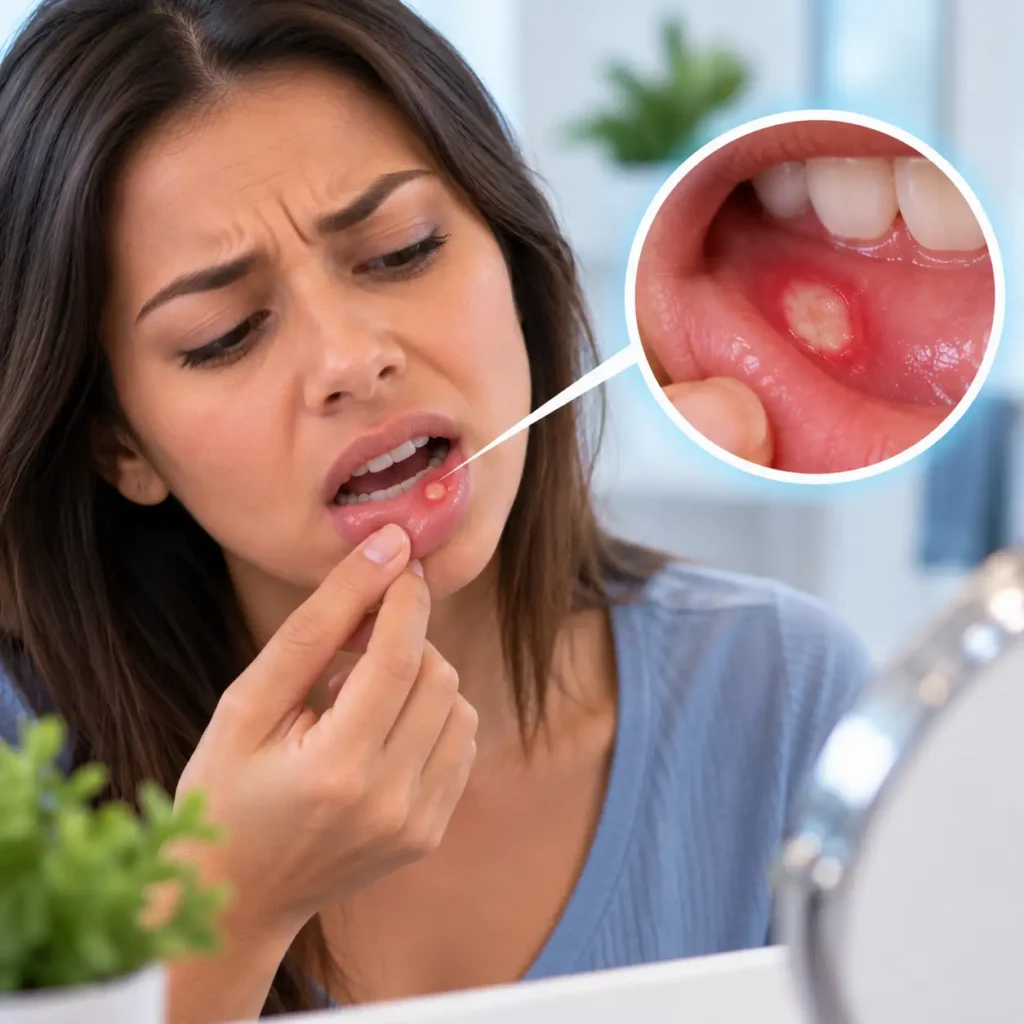
Canker Sores vs. Cold Sores: The Key Difference
These two are often confused, but they’re different conditions with different causes.
If a sore is inside your mouth and you’ve never had a cold sore break out on your lips before, it’s very likely a canker sore rather than a cold sore.
Canker Sore or Cold Sore?
Canker Sores
Location: Inside the mouth—cheek, tongue, gums, or inner lip
Contagious? No
Appearance: Flat, with a white or yellow center and a red border
Cause: Not fully known; often linked to injury, irritation, or stress
Cold Sores
Location: On or around the outside of the lips
Contagious? Yes—caused by a herpes simplex virus
Appearance: Fluid-filled blisters, often in a cluster
Cause: Herpes simplex virus (HSV-1)
Causes of Canker Sores
The exact cause of canker sores isn’t fully understood, but several things are known to trigger them:
- Injury or irritation: Biting your cheek, a sharp piece of food, or irritation from braces or a rough dental appliance
- Certain foods: Acidic or spicy foods, such as citrus fruits, can trigger sores in people who are sensitive to them
- Nutritional deficiencies: Particularly low vitamin B12, iron, or folate
- Stress: Emotional or physical stress is a common trigger
- Family history: Canker sores tend to run in families
- Hormonal changes: Some people notice a pattern tied to hormonal shifts
Symptoms of Canker Sores
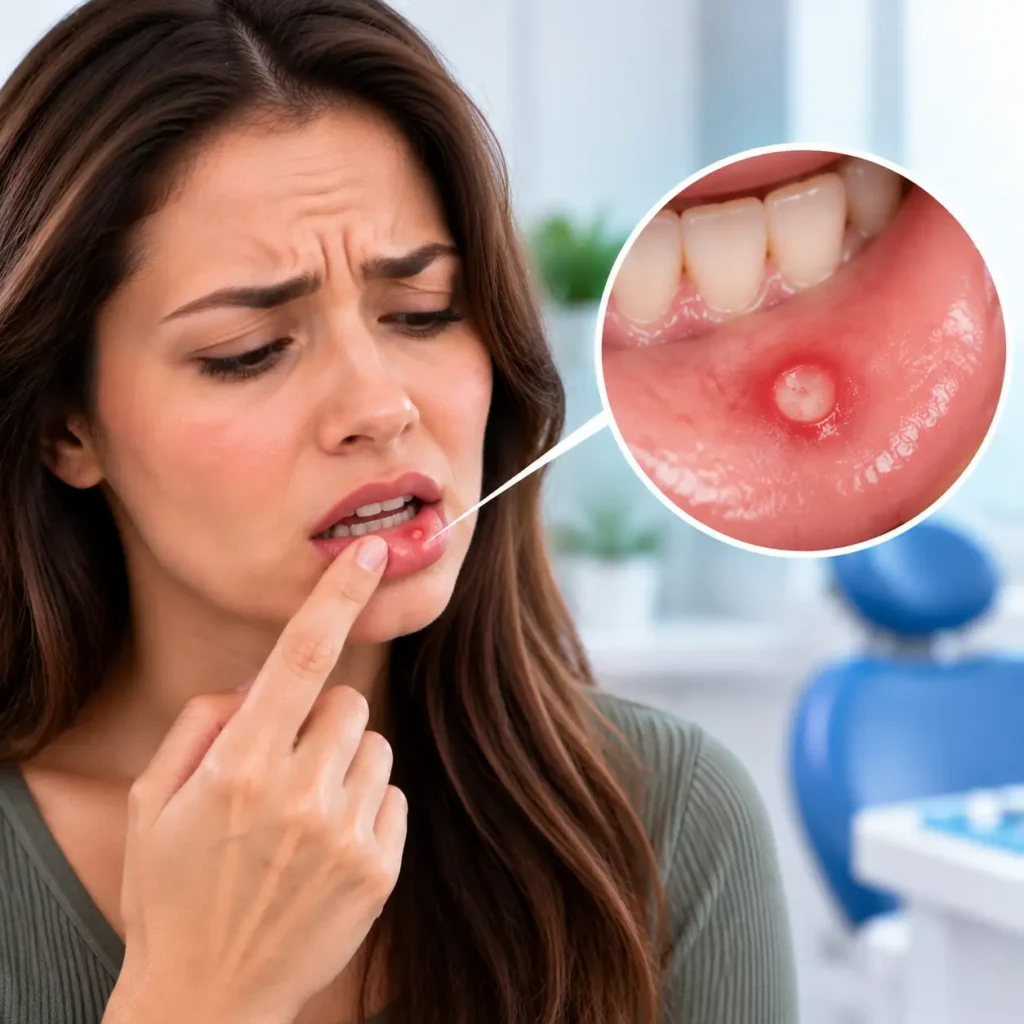
- A small, round or oval sore with a white or yellow center and a red border
- Tingling or burning sensation in the day or two before the sore appears
- Pain when eating, drinking, or talking, especially with acidic or spicy foods
- Most commonly found on the inner cheeks, inner lips, tongue, gums, or soft palate
- One sore at a time in most cases, though several can appear together
A less common form, called a herpetiform canker sore, causes a cluster of many small ulcers at once. Despite the name, it isn’t caused by the herpes virus; it’s still a type of canker sore, just with a different pattern of ulceration.
About Cold Sores
Cold sores, also called fever blisters, are a different condition caused by the herpes simplex virus (HSV-1). Unlike canker sores, they’re contagious and typically appear as a cluster of small blisters on or around the lips rather than inside the mouth.
They often start with tingling or itching before the blisters form, and they tend to crust over as they heal. Because cold sores are viral, they can recur when triggered by stress, illness, or sun exposure, and antiviral treatment—rather than the canker sore remedies below—is usually what helps them heal faster.
If you’re dealing with a sore that matches this description rather than the canker sore pattern above, it’s worth having it evaluated so the right treatment approach is used.
Is It Something More Serious?
Have It Checked If
- It’s unusually large or especially painful
- It hasn’t healed within two to three weeks
- You’re getting them frequently or they keep coming back
- It’s accompanied by fever, fatigue, or swollen lymph nodes
Why Persistent Cases Matter
Treatment Options
1. Natural Healing
2. Topical Gels or Pastes
3. Antimicrobial Rinses
4. Prescription Medication
Home Care / What Not to Do
Can Help While It Heals
- Rinse gently with warm salt water several times a day
- Apply a small amount of milk of magnesia directly to the sore with a cotton swab
- Use an ice chip or cold compress to numb discomfort
- Avoid acidic, spicy, or rough/crunchy foods that can further irritate the sore
Avoid
- Rinsing with hydrogen peroxide—it shouldn’t be swallowed and isn’t recommended as a mouth rinse
- Picking at or re-irritating the sore, which can slow healing
- Assuming it’s “just a canker sore” if it keeps recurring—persistent cases deserve a look
How We Treat Recurring Canker Sores
Related Reading
Medically Reviewed Information
Medically reviewed by Dr. Matthew Roper, DDS. Last updated September 15, 2026.
Dr. Roper is a licensed general dentist who earned his Doctorate of Dental Medicine from A.T. Still University in Mesa.
This information is for educational purposes and does not replace a professional diagnosis.
Frequently Asked Questions
Are canker sores contagious?
What causes canker sores?
How long do canker sores take to heal?
What's the difference between a canker sore and a cold sore?
What is a herpetiform canker sore?
Neighborhoods We Serve
Ocotillo Trails Family Dentistry is proud to welcome patients from San Tan Valley and the surrounding communities, including:
Driving Directions to Our San Tan Valley Dental Office
Coming to our office with concerns about canker or cold sores? Ocotillo Trails Family Dentistry is at 40815 N Ironwood Rd #102, San Tan Valley, AZ 85140. Follow N Ironwood Road toward E Ocotillo Road and continue into the property to Suite 102.