
Ocotillo Trails Family Dentistry

What Is an Abscessed Tooth?

An abscessed tooth is a painful infection that forms when bacteria reach the inner tissue of a tooth or the gum beside it. It doesn't resolve without treatment, and in some cases can become a dental emergency. Ocotillo Trails Family Dentistry treats abscessed teeth at our San Tan Valley, Gilbert, and Mesa locations.

San Tan Valley (480) 457-1977
Gilbert (480) 963-9900
Mesa (480) 830-3344
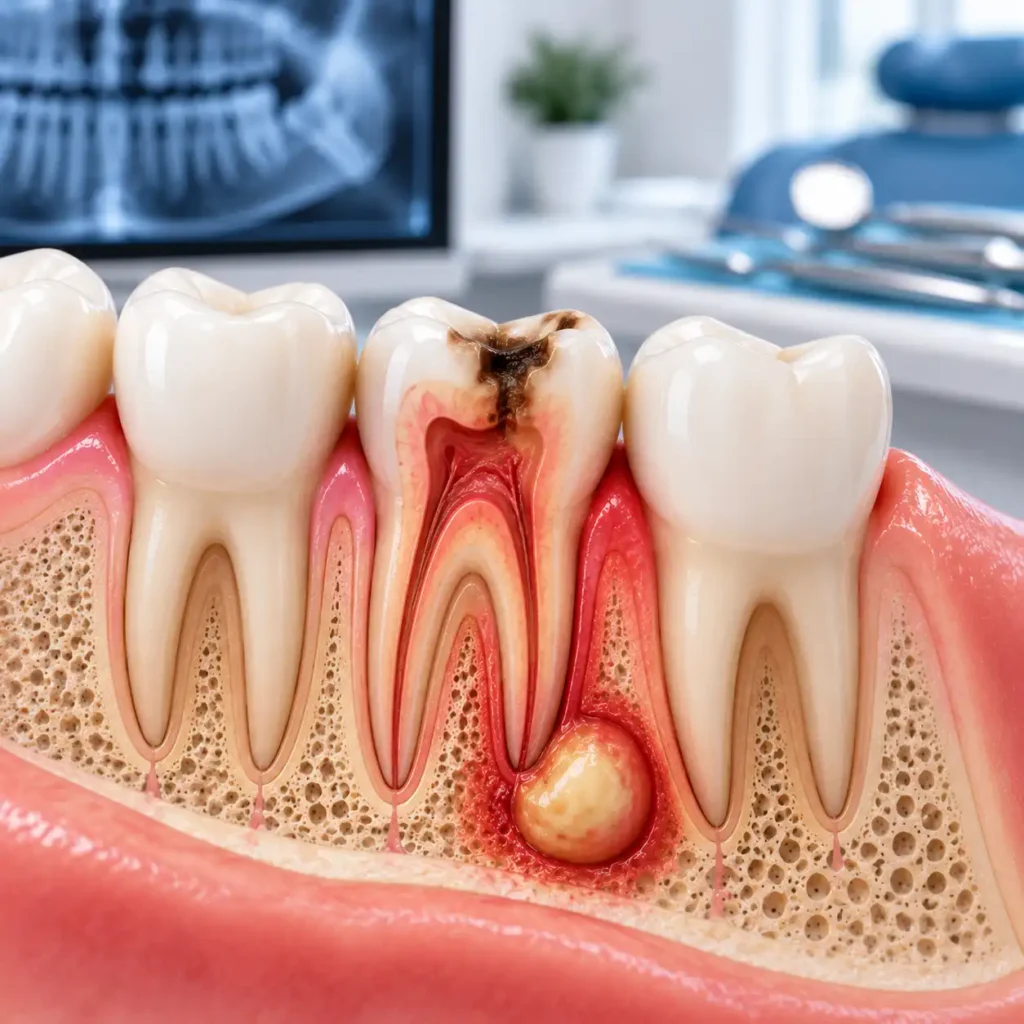
Abscessed Tooth

Causes

A dental abscess usually starts with something that lets bacteria get past the tooth’s outer defenses. Common causes include:

  • Untreated tooth decay. A cavity that’s gone deep enough can let bacteria reach the pulp—the nerve and blood vessel tissue inside the tooth.
  • A cracked, chipped, or broken tooth. Even a small crack can give bacteria a path to the inner tooth.
  • Advanced gum disease. As gum disease progresses, bacteria can reach deeper tissue around the tooth root.
  • Injury to a tooth. Trauma can damage the inner pulp even when there’s no visible crack, making it more vulnerable to infection later.

Risk Factors

Some people are more likely to develop a tooth abscess.

Lifestyle and Oral-Care Factors

Smoking, inconsistent brushing and flossing habits, and a diet high in sugar can increase the risk of developing a tooth abscess.

Health-Related Factors

Dry mouth or a weakened immune system can make a person more vulnerable to infection and increase the risk of a dental abscess.

Symptoms

  • Persistent, throbbing tooth pain that may spread to the jaw, ear, or neck
  • Pain or sensitivity when chewing, or with hot and cold temperatures
  • Swelling in the face, cheek, or gums
  • A bad taste or odor in the mouth
  • Fever
  • Tender or swollen lymph nodes under the jaw
  • A pimple-like bump on the gum that may drain fluid

Abscessed Tooth Symptoms

How It's Diagnosed

Your dentist will examine the affected tooth and surrounding tissue, and may tap on the tooth to check for sensitivity. An X-ray is commonly used to confirm a dental abscess and check whether nearby teeth or bone are affected.
If there’s concern the infection has spread further into the face or neck, a CT scan may be recommended.

Is This a Dental Emergency?

Most abscessed teeth need prompt dental care, but not every case requires an emergency room visit. The guidance below can help you understand what to do next.

Call Our Office Right Away

Call our office right away if you notice tooth pain, swelling, or a bump on the gum. The sooner it’s evaluated, the less likely the infection is to spread.

Go to the Emergency Room

Go to the emergency room if you have a tooth abscess along with a fever of 100.4°F or higher, swelling that’s spreading to your face or neck, difficulty breathing or swallowing, or a rapid heartbeat or confusion. These can be signs the infection is spreading beyond the tooth and needs immediate attention.

Why the Pain May Stop

Sometimes the pain lessens or stops on its own, but that usually means the nerve inside the tooth has died—not that the infection has resolved.

What Happens If Left Untreated

A tooth abscess will not go away on its own. Bacteria can continue to spread into the jawbone and surrounding tissue, and in rare cases into the bloodstream, which is a serious, potentially life-threatening complication. This is why it’s worth having any suspected abscess checked even if the pain has eased.

Treatment Options

1. Incision and Drainage

A small opening is made to let the pus drain, relieving pressure and pain.

2. Root Canal Therapy

The infected pulp is removed and the tooth is sealed, often allowing the natural tooth to be saved.

3. Extraction

If the tooth is too damaged to save, it may need to be removed along with draining the infection.

4. Antibiotics

Antibiotics are sometimes prescribed, but usually alongside one of the treatments above—not as a stand-alone fix. They can help control an infection that’s begun to spread, but they don’t address the source inside the tooth, which is why the underlying abscess still needs direct treatment.

Home Care While You Wait

These steps may help while you wait for your appointment, but they do not replace dental treatment.

Can Help

  • Rinse gently with warm salt water
  • Take an over-the-counter pain reliever as directed
  • Apply a cold compress to the outside of the cheek to reduce swelling

Avoid

  • Trying to drain the abscess yourself—this can push the infection deeper or spread it
  • Relying on antibiotics alone without having the tooth treated
  • Waiting to see if the pain goes away on its own—a tooth abscess needs treatment, even if it feels better temporarily

How We Treat an Abscessed Tooth

Treatment for an abscessed tooth depends on how far the infection has progressed. In many cases, a root canal can remove the infected tissue and save the natural tooth; if the tooth can’t be saved, extraction may be necessary instead. Our Emergency Dental Services team can evaluate an abscessed tooth quickly, and our Root Canal Therapy page explains what that treatment involves in more detail.

Frequently Asked Questions

No. Pain from an abscess can lessen or stop, but that usually means the nerve inside the tooth has died, not that the infection is gone. The bacteria can keep spreading until the tooth is treated.
Not usually. Antibiotics can help control the spread of infection, but they don’t remove its source inside the tooth. Most abscesses still need a root canal, drainage, or extraction alongside or instead of antibiotics.
A tooth (periapical) abscess forms at the root tip inside the tooth, usually from decay or injury. A gum (periodontal) abscess forms in the gum tissue beside a tooth, usually related to gum disease. Both need dental evaluation, though the treatment can differ.
Not always, but it should always be evaluated promptly. It becomes an emergency-room situation specifically when there’s facial swelling with fever, or difficulty breathing or swallowing—see the emergency guidance above.
Most people notice significant relief within a few days of treatment, though full healing time varies by case. Your dentist can give you a more specific timeline based on the extent of the infection and the treatment used.

Related Reading

Explore these related oral-health topics:

Medically Reviewed Information

Medically reviewed by Dr. Matthew Roper, DDS. Last updated September 9, 2026.

Dr. Roper is a licensed general dentist who earned his Doctorate of Dental Medicine from A.T. Still University in Mesa.

This information is for educational purposes and does not replace a professional diagnosis. If you’re experiencing symptoms of an abscessed tooth, please contact our office or seek prompt dental care.

Neighborhoods We Serve

Ocotillo Trails Family Dentistry is proud to welcome patients from San Tan Valley and the surrounding communities, including:

Driving Directions to Our San Tan Valley Dental Office

Coming to Ocotillo Trails Family Dentistry for an abscessed tooth? Find us at 40815 N Ironwood Rd #102, San Tan Valley, AZ 85140. Follow N Ironwood Road toward E Ocotillo Road, enter the property, and continue to Suite 102.