
Dental Fluorosis: Causes, Prevention & Treatment
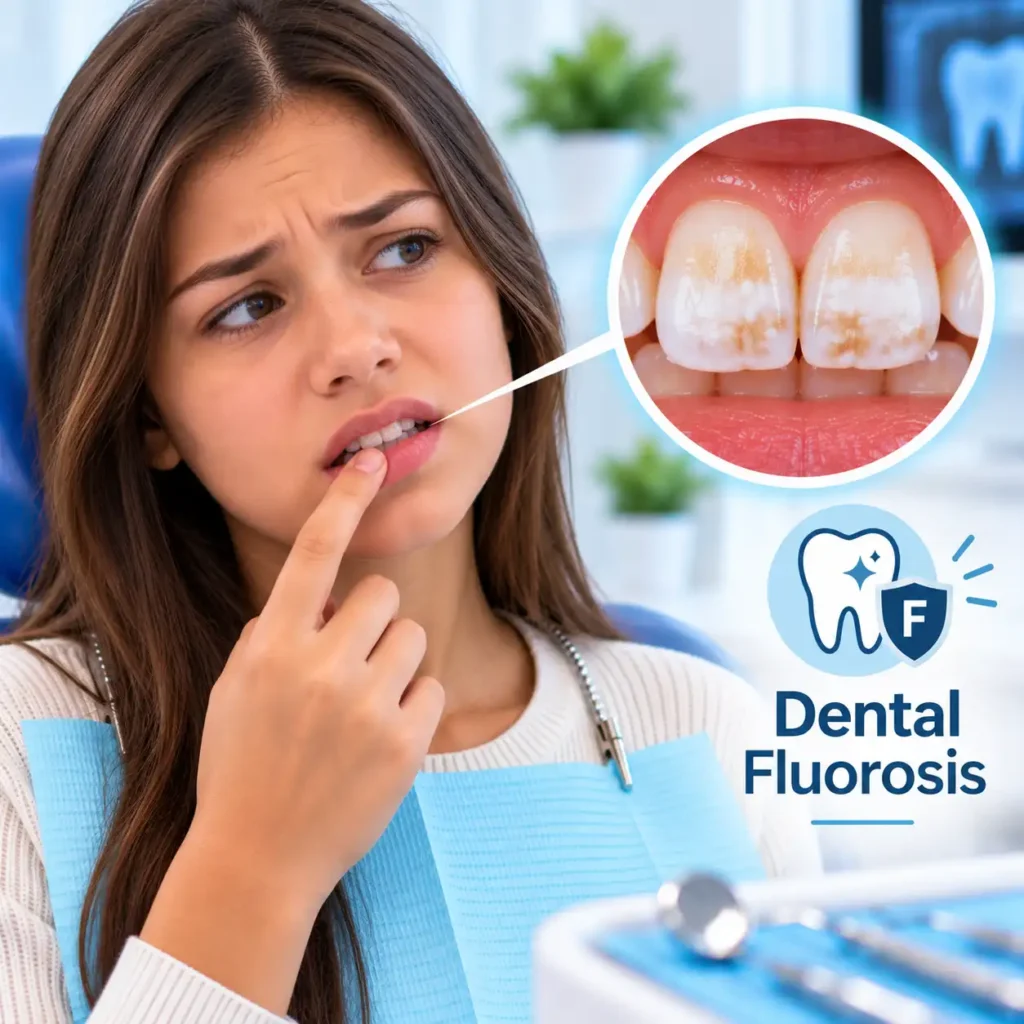
Dental fluorosis is a cosmetic change in tooth appearance usually white spots, flecks, or lines caused by getting too much fluoride while teeth are still forming, during early childhood. It's common, not painful, and doesn't affect how teeth function. Ocotillo Trails Family Dentistry helps families in understand fluorosis and explore cosmetic options if it's already affecting your child's smile.
San Tan Valley (480) 457-1977
Gilbert (480) 963-9900
Mesa (480) 830-3344
What Is Dental Fluorosis?
Dental fluorosis happens when a child consumes too much fluoride while their permanent teeth are still developing under the gums, typically before age 8.
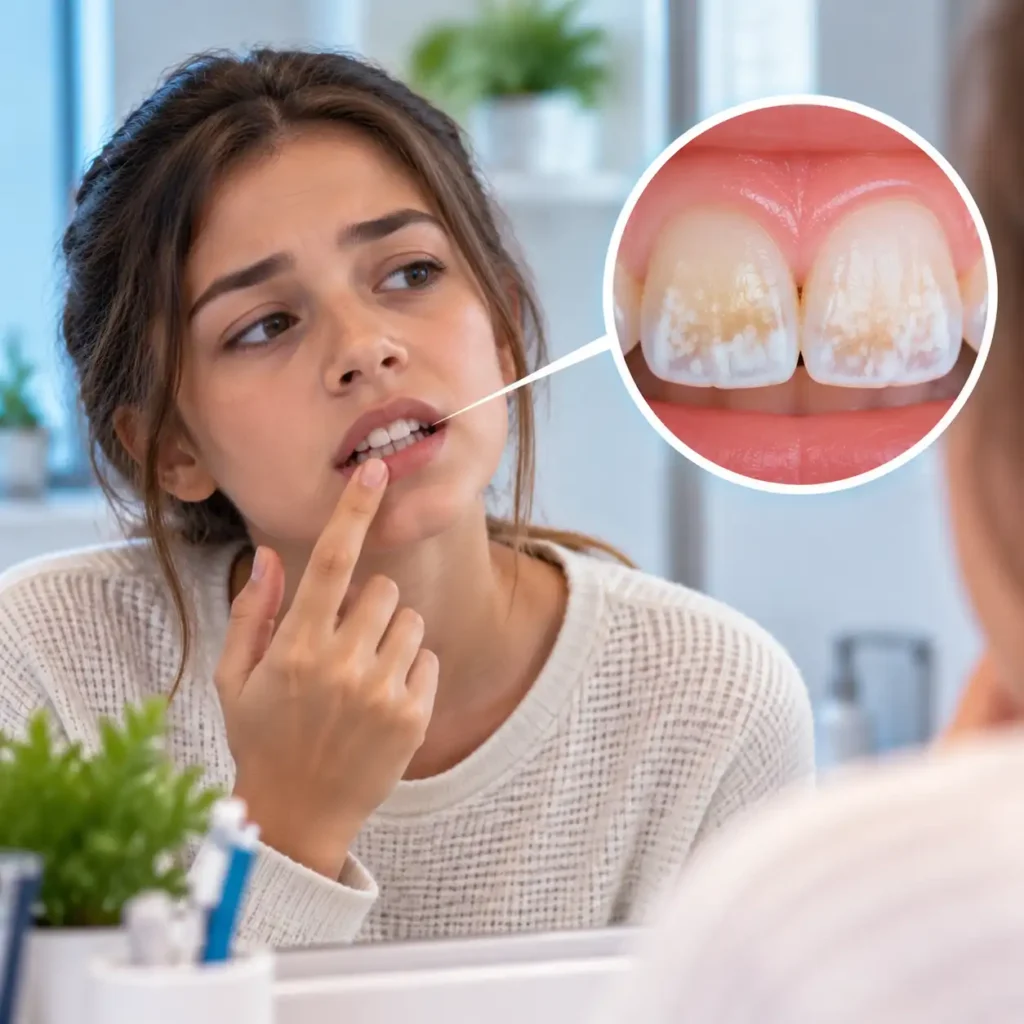
It shows up as white spots, flecks, or lines on the enamel and, in more pronounced cases, brown staining or texture changes. It’s a cosmetic condition, not a health problem. Fluorosis doesn’t cause pain and doesn’t make teeth more prone to cavities.
Dental Fluorosis vs. Skeletal Fluorosis
Dental Fluorosis
Skeletal Fluorosis
Skeletal fluorosis is a separate, much rarer condition that affects bones and joints. It is caused by very high fluoride exposure over many years; the levels involved are far beyond typical U.S. drinking water or toothpaste use.
Fluoride is not toxic at normal exposure levels. Toxicity concerns apply to much higher, prolonged exposure than what causes dental fluorosis. Concerns about bone or joint symptoms should be discussed with a physician, not a dentist.
Why This Only Affects Children
What Causes Dental Fluorosis
Fluorosis happens when a young child gets more fluoride than needed during the early tooth-development years, most commonly from:
- Swallowing fluoride toothpaste instead of spitting it out, especially with more than a pea-sized amount
- Fluoridated water combined with fluoridated infant formula, which can add up to more fluoride than intended
- Fluoride supplements taken without a dentist’s guidance, especially alongside already-fluoridated water
A Bit of History
Is Fluoride Bad for My Child's Teeth?
Enough to Protect Against Decay
Avoid More Than Is Needed
Is It the Same as Other Tooth Discoloration?
Can Fluorosis Be Treated?
Fluorosis itself isn’t reversible once the enamel has formed; the change is permanent. The good news is that the appearance can be cosmetically corrected in most cases.
Options depend on severity and include teeth whitening, often effective for milder cases, dental bonding, enamel microabrasion, or veneers for more visible staining. Your dentist can recommend the right approach based on how it looks.
What Dental Fluorosis Looks Like
Questionable
Very Mild to Mild
Moderate
Severe
Reducing Your Child's Risk
Toothpaste Amount and Supervision
- Use only a pea-sized amount of fluoride toothpaste for children ages 3–6, and a grain-of-rice-sized amount for children under 3
- For children under 2, check with your dentist or pediatrician before using fluoride toothpaste or products
- Supervise brushing and teach kids to spit out toothpaste rather than swallow it
Formula, Water and Supplements
- If you use fluoridated infant formula, mix it with non-fluoridated water—or, if you use fluoridated water, choose a non-fluoridated formula
- Check your water source’s fluoride level, especially if you use well water
- Ask your dentist whether a fluoride supplement is appropriate
How We Treat Dental Fluorosis
If dental fluorosis is affecting your child’s or your own confidence in their smile, we can talk through cosmetic options that fit the specific staining pattern, from whitening to bonding to veneers for more noticeable cases. Our Veneers and Bonding pages explain two of the more common approaches in greater detail.
Related Reading
Medically Reviewed Information
Medically reviewed by Dr. Matthew Roper, DDS. Last updated October 5, 2026.
Dr. Roper is a licensed general dentist who earned his Doctorate of Dental Medicine from A.T. Still University in Mesa.
This information is for educational purposes and does not replace a professional diagnosis.
Frequently Asked Questions
Is fluorosis dangerous?
Can fluorosis be reversed?
Does fluorosis mean my child got too much fluoride from toothpaste?
Is fluoride bad for teeth?
Neighborhoods We Serve
Ocotillo Trails Family Dentistry is proud to welcome patients from San Tan Valley and the surrounding communities, including:
Driving Directions to Our San Tan Valley Dental Office
Coming to our office for fluorosis concerns? Find Ocotillo Trails Family Dentistry at 40815 N Ironwood Rd #102, San Tan Valley, AZ 85140. Follow N Ironwood Road toward E Ocotillo Road, enter the property, and continue to Suite 102.