
Sealants
San Tan Valley (480) 457-1977
Gilbert (480) 963-9900
Mesa (480) 830-3344
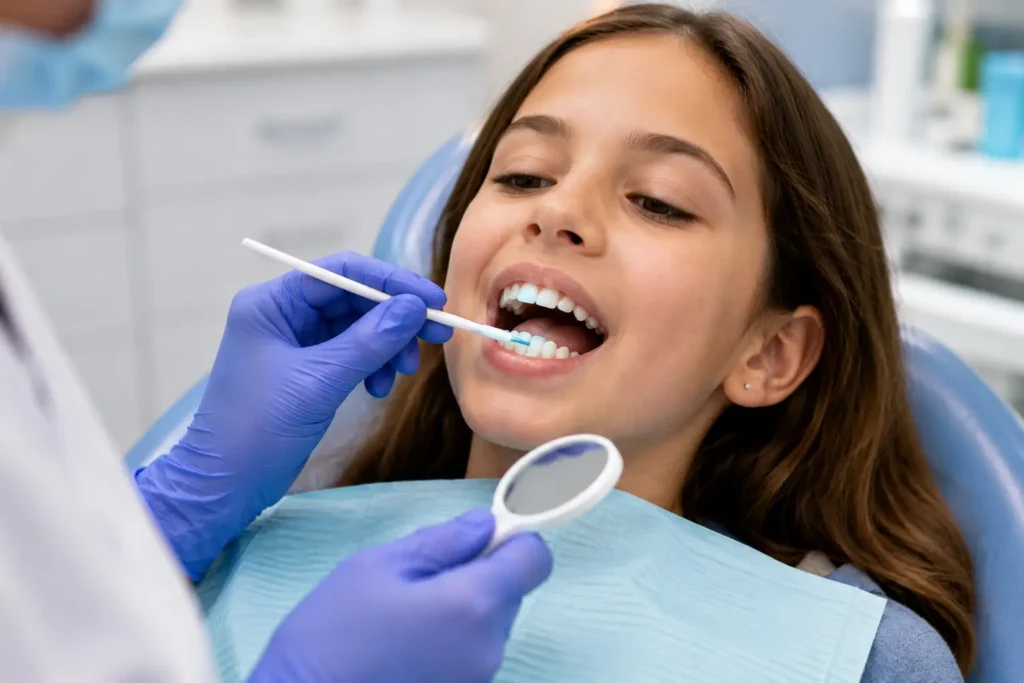
Protect Hard-to-Clean Areas From Tooth Decay
Dental sealants provide an extra layer of protection for the deep grooves and pits on the chewing surfaces of back teeth, where food particles and plaque can be difficult to remove with brushing alone. These areas are especially vulnerable to cavities because bacteria can collect in narrow spaces. At Ocotillo Trails Family Dentistry in San Tan Valley, AZ, we can evaluate whether sealants may be helpful based on the shape of your teeth, cavity risk, and overall oral health. Sealants are commonly used for children and teens, but some adults may also benefit when certain teeth remain at higher risk for decay.
What Is Sealants
Sealants are liquid coatings that harden on the chewing surfaces of teeth and are showing a great deal of effectiveness in preventing cavities—even on teeth where decay has begun.
The pits and grooves of your teeth are prime areas for opportunistic decay. Even regular brushing sometimes misses these intricate structures on the chewing surfaces of your teeth.
The sealants are applied to the chewing surfaces and are designed to prevent the intrusion of bacteria and other debris into the deep crevices on the tops of teeth.
Sealants actually were developed about 50 years ago, but didn’t become commonly used until the 1970s. Today, sealants are becoming widely popular and effective; young children are great candidates for preventative measures like sealants (especially on molars) because in many cases, decay has not set in. Even on teeth where decay is present, sealants have been shown to fight additional damage.
Application
Sealants are applied by first cleaning the tooth surface. The procedure is followed by “etching” the tooth with a chemical substance, which allows the sealant to better adhere. After the sealant is applied, a warm light source is directed to the site to promote faster drying. Sealants usually need re-application every five to 10 years.
Why Choose Us for Dental Sealants?
At Ocotillo Trails Family Dentistry in San Tan Valley, AZ, dental sealants can be part of a preventive approach to protecting teeth from decay. Our team focuses on careful evaluation, appropriate recommendations, and practical preventive care for children, teens, and adults when sealants may be beneficial.
Careful Evaluation Before Treatment
Dental sealants are not needed on every tooth. We examine the chewing surfaces of your teeth, cavity history, and overall oral health before recommending whether sealants may be appropriate.
Extra Protection for Back Teeth
Molars and premolars have grooves and pits where food and plaque can collect. Sealants create a protective layer over these areas, helping reduce the chance that decay develops in hard-to-clean surfaces.
Personalized Preventive Care
Every patient has a different level of cavity risk. We consider age, brushing habits, dental history, and the condition of your teeth when deciding how sealants may fit into your preventive care plan.
Quick and Comfortable Application
Applying dental sealants is generally a simple, noninvasive process. Our team works carefully to keep the tooth clean and dry before placing the material so it can properly cover the intended surface.
Ongoing Sealant Monitoring
Sealants can wear over time or become damaged. We check sealed teeth during routine dental visits and let you know if an area may need to be monitored, repaired, or reapplied.
Convenient San Tan Valley Location
Our San Tan Valley dental office makes it convenient for local families to receive dental sealants, routine examinations, professional cleanings, and other preventive dental care close to home.
Choose Ocotillo Trails Family Dentistry for personalized dental sealant care in San Tan Valley, AZ. Our team is here to help protect vulnerable tooth surfaces, support cavity prevention, and maintain healthier teeth through consistent preventive care.
Our Dental Sealant Process: What to Expect
Dental sealants help protect the deep grooves of back teeth where food particles and plaque can be harder to remove with brushing alone. Usually, we begin by examining the teeth and cavity risk, then determine whether sealants may provide useful preventive protection.
1. Oral Health and Cavity Risk Review
We begin by reviewing your dental history, previous cavities, brushing habits, and other factors that may affect decay risk. This helps us decide whether sealants may be appropriate.
2. Tooth Surface Examination
Your dentist examines the chewing surfaces of the molars and premolars for deep grooves, plaque buildup, early decay, or existing restorations that could affect sealant placement.
3. Sealant Treatment Planning
If suitable teeth are identified, we explain which surfaces may benefit from sealants and why. Recommendations can vary depending on age, tooth anatomy, eruption, and individual cavity risk.
4. Tooth Cleaning and Preparation
Before the sealant is placed, the tooth surface is carefully cleaned and prepared. Keeping the area clean and dry helps the sealant material bond properly to the grooves.
5. Sealant Placement and Bite Check
The sealant material is applied over the prepared chewing surface and hardened according to the material used. We then check the tooth and bite to make sure everything feels comfortable.
6. Follow-Up and Ongoing Monitoring
Sealants are checked during regular dental visits for wear, damage, or areas that may need attention. Continued brushing, flossing, and routine preventive care remain important for protecting overall oral health.
Kind words from our patients
“The dentist explained how sealants help protect the grooves of the back teeth from decay. The whole visit was simple, comfortable, and easy to understand.”
“I liked how clearly the team explained dental sealants and why they may help prevent cavities. The process felt quick and straightforward from start to finish.”
“They answered my questions about sealants and showed me which teeth could benefit most. I appreciated the practical advice and careful approach.”
Call Our Office to Find Out How We Can Help
Have questions about Dental Sealants? Our team is here to help you understand your options and find the right care for your needs. Whether you’re dealing with a concern now or just want expert advice, we’re ready to guide you every step of the way. Call today and let us show you how easy it is to get the care you need.
Neighborhoods We Serve
Ocotillo Trails Family Dentistry is proud to welcome patients from San Tan Valley and the surrounding communities, including:
Driving Directions to Our San Tan Valley Dental Office
Coming to Ocotillo Trails Family Dentistry for dental sealants? Find our office at 40815 N Ironwood Rd #102, San Tan Valley, AZ 85140. Travel along N Ironwood Road toward E Ocotillo Road and enter the property to reach Suite 102.
Dental Sealants FAQs
How do I know if my child’s back teeth need sealants?
Sealants are most useful on molars with pits and grooves that can trap plaque and food. Your dentist can examine the chewing surfaces and consider your child’s cavity risk before recommending them.
When is the best time for children to get dental sealants?
Sealants are often considered soon after permanent molars erupt, commonly around age 6 for first molars and around age 12 for second molars. The exact timing depends on when each tooth comes in and whether the surface is suitable for sealing.
Can adults in San Tan Valley get dental sealants too?
Possibly. Adults with deep grooves in healthy back teeth may sometimes be candidates, although sealants are most commonly recommended for children and adolescents. Your dentist can determine whether sealing a particular tooth would be useful.
Does getting a dental sealant hurt?
Usually, no. The tooth surface is cleaned and prepared before the sealant is placed into the grooves and hardened. The process does not normally require drilling into healthy tooth structure.
How long should dental sealants stay on the teeth?
Sealants can remain effective for years, but they may gradually wear, chip, or partially come away. Your dentist can check them during regular dental visits and determine whether any area should be repaired or resealed.
Do sealants mean my child can brush less carefully?
No. Sealants protect only the pits and fissures where they are placed. Brushing with fluoride toothpaste and cleaning between teeth are still important because cavities can develop on other tooth surfaces.
Does every molar need a dental sealant?
Not necessarily. Some molars have deeper grooves or a higher risk of decay than others. Your dentist can evaluate each tooth individually rather than placing sealants automatically on every back tooth.