
Sensitive Teeth: Causes, Relief & Treatment
Sensitive teeth cause a sharp, short burst of pain when you eat or drink something hot, cold, sweet, or sour sometimes even from brushing. It's a common problem, and it's usually very treatable once the cause is identified. Ocotillo Trails Family Dentistry helps patients in San Tan Valley, Gilbert, and Mesa figure out why their teeth are sensitive and find real relief.
San Tan Valley (480) 457-1977
Gilbert (480) 963-9900
Mesa (480) 830-3344
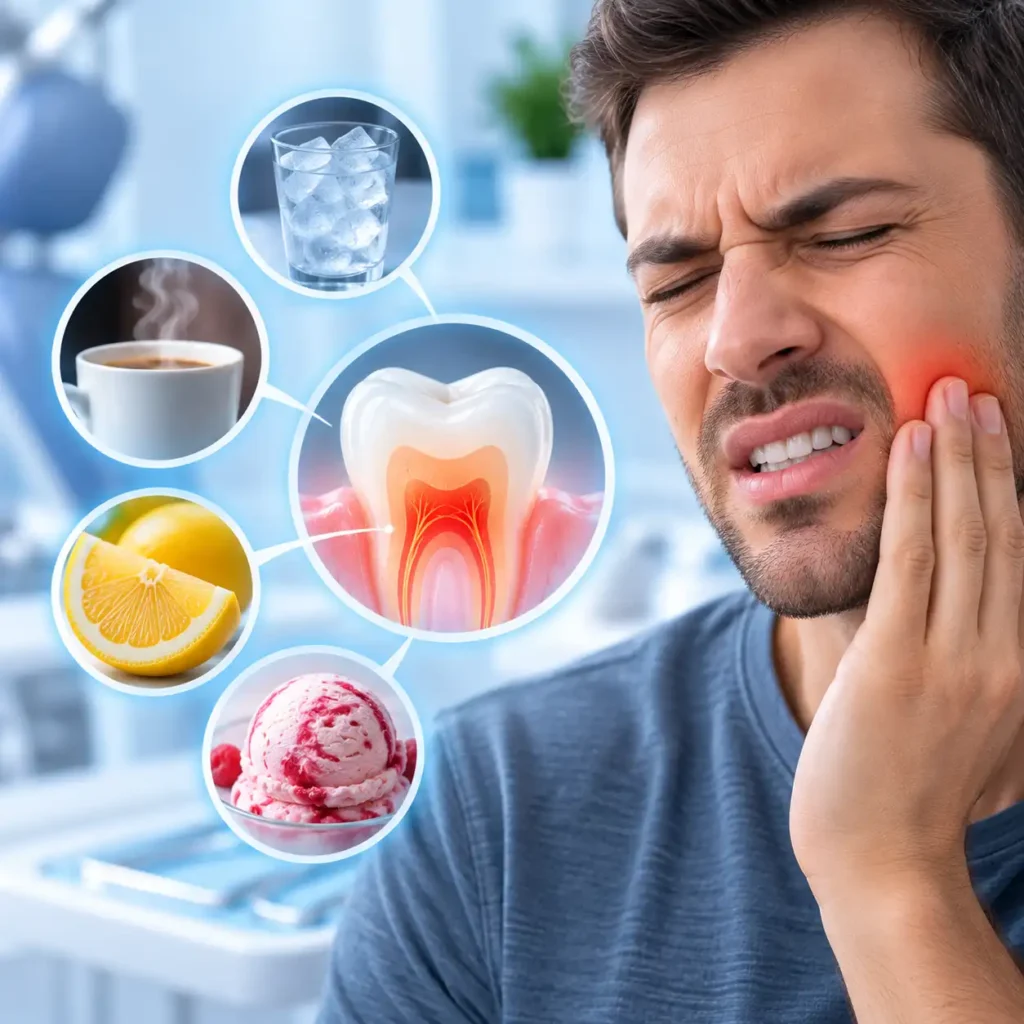
What Causes Sensitive Teeth
- Brushing too hard: Too much pressure or a hard-bristled toothbrush wears down enamel and can push gums back
- Acidic foods and drinks: Citrus fruits, tomatoes, coffee, wine, and soda can gradually wear down enamel
- Gum recession: Thinning or receding gums expose the sensitive root surface
- Teeth grinding (bruxism): Grinding or clenching wears down enamel and can expose dentin
- Cracked or chipped teeth: A crack can let irritants reach the inner tooth
- Gum disease: Swollen or infected gums can expose tooth roots
- Plaque buildup near the gumline
- Teeth whitening products: Some can increase sensitivity temporarily
- Recent dental work: Fillings, cleanings, or other treatments can cause short-term sensitivity that usually fades
- A worn or damaged filling
A Few Specific Patterns Worth Knowing
Sudden Sensitivity
Sensitivity in One Tooth
What You Can Do at Home
- Try a desensitizing toothpaste. These work by blocking the tiny tubules in dentin from transmitting pain signals to the nerve, or by helping strengthen enamel. Look for potassium nitrate or stannous fluoride. Consistent daily use over a few weeks is usually needed for the full effect.
- Switch to a soft-bristled toothbrush and use gentle strokes rather than scrubbing
- Use a fluoride toothpaste and avoid abrasive or whitening toothpastes if they seem to make sensitivity worse
- Limit acidic foods and drinks, and use a straw for acidic beverages to reduce contact with your teeth
- Rinse with water after eating or drinking something acidic, rather than brushing right away
- Ask about a mouth guard if you grind your teeth at night
What Happens If It's Left Untreated
When to See a Dentist
Professional Treatment Options
Ways We Can Treat Sensitive Teeth
1. Fluoride Varnish
2. Dental Bonding or Dentin Sealant
3. Root-Surface Protection
4. Gum Graft
5. Treat the Underlying Cause
How We Treat Sensitive Teeth
Related Reading
Medically Reviewed Information
Medically reviewed by Dr. Matthew Roper, DDS. Last updated September 29, 2026.
Dr. Roper is a licensed general dentist who earned his Doctorate of Dental Medicine from A.T. Still University in Mesa.
This information is for educational purposes and does not replace a professional diagnosis.
Frequently Asked Questions
Why are my teeth suddenly sensitive?
Sudden sensitivity is often linked to a specific recent cause: a new cavity or crack, recent teeth whitening, or a change in brushing habits. It’s worth having checked rather than waiting to see if it resolves.
What toothpaste is good for sensitive teeth?
Look for a desensitizing toothpaste containing potassium nitrate or stannous fluoride, both well-established for blocking sensitivity signals. It typically takes a few weeks of consistent use to notice the full effect. Your dentist can recommend a specific option if over-the-counter versions aren’t helping.
Can sensitive teeth go away on their own?
Sometimes. Sensitivity after a dental procedure, for example, often fades within a few days to weeks. But ongoing sensitivity usually has an underlying cause that needs to be addressed rather than something that resolves by itself.
Is tooth sensitivity a sign of a cavity?
It can be, but it’s not the only possible cause. Sensitivity is also commonly caused by enamel wear, gum recession, or grinding. A dental exam is the most reliable way to know for sure.
Does teeth whitening cause sensitivity?
It can for some people, and it’s usually temporary. If whitening-related sensitivity is severe or doesn’t improve, let your dentist know; there are gentler options available.
Neighborhoods We Serve
Ocotillo Trails Family Dentistry is proud to welcome patients from San Tan Valley and the surrounding communities, including:
Driving Directions to Our San Tan Valley Dental Office
Visiting Ocotillo Trails Family Dentistry for sensitive teeth? Our office is at 40815 N Ironwood Rd #102, San Tan Valley, AZ 85140. Travel along N Ironwood Road toward E Ocotillo Road, enter the property, and continue to Suite 102.