
Wisdom Teeth Removal in San Tan Valley, AZ
Pain, swelling, infection, or an impacted wisdom tooth can make the back of your mouth difficult to ignore. Ocotillo Trails Family Dentistry provides wisdom teeth evaluations and removal in San Tan Valley, helping patients determine whether extraction is appropriate and what type of care their situation requires.
San Tan Valley (480) 457-1977
Gilbert (480) 963-9900
Mesa (480) 830-3344

When a Wisdom Tooth Needs More Than Monitoring
Not every wisdom tooth needs to be removed. When a third molar erupts normally, remains healthy, and can be cleaned effectively, your dentist may recommend continuing to monitor it. Removal becomes more relevant when the tooth is painful, infected, impacted, difficult to maintain, or beginning to affect nearby teeth or gums.
At Ocotillo Trails Family Dentistry, the decision starts with an examination rather than automatically recommending extraction.
We evaluate the position and condition of your wisdom teeth, determine whether they are contributing to your symptoms, and explain whether monitoring, removal, or referral for more complex care is appropriate.
Have a Painful or Infected Wisdom Tooth?
Severe wisdom tooth pain, facial or gum swelling, drainage, or other signs of infection deserve prompt dental evaluation.
An urgent appointment allows your dentist to identify whether a wisdom tooth is actually responsible for the problem and determine what treatment should happen next.
Depending on the condition of the tooth, that may involve extraction, management of an infection, or referral for more complex surgical care.
For broader urgent dental concerns, patients can also visit our Emergency Dental Services page.
Wisdom Teeth Care Based on the Tooth’s Position
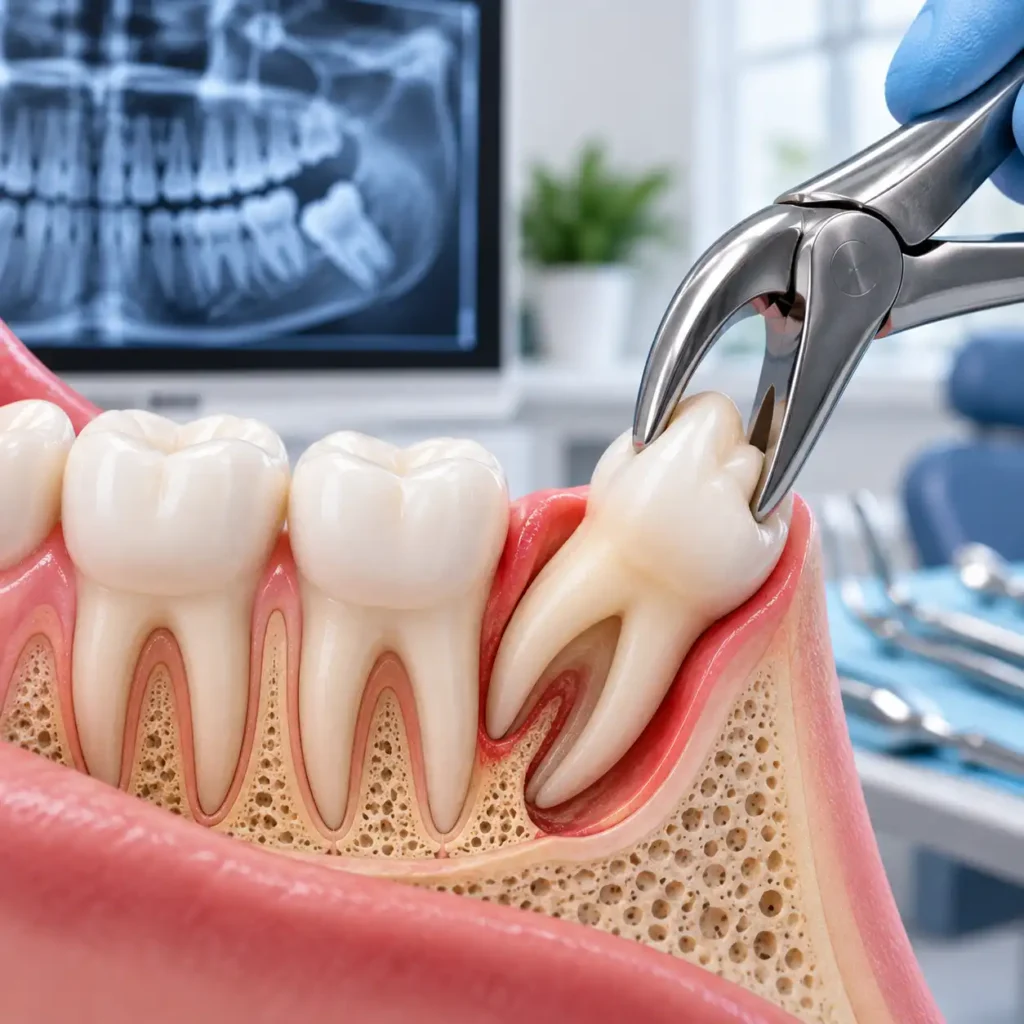
Wisdom teeth can require different approaches depending on how they have developed. A fully erupted wisdom tooth that requires removal may be relatively straightforward to access. A tooth that is partially trapped beneath the gums, positioned at an angle, or impacted in the jaw can require a more involved approach.
Digital X-rays help your dentist evaluate the position of the wisdom tooth, its roots, nearby teeth, and surrounding structures before treatment is planned.
If the position or complexity of an impacted wisdom tooth requires care beyond what is appropriate in our office, we can discuss referral for the necessary surgical treatment.
Our Wisdom Teeth Removal Process
1. Evaluate Your Symptoms
Your dentist begins by discussing any pain, swelling, tenderness, difficulty chewing, or other concerns you have noticed around the wisdom tooth.
We also determine whether the symptoms appear to be coming from the third molar or another dental problem.
2. Examine the Wisdom Teeth
The back of your mouth is examined for eruption, gum inflammation, infection, decay, and the condition of nearby teeth.
This helps determine whether the wisdom tooth can be maintained or whether removal should be considered.
3. Review Digital X-Rays
Digital X-rays may be used to evaluate wisdom teeth that cannot be fully assessed through a visual examination.
The images help show tooth position, root development, impaction, and the relationship to surrounding structures.
4. Plan the Appropriate Treatment
Your dentist explains whether the wisdom tooth can be monitored, removed in the dental office, or requires referral for more complex treatment.
You will have an opportunity to discuss the procedure, comfort options, recovery, and expected costs before treatment begins.
6. Remove the Wisdom Tooth
The tooth is carefully removed using an approach based on its position and condition.
The procedure may differ depending on whether the wisdom tooth has fully erupted or requires more involved access.
Review Your Recovery Instructions
Before leaving, you will receive instructions for protecting the extraction site, managing expected tenderness or swelling, eating during early recovery, and knowing when to contact the office.
Why Choose Ocotillo Trails Family Dentistry for Wisdom Teeth Care?
Wisdom teeth treatment should begin with determining whether removal is actually necessary.
Individual Wisdom Tooth Evaluation
We evaluate symptoms, eruption, tooth position, nearby teeth, and other relevant findings before recommending extraction.
Digital X-Rays
Digital X-rays help us assess wisdom tooth position and surrounding structures when imaging is appropriate.
Conservative Treatment Decisions
Healthy, functional wisdom teeth do not automatically need to be removed. We base treatment recommendations on your dental findings and individual risks.
Comfort-Focused Dental Care
Local anesthesia is used during tooth removal, and nitrous oxide is available for appropriate patients who may benefit from additional relaxation.
Schedule a Wisdom Teeth Evaluation in San Tan Valley
If a wisdom tooth is painful, impacted, infected, or creating problems around the back of your mouth, an evaluation can help determine whether removal is the appropriate next step.
Ocotillo Trails Family Dentistry can examine your wisdom teeth, review digital X-rays when appropriate, and explain whether monitoring, extraction, or referral for more complex care is recommended.
Kind Words From Our Patients
“I was nervous about having my wisdom teeth removed, but the dentist explained the procedure clearly and made sure I understood what to expect afterward.”
“My wisdom tooth had been causing discomfort, and the team carefully evaluated the area before discussing removal. The whole visit felt organized and reassuring.”
“The dentist answered all my questions about wisdom teeth removal, recovery, and aftercare. I appreciated how clearly everything was explained before the procedure.”
Frequently Asked Question (FAQs)
Do all wisdom teeth need to be removed?
No. Healthy wisdom teeth that erupt properly, function normally, and can be kept clean may sometimes remain in place with regular monitoring. Removal is more likely to be recommended when there is pain, infection, decay, gum disease, impaction, damage to another tooth, or another clinical concern.
How do I know if my wisdom teeth need to come out?
A dental examination and X-rays are the best way to determine whether removal is appropriate. Pain, swelling, recurrent gum infections, difficulty cleaning the area, or an impacted tooth may indicate a problem. Some wisdom-tooth concerns can also develop without obvious symptoms.
Does wisdom teeth removal hurt?
Local anesthesia is used to numb the treatment area before extraction. Patients may notice pressure or movement rather than sharp pain during the procedure. Tenderness and swelling can occur afterward, and your dental team will provide instructions for managing the expected recovery period.
What is an impacted wisdom tooth?
An impacted wisdom tooth is unable to erupt normally into a functional position. It may remain partly or completely beneath the gums or bone or grow at an unfavorable angle. Your dentist can use an examination and dental X-rays to determine the tooth’s position.
How long does wisdom teeth removal recovery take?
Recovery depends on how many teeth are removed, their position, the complexity of treatment, and your individual healing response. Tenderness and swelling are commonly most noticeable during early recovery, while the extraction sites continue healing for longer. Your dentist can provide procedure-specific expectations.
What can I eat after wisdom tooth extraction?
Soft foods are usually easier to manage during the first part of recovery. Your dental team will explain when you can gradually return to your usual diet based on your procedure and healing. Avoid foods or eating habits that could disturb the extraction site.
What is dry socket after wisdom teeth removal?
Dry socket occurs when the protective blood clot at an extraction site is lost or breaks down before healing has progressed sufficiently. It can cause significant pain and requires dental attention. Following post-operative instructions, including avoiding smoking and straws, helps protect the extraction site.
Can an infected wisdom tooth be removed?
Sometimes, but the appropriate treatment depends on the severity and location of the infection, tooth position, your medical history, and other findings. Your dentist should evaluate the area before deciding on extraction timing and whether any additional treatment is necessary.
How much does wisdom teeth removal cost?
The cost depends on how many wisdom teeth require removal, whether they are fully erupted or impacted, procedure complexity, diagnostic needs, and dental benefits. After your evaluation, Ocotillo Trails Family Dentistry can explain the recommended treatment and associated fees.
Does dental insurance cover wisdom teeth removal?
Many dental plans provide some coverage for medically necessary extractions, but benefits vary considerably between policies. Impacted and surgical wisdom teeth may also be processed differently from straightforward extractions. Our team can help review available dental benefits, but your insurer determines final coverage.
Neighborhoods We Serve
Ocotillo Trails Family Dentistry is proud to welcome patients from San Tan Valley and the surrounding communities, including:
Driving Directions to Our San Tan Valley Dental Office
Visiting our office for wisdom teeth concerns? Ocotillo Trails Family Dentistry is at 40815 N Ironwood Rd #102, San Tan Valley, AZ 85140. Follow N Ironwood Road toward E Ocotillo Road and continue into the property to Suite 102.