









Gum disease is a common problem many people face even when they brush and eat well. The gums around our teeth are more important than many people realize. They help hold our teeth in place, protect the bone underneath, and keep our mouth healthy. When gums become unhealthy, we get gum disease, and this worries a lot of people.
The good thing is if gum disease is caught early, it can often be reversed. But if it develops too far, it becomes much harder to fix. In this post, we’ll explain what gum disease is, how it develops, and most importantly when and how it can be reversed.
What Is Gum Disease?
Gum disease happens when bacteria in your mouth start causing problems for your gums. You know that sticky feeling on your teeth when you wake up in the morning? That’s plaque, and it’s full of tiny bacteria. When you don’t brush and floss well enough, this plaque builds up around your teeth and gums.
Think of plaque like a sticky film that sits right where your teeth meet your gums. If you leave it there too long, it turns into something harder called tartar. Your toothbrush can’t remove tartar once it forms. That’s when the real trouble starts because the bacteria in plaque and tartar make your gums angry and swollen.
The Two Main Types of Gum Disease
Gingivitis: The Early Stage
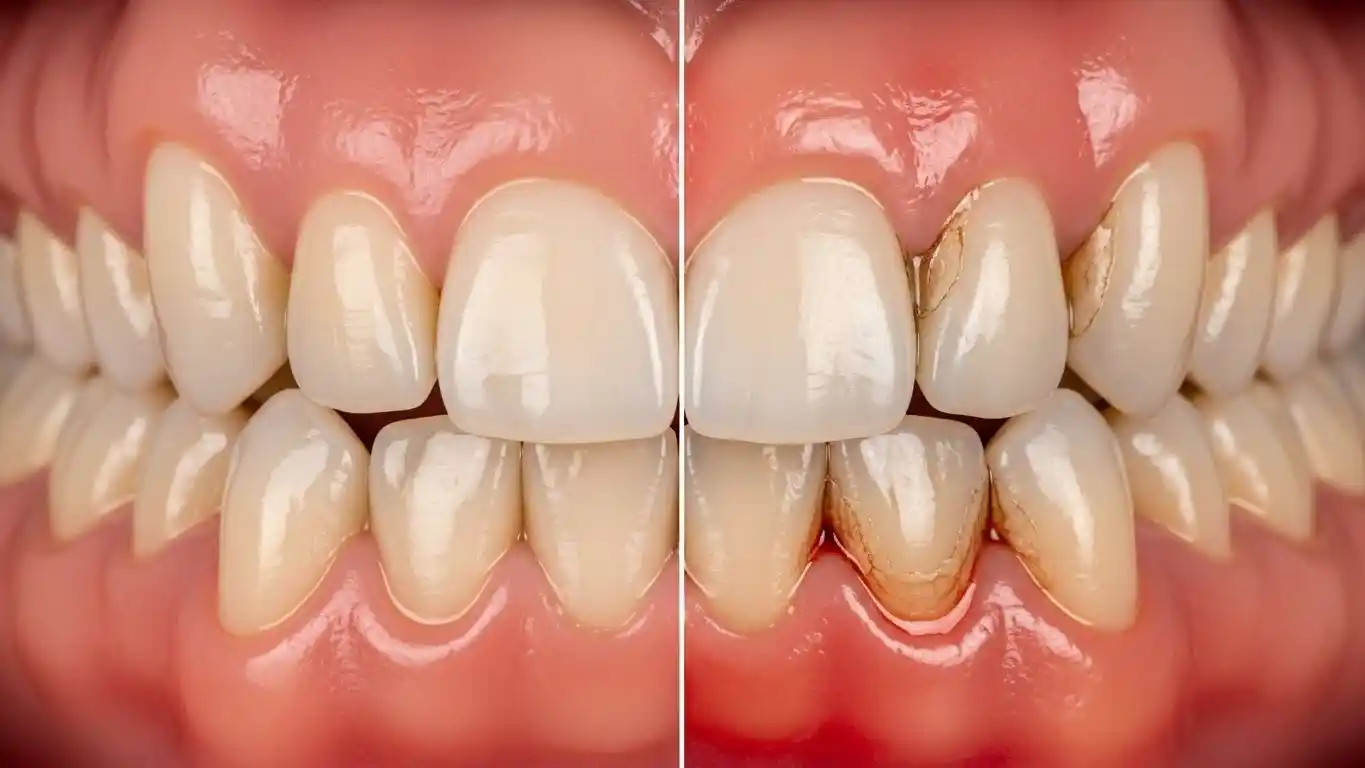
Gingivitis is the first stage of gum disease, and here’s the really important part – it can be reversed! When you have gingivitis, your gums become red and puffy. They might bleed when you brush your teeth or eat something hard like an apple. You might also notice bad breath that doesn’t go away even after brushing.
At this stage, the damage is only happening to your gums. The bone that holds your teeth in place is still fine. This is why gingivitis can be turned around if you catch it early and start taking better care of your teeth.
Periodontitis: The Advanced Stage
If gingivitis doesn’t get treated, it turns into periodontitis. This is much more serious. Now the bacteria have gotten under your gums and started attacking the bone that keeps your teeth in place. This damage is permanent and cannot be completely reversed.
When you have periodontitis, your gums start pulling away from your teeth. This creates pockets or spaces between your teeth and gums where more bacteria can hide. These pockets get deeper over time, and regular brushing and flossing can’t reach down there to clean them out.
The Four Stages of Gum Disease
Understanding the stages helps you know where you stand:
Stage 1 – Gingivitis
Your gums are red, swollen, and bleed easily. The good news? This stage is completely reversible with proper care.
Stage 2 – Early Periodontitis
The infection has reached your bone, and you start losing some of it. Your gums might pull away from your teeth by 4-5 millimeters. At this stage, you can stop the disease from getting worse, but you can’t fully reverse the damage.
Stage 3 – Moderate Periodontitis
More bone is lost, your gums pull away even further (6-7 millimeters), and your teeth might start feeling loose. The pockets around your teeth get deeper and harder to clean.
Stage 4 – Advanced Periodontitis
This is the most severe stage. A lot of bone is gone, your teeth become very loose, and you might lose teeth. Your gums could have pus, and you’ll probably have constant bad breath.
Can Gum Disease Really Be Reversed?
Here’s the straight answer: gingivitis can be reversed, but periodontitis cannot be fully reversed. However, even advanced gum disease can be managed and stopped from getting worse.
When you have gingivitis, professional cleaning from your dentist plus good brushing and flossing at home can bring your gums back to health. The redness and swelling will go away, the bleeding will stop, and your gums will look pink and healthy again.
With periodontitis, you’ve already lost some bone and tissue. That part won’t grow back completely. But you can stop the disease right where it is. Think of it like stopping a leak in your house – you can’t undo the water damage, but you can fix the leak so no more damage happens.
Warning Signs to Watch For
Pay attention to these signs that might mean you have gum disease:
- Gums that bleed when you brush or floss
- Red, swollen, or tender gums
- Gums that have pulled away from your teeth, making your teeth look longer
- Bad breath that won’t go away
- Pus between your teeth and gums
- Loose teeth or teeth that feel different when you bite
- Changes in how your teeth fit together when you bite
Why Does Gum Disease Happen?
The main reason is poor oral hygiene, but other things can make it worse:
- Poor Brushing and Flossing: When you don’t brush twice a day and floss once a day, plaque builds up fast. After just three days, plaque can harden into tartar.
- Smoking: This is one of the biggest risk factors. Smoking makes it harder for your gums to heal and weakens your immune system.
- Diabetes: People with diabetes are more likely to get gum disease. High blood sugar makes it easier for infections to take hold.
- Genetics: Some people are just more likely to get gum disease because of their genes. If your parents had gum problems, you might too.
- Stress: When you’re stressed out, your body has a harder time fighting infections, including gum disease.
- Medications: Some medicines can affect your gums by reducing saliva or making your gums grow bigger.
- Hormonal Changes: Pregnancy, periods, and menopause can make gums more sensitive and prone to disease.
Home Remedies That Can Help
If you catch gingivitis early, these home remedies can help alongside good brushing and flossing:
- Salt Water Rinse: Mix half a teaspoon of salt in warm water and swish it around your mouth for 30 seconds. Do this 2-3 times a day. Salt helps reduce swelling and kills bacteria.
- Hydrogen Peroxide Rinse: Mix equal parts of 3 percent hydrogen peroxide and water. Swish gently for 30 seconds and spit it out. This kills bacteria and helps bleeding gums. Never swallow it!
- Oil Pulling: Take a tablespoon of coconut oil and swish it in your mouth for 15-20 minutes, then spit it out. This old practice can reduce bacteria and plaque.
- Aloe Vera: Use pure aloe vera gel on your gums. It has properties that fight inflammation and bacteria.
- Turmeric Paste: Mix turmeric powder with a little water to make a paste. Put it on your gums for 5-10 minutes, then rinse. Turmeric fights inflammation and kills germs.
- Green Tea: Drinking green tea or using it as a mouth rinse can help because it has antioxidants that reduce inflammation.
- Vitamin C: Make sure you get enough vitamin C from oranges, strawberries, or supplements. It helps build healthy gums and fight infections.
Remember, these home remedies work for gingivitis but are NOT a replacement for seeing a dentist. If your symptoms don’t improve in a week or two, you need professional help.
Professional Treatments
When home care isn’t enough, your dentist has several treatments:
- Professional Cleaning: For gingivitis, a regular dental cleaning might be all you need. The dentist or hygienist will remove all the plaque and tartar from your teeth.
- Scaling and Root Planing: This is a deep cleaning for periodontitis. Your dentist will numb your gums and then clean deep under the gum line to remove plaque and tartar from the roots of your teeth. They’ll also smooth out rough spots on the roots so bacteria can’t stick there as easily. This usually takes one or two visits.
- Antibiotics: Your dentist might give you antibiotics to help fight the infection. These could be pills or gels applied directly to your gums.
- Laser Treatment: Some dentists use lasers to remove infected gum tissue and kill bacteria. This method usually causes less pain and heals faster.
- Surgery: For advanced cases, you might need surgery. This could include flap surgery (where they lift your gums to clean deeper) or bone grafts (to replace lost bone).
How to Prevent Gum Disease
Prevention is easier than treatment. Here’s what you should do:
- Brush Properly:Brush for two full minutes, twice a day. Use a soft-bristled toothbrush and hold it at a 45-degree angle to your gums. Use gentle circular motions. Don’t scrub hard – that can hurt your gums.
- Floss Every Day:Flossing removes plaque from between your teeth where your toothbrush can’t reach. Do it at least once a day, preferably before bed.
- Use Mouthwash:An antimicrobial mouthwash can kill bacteria that brushing and flossing miss. Rinse for 30 seconds after brushing.
- See Your Dentist Regularly:Visit your dentist twice a year for checkups and cleanings. If you have gum disease, you might need to go more often.
- Eat Healthy:Foods rich in vitamins and minerals help keep your gums strong. Eat plenty of fruits, vegetables, and foods with calcium and vitamin C. Cut down on sugary snacks and drinks.
- Quit Smoking:If you smoke, quitting is one of the best things you can do for your gums. Smoking makes gum disease worse and harder to treat.
- Manage Stress:Find ways to reduce stress through exercise, meditation, or hobbies. Less stress means a stronger immune system.
- Control Diabetes:If you have diabetes, keep your blood sugar under control. This will help prevent gum problems.
The Connection Between Gum Disease and Overall Health
Gum disease isn’t just about your mouth. Research shows it can affect your whole body. The bacteria from gum disease can enter your bloodstream and travel to other parts of your body.
Studies have found links between gum disease and:
- Heart disease and stroke
- Diabetes (it makes diabetes harder to control)
- Respiratory diseases
- Pregnancy complications
- Dementia
This is why taking care of your gums is so important for your overall health, not just your smile.
How Long Does It Take to Reverse Gingivitis?
If you have gingivitis and start taking better care of your teeth, you should see improvement within a few days. The bleeding might stop first, then the redness and swelling will go down. Full recovery usually takes a few weeks of consistent good care.
After a professional cleaning, your gums might be sore for a couple of days, but then they should start healing quickly if you keep up with brushing and flossing.
Ready to Take Control of Your Gum Health Today?
Don’t let gum disease steal your smile or harm your overall health. If you’re experiencing any signs of gum problems like bleeding gums, bad breath, or swollen tissue, the time to act is now. Schedule an appointment with your dentist this week for a professional evaluation.
Remember, gingivitis can be completely reversed when caught early, but waiting could mean permanent damage. Take the first step toward healthier gums by booking that dental checkup today. Your teeth and your body will thank you for years to come.
Conclusion
So, can gum disease be reversed? Yes, if you catch it in the gingivitis stage. At this early point, with professional cleaning and good home care, you can completely turn things around and get your gums back to being healthy.
Once gum disease has progressed to periodontitis, you can’t fully reverse the damage. But don’t give up! You can stop it from getting worse and keep your teeth and gums as healthy as possible. With the right treatment and good daily care, many people with periodontitis keep their teeth for their whole life.
The key is catching it early and taking action right away. If you notice any warning signs like bleeding gums or bad breath, don’t wait. See your dentist as soon as possible. The earlier you start treatment, the better your results will be.
Remember, your mouth is the gateway to your body. Healthy gums mean a healthy you. Take a few minutes each day to brush properly, floss, and take care of your gums. Your future self will thank you for it!
Frequently Asked Questions
What is gum disease?
Gum disease, also called periodontal disease, is an infection of the gums caused by plaque and bacteria. It can lead to red, swollen, or bleeding gums and, in severe cases, damage the bone that supports your teeth.
Can gum disease be reversed?
Yes, early-stage gum disease (gingivitis) can be reversed with proper brushing, flossing, and professional dental cleaning. Advanced gum disease (periodontitis) cannot be fully reversed, but it can be managed to prevent further damage.
What are the early signs of gum disease?
Early signs include red or swollen gums, bleeding while brushing or flossing, persistent bad breath, and tender gums. Catching these early can help reverse the disease.
What causes gum disease?
The main cause is plaque buildup from poor oral hygiene. Other factors include smoking, diabetes, stress, hormonal changes, medications, and genetics.
How long does it take to reverse gum disease?
If you have gingivitis, you can see improvement in a few days, with full recovery in 2–4 weeks when following good oral hygiene and professional care.