



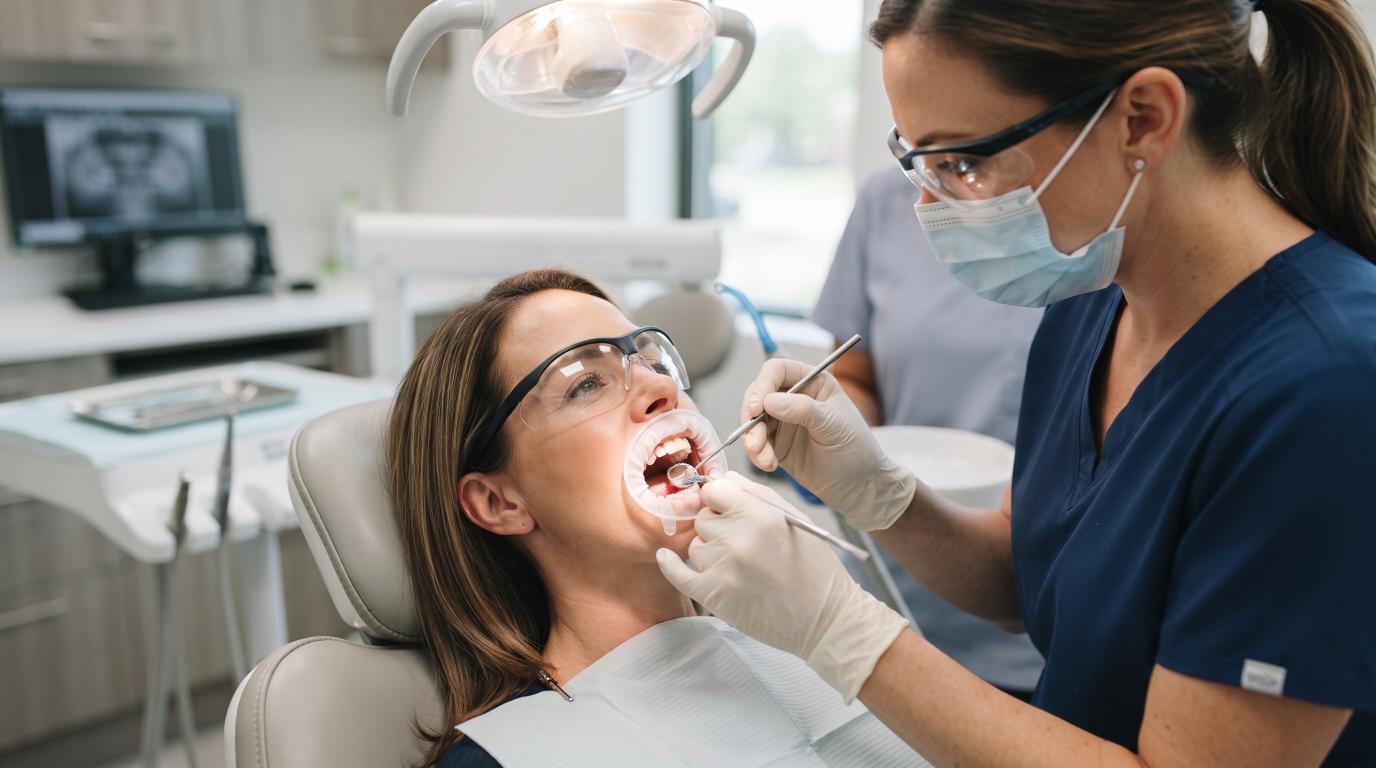
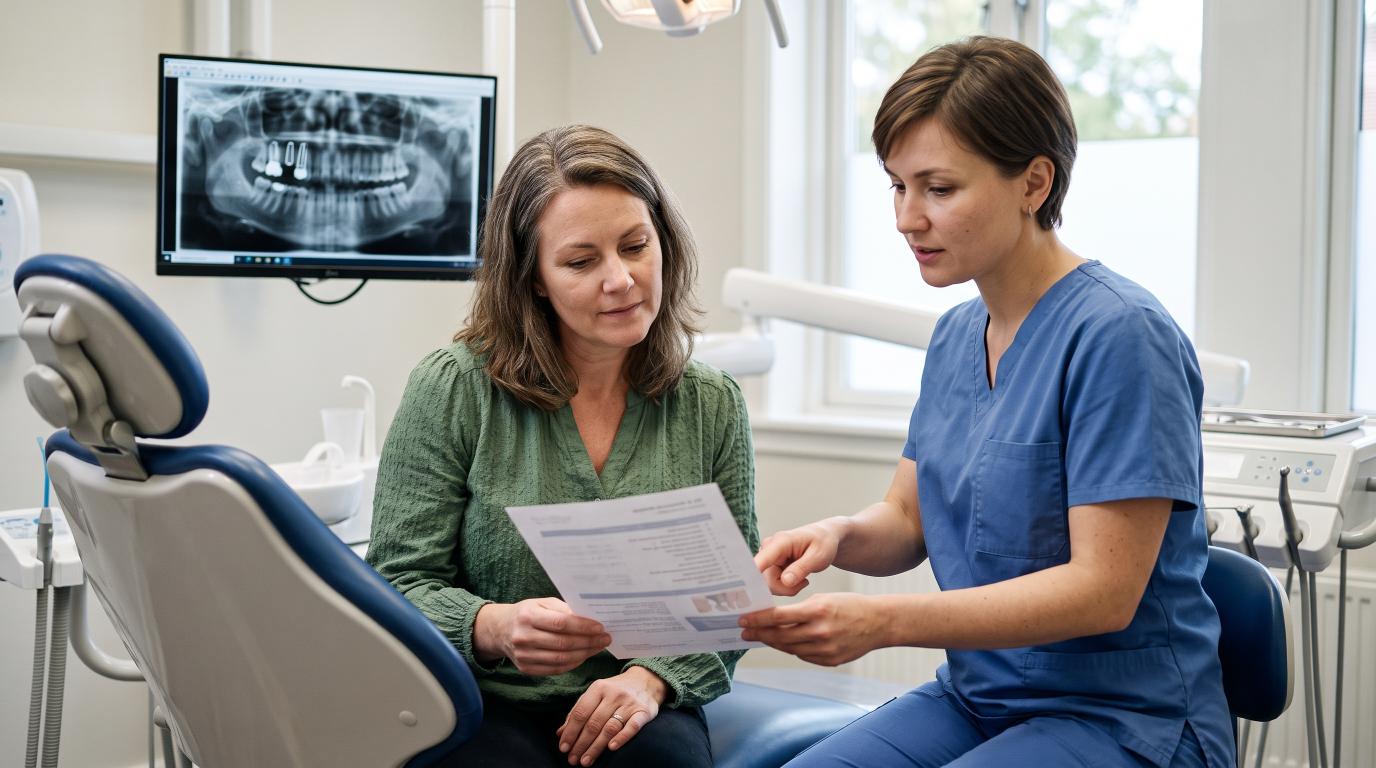






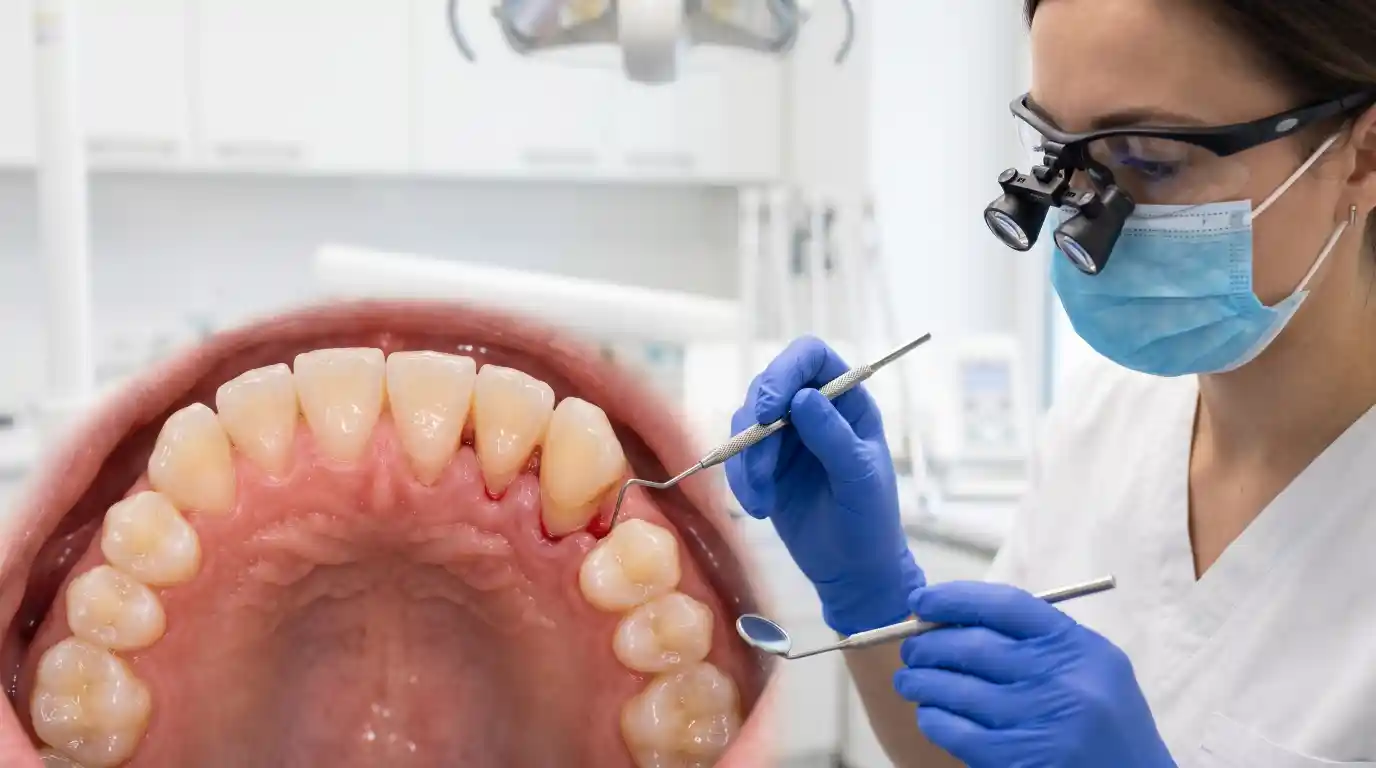
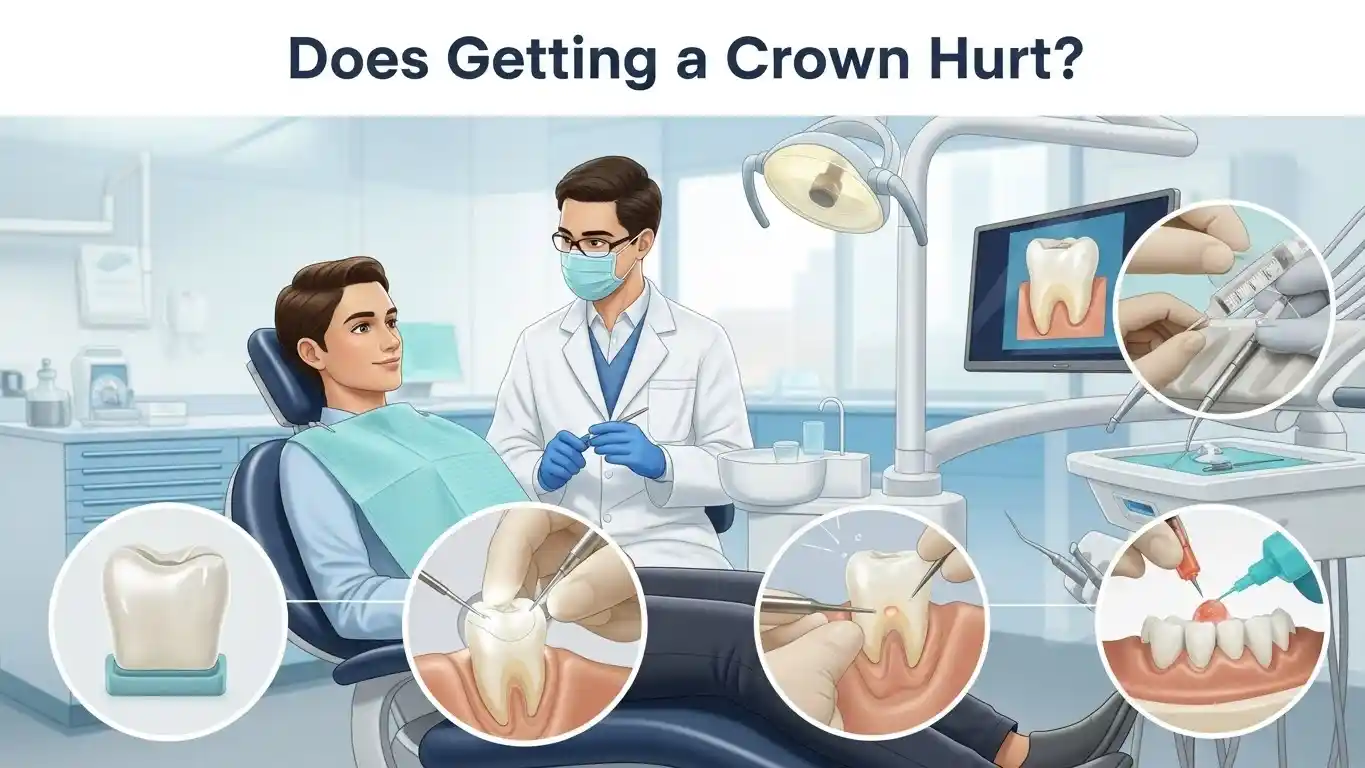
No, getting a dental crown does not hurt during the procedure. Your dentist will use local anesthesia to numb the area completely before starting any work. You might feel some pressure, but you won’t feel pain. After the procedure, most people experience mild discomfort for a few days, which is easy to manage with over-the-counter pain medicine. Let’s break down exactly what happens during the crown procedure and what you can expect afterward.
What is a Dental Crown?
A dental crown is like a cap that fits over your tooth. It covers the entire visible part of your tooth above the gum line. Dentists use crowns to protect damaged or weak teeth and make them strong again.
Crowns are made from different materials like porcelain, ceramic, metal, or a combination of these. The crown helps your tooth look natural and work just like your other teeth.
Why Do You Need a Dental Crown?
Your dentist might recommend a crown for several reasons:
- You have a large cavity that’s too big for a regular filling
- Your tooth is cracked or broken
- You had a root canal treatment
- Your tooth is very weak and needs protection
- You want to cover a tooth that looks bad or is discolored
- You need to support a dental bridge
Does the Crown Procedure Hurt?
The simple answer is no. Getting a dental crown should not hurt during the procedure. Here’s why you won’t feel pain:
Local Anesthesia Keeps You Comfortable
Before your dentist starts working on your tooth, they will numb the area with local anesthesia. This is the same numbing medicine they use for fillings. Once the area is numb, you won’t feel any pain during the procedure.
You might feel some pressure as the dentist works on your tooth, but it shouldn’t hurt. Many people say they feel nervous before the appointment, but the actual procedure is much easier than they expected.
Modern Dental Technology Helps Too
Today’s dental technology makes getting a crown more comfortable than ever. Dentists use precise tools and techniques that cause less discomfort. Some dental offices even offer same-day crowns using special computer technology, which means fewer appointments and less time in the dental chair.
What Happens During the Crown Procedure?
Understanding the steps can help you feel less worried. Here’s what happens when you get a dental crown:
Preparing Your Tooth
During your first appointment, your dentist will examine your tooth and take X-rays. Then they will:
- Give you local anesthesia to numb the area
- Remove any decay from your tooth
- Shape your tooth so the crown can fit over it
- Take an impression or digital scan of your tooth
- Place a temporary crown to protect your tooth
The temporary crown is important because it protects your prepared tooth while the permanent crown is being made. The whole first visit usually takes about an hour.
Waiting for Your Permanent Crown
Your tooth impressions go to a dental lab where technicians create your custom crown. This usually takes one to two weeks. During this time, you’ll wear the temporary crown.
Be careful with your temporary crown. Avoid sticky or very hard foods that might pull it off. Brush gently around it, and try to chew on the other side of your mouth.
Getting Your Permanent Crown
When your permanent crown is ready, you’ll come back for your second appointment. Your dentist will:
- Remove the temporary crown
- Clean your tooth thoroughly
- Check that the new crown fits perfectly
- Make any needed adjustments
- Cement the permanent crown in place
The dentist might use a numbing agent again to keep you comfortable. Once the crown is cemented, they’ll check your bite to make sure everything feels right.
What About Pain After the Procedure?
Most people have some mild discomfort after getting a crown, but it’s usually not bad. Here’s what’s normal and what to expect:
The First Few Days
After your appointment, you might experience:
- Mild soreness in your gums where the dentist worked
- Sensitivity to hot or cold foods and drinks
- Tenderness when you bite down
- A strange feeling as you get used to the new crown
This is completely normal. Your mouth just needs time to adjust to the new restoration. The numbing medicine will wear off in a few hours, and you might feel some tenderness at that point.
How Long Does Discomfort Last?
For most people, any discomfort goes away within a few days to two weeks. Crown sensitivity is very common and usually fades quickly as your mouth heals from the procedure.
Your gums might be a bit sore where they meet the crown. This happens because of mild inflammation from dental work. The soreness should get better each day.
Managing Pain and Sensitivity
Here are some easy ways to feel better after getting your crown:
- Take Over-the-Counter Pain Medicine: Ibuprofen or acetaminophen can help with any soreness. Take it as directed on the bottle.
- Use Saltwater Rinses: Mix one teaspoon of salt in a glass of warm water. Swish it around your mouth for a few minutes. Salt has natural properties that help reduce swelling and kill germs.
- Try Toothpaste for Sensitive Teeth: Special toothpaste designed for sensitive teeth can help if your crown feels sensitive to hot or cold.
- Avoid Extreme Temperatures: For the first few days, skip very hot coffee or ice cream. Stick to foods and drinks that are closer to room temperature.
- Chew Carefully: Be gentle when you chew, especially on the side with the new crown. Avoid hard foods like ice or hard candy.
- Use a Soft Toothbrush: Brush gently around the crown area with a soft-bristled toothbrush.
When Should You Call Your Dentist?
While some discomfort is normal, certain symptoms mean you should contact your dentist right away:
Warning Signs to Watch For
- Sharp Pain That Lasts More Than Two Weeks: If your pain doesn’t get better or gets worse after two weeks, something might be wrong.
- Pain When You Bite Down: If it hurts when you chew, your crown might be sitting too high. Your dentist can easily adjust this.
- Swelling or Pus: These could be signs of an infection under the crown.
- Your Bite Feels Wrong: If your teeth don’t come together properly, the crown needs adjustment.
- The Crown Feels Loose: If your crown feels like it’s moving or falls off, see your dentist immediately.
- Constant Throbbing Pain: Pain that doesn’t go away with medicine might mean the tooth’s nerve is affected.
Don’t ignore these symptoms. Your dentist can fix most problems quickly with a simple adjustment or treatment.
Why Might a Crown Cause Pain?
Understanding why pain happens can help you prevent it. Here are common reasons a crown might hurt:
Improper Fit
If the crown doesn’t fit just right, it can cause discomfort. A crown that’s too high will hurt when you bite. Your dentist can fix this by adjusting the crown so it matches your natural bite.
Nerve Irritation
The tooth under your crown is still alive and has nerves. Sometimes the preparation process or decay can irritate these nerves. If the nerve was already damaged before you got the crown, you might need a root canal to remove it.
Infection
Even though the crown itself can’t get infected, the tooth underneath can. Bacteria can get in at the edge where the crown meets your tooth, especially if you don’t brush and floss well. An infection needs treatment right away to save the tooth.
Tooth Decay
The natural tooth under your crown can still get cavities. If decay develops near the edge of the crown, it can cause pain. Good dental hygiene helps prevent this.
Teeth Grinding
If you grind your teeth at night, it puts extra pressure on your crown. This can cause pain in your jaw and around the crown. Your dentist might recommend a night guard to protect your teeth.
Gum Recession
Sometimes gums pull away from teeth, exposing the tooth root. This makes the area very sensitive. Gum recession can happen from brushing too hard or from gum disease.
Tips for a Smooth Recovery
Follow these tips to help your crown feel normal faster:
- Practice Good Oral Hygiene: Brush twice a day and floss daily. The tooth under your crown still needs protection from cavities and gum disease.
- Eat Soft Foods at First: For the first day or two, stick to softer foods that are easier to chew. Gradually add harder foods as you feel comfortable.
- Avoid Sticky Foods: Skip sticky candies, caramel, and gum, especially right after getting your crown.
- Don’t Chew Ice or Hard Objects: Hard items can crack or damage your crown.
- Keep Your Follow-Up Appointments: See your dentist for regular check-ups so they can make sure your crown is doing well.
- Tell Your Dentist About Problems: If something doesn’t feel right, call your dentist. Most issues are easy to fix if caught early.
How Long Do Dental Crowns Last?
With good care, dental crowns can last 10 to 15 years or even longer. Some people keep their crowns for 20 years or more. How long your crown lasts depends on:
- How well you take care of it
- What material it’s made from
- Where it is in your mouth
- Whether you grind your teeth
Taking care of your crown is just like taking care of your natural teeth. Brush, floss, and see your dentist regularly.
What About Same-Day Crowns?
Some dental clinics can make your crown in one visit using special technology called CEREC. This means you don’t need a temporary crown or a second appointment.
With same-day crowns, the dentist:
- Prepares your tooth
- Takes digital images
- Makes your crown right there in the office using a milling machine
- Places it the same day
You might still have some mild tenderness, but you only go through the procedure once instead of twice.
Protect Your Smile with a Painless Crown
Getting a dental crown is usually painless thanks to local anesthesia, and any mild soreness afterward is temporary. Crowns help protect and restore your tooth, keeping your smile healthy and strong. Don’t let fear hold you back — if you want a comfortable and professional experience, book an appointment today. Your smile deserves the best care!
Conclusion
Getting a dental crown doesn’t have to be scary. The procedure itself is painless because your dentist uses numbing medicine. Most people only have mild discomfort for a few days afterward, which is easy to manage with simple remedies.
The crown procedure is not painful during treatment thanks to local anesthesia that keeps you comfortable. Some sensitivity for a few days is completely normal as your mouth adjusts to the new restoration. Most discomfort goes away within one to two weeks without any special treatment. However, you should call your dentist if pain lasts longer or gets worse, as this could mean the crown needs a simple adjustment.
A dental crown can save your tooth and help it last for many more years. Don’t let fear of pain stop you from getting the dental care you need. Talk to your dentist about any concerns you have. They can explain exactly what will happen and answer all your questions.
Frequently Asked Questions
Does getting a dental crown hurt?
No. The procedure itself should not hurt because your dentist uses local anesthesia to numb the area. You may feel pressure, but not pain. Mild soreness afterward is normal.
How long does pain last after getting a crown?
Most people feel mild discomfort for a few days up to two weeks. Sensitivity to hot or cold is common but should slowly improve. If pain lasts longer than two weeks, call your dentist.
Why does my dental crown hurt when I bite down?
If it hurts when you bite, the crown may be sitting too high or not fitting correctly. This is easy for your dentist to adjust, so you should schedule a visit.
Can the tooth under a crown get infected?
Yes, the natural tooth underneath can still develop decay or infection. This usually happens if bacteria enter around the edge of the crown. Good brushing and flossing help prevent this.
What can I do to reduce sensitivity after getting a crown?
You can take over-the-counter pain medicine, use saltwater rinses, try toothpaste for sensitive teeth, avoid very hot or cold foods, and chew gently for a few days.