








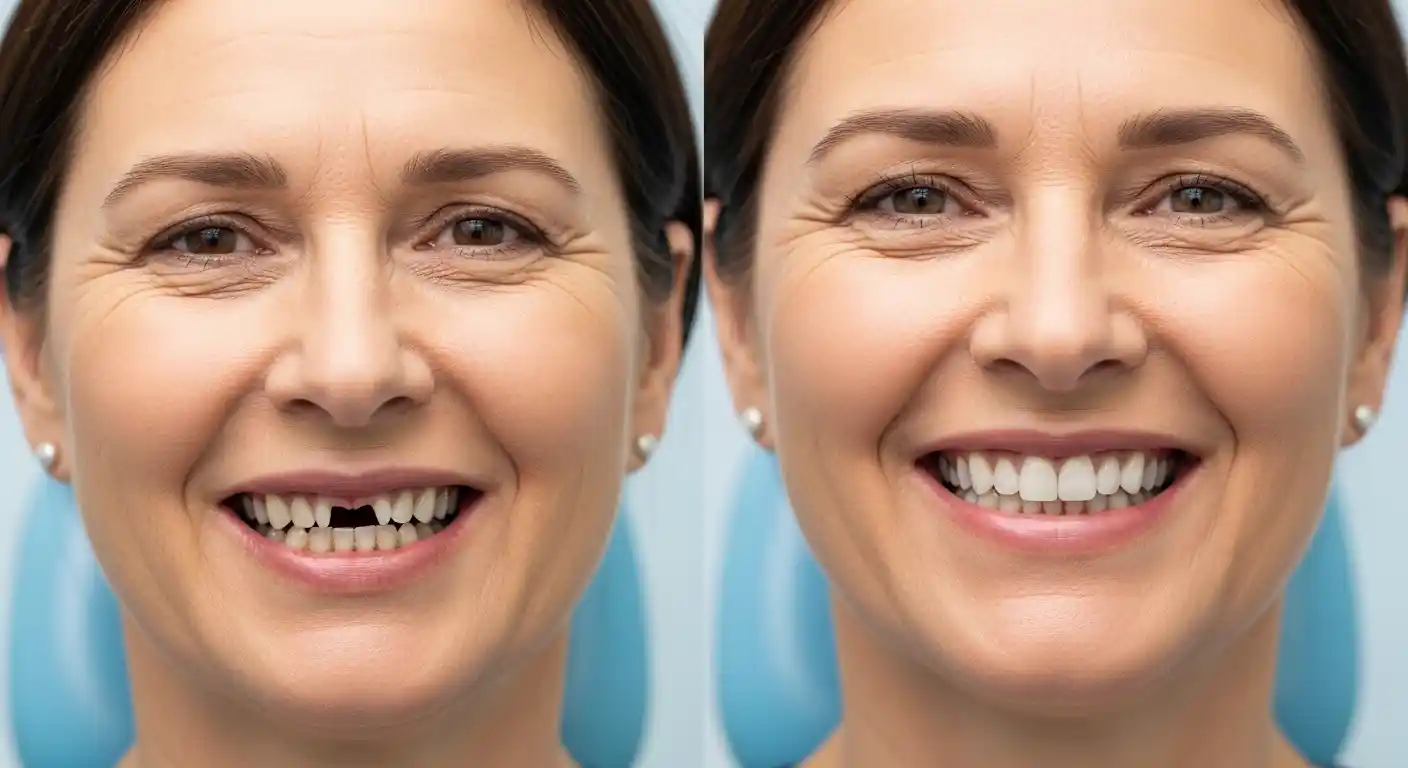
Invisalign uses a set of clear, custom-made plastic trays to slowly straighten your teeth. These trays are hard to see and are a good alternative to metal braces. You wear them most of the day, but you can take them out when eating, brushing your teeth, or for special events. If you have been wondering what Invisalign actually does and whether it can fix your specific dental problem, you are in the right place.
At Santan Dentist in Santa Tan Valley, we work with patients every day who come in with crooked teeth, gaps, bite issues, and smiles they have been unhappy with for years. Invisalign fixes all of these things gradually and discreetly, and most people around you will never even notice you are wearing anything.
What Is Invisalign?
Invisalign is a modern orthodontic treatment that uses a series of clear, removable aligners to gradually shift your teeth into the right position. Instead of metal brackets glued to your teeth and wires tightened every few weeks, you wear a set of custom-made plastic trays that fit snugly over your teeth and apply gentle pressure to move them.
Unlike braces, Invisalign aligners are removable, virtually invisible, and more comfortable than traditional metal braces. You take them out to eat, drink, and brush your teeth, then put them back in. No food restrictions. No poking wires. No obvious metal in your mouth.
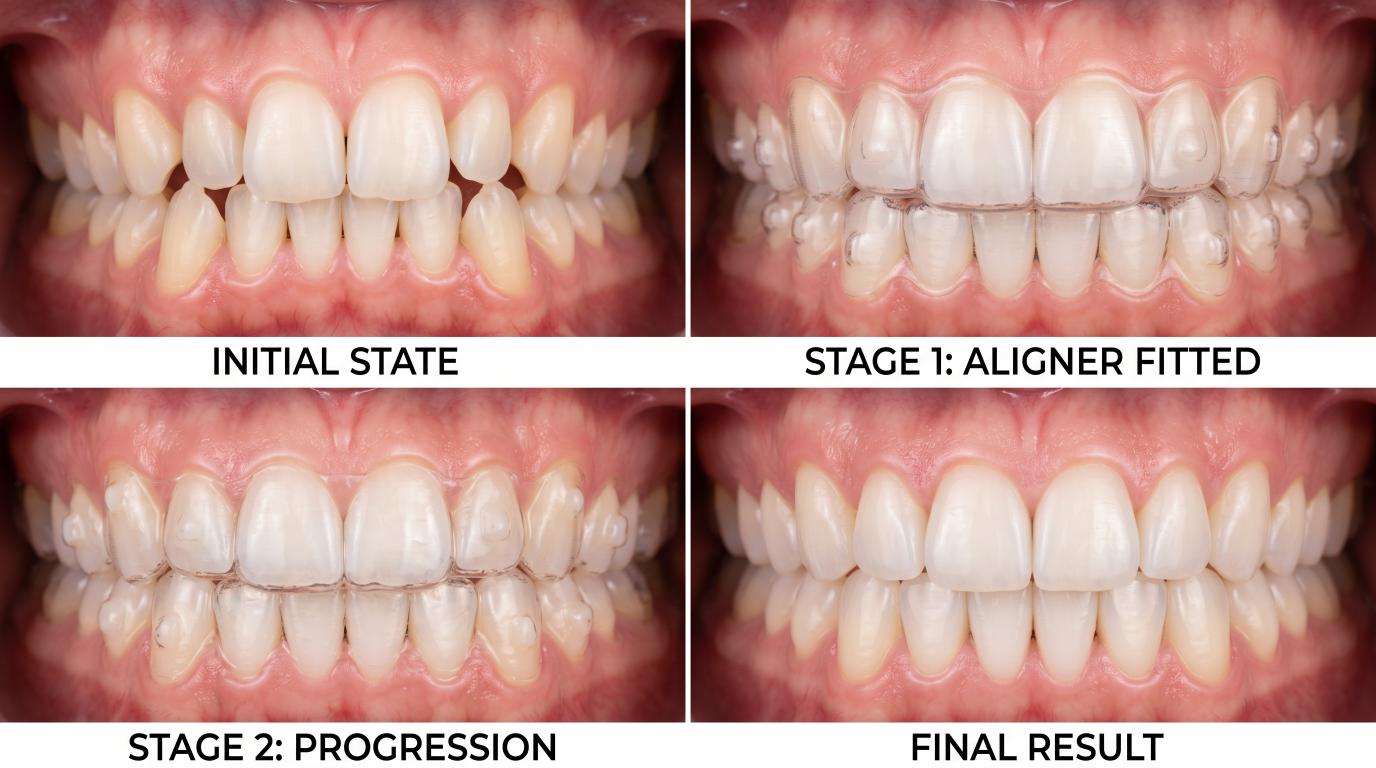
What Does Invisalign Do for Your Teeth?
It physically moves them into better positions over time, and in doing so, it fixes a range of dental problems that used to require metal braces.
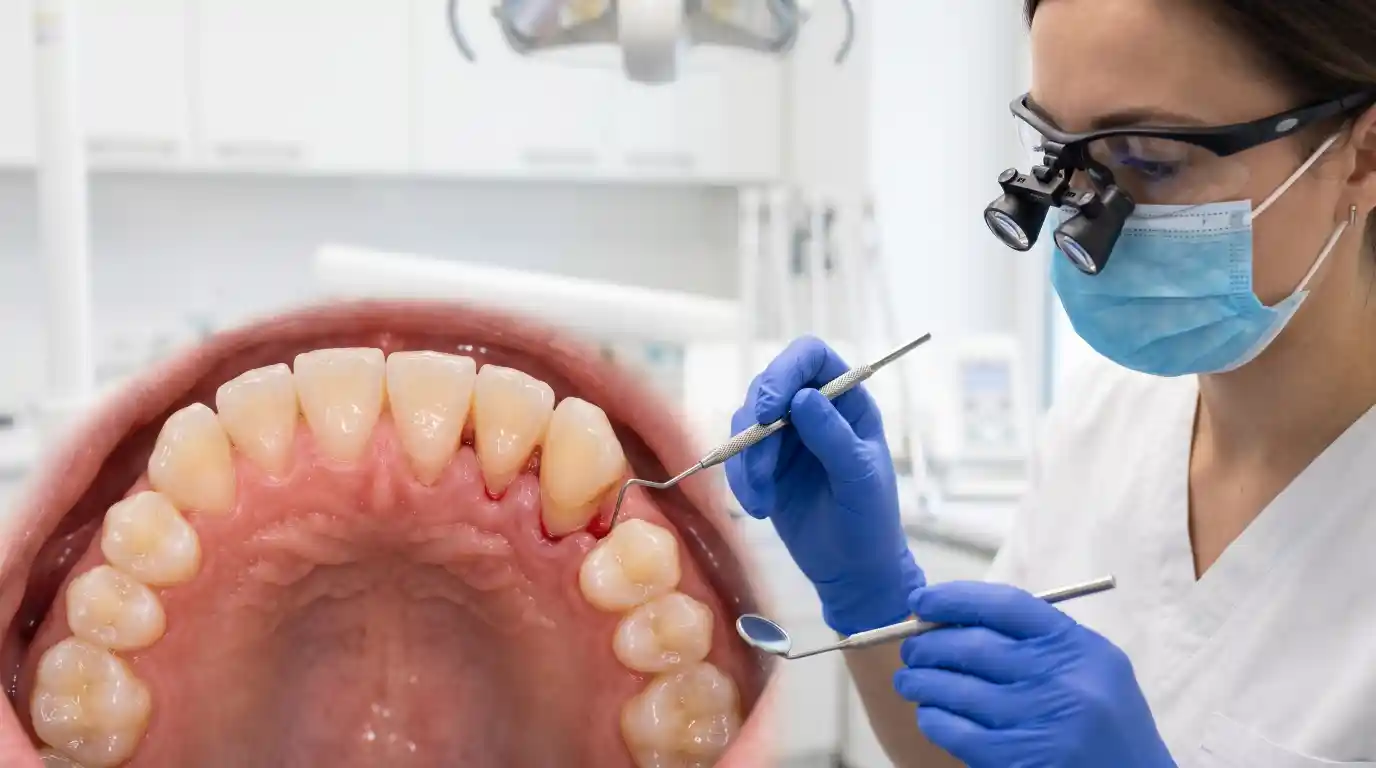
Straightens Crooked Teeth: Teeth that are twisted, rotated, or sitting at odd angles can be guided back into proper alignment through the controlled pressure that each aligner applies.
Fixes Spacing and Gaps: Gaps between teeth are not just a cosmetic issue. They can trap food and lead to gum problems over time. Invisalign closes those gaps by slowly moving the surrounding teeth together.
Corrects Bite Problems: Overbites, underbites, crossbites, and open bites can all affect how you chew, speak, and even how your jaw feels. Orthodontic treatments can ease jaw pain and decrease the risk of temporomandibular joint issues.
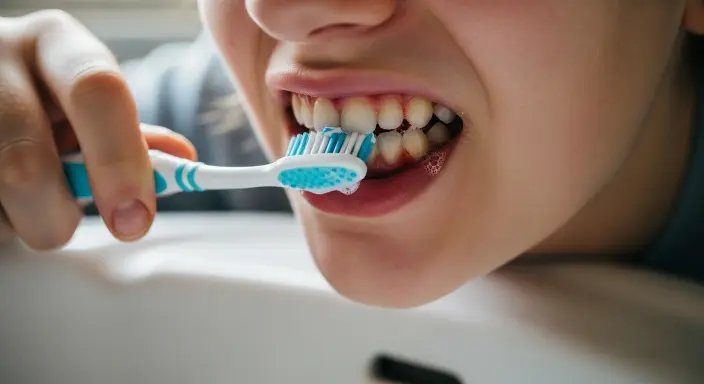
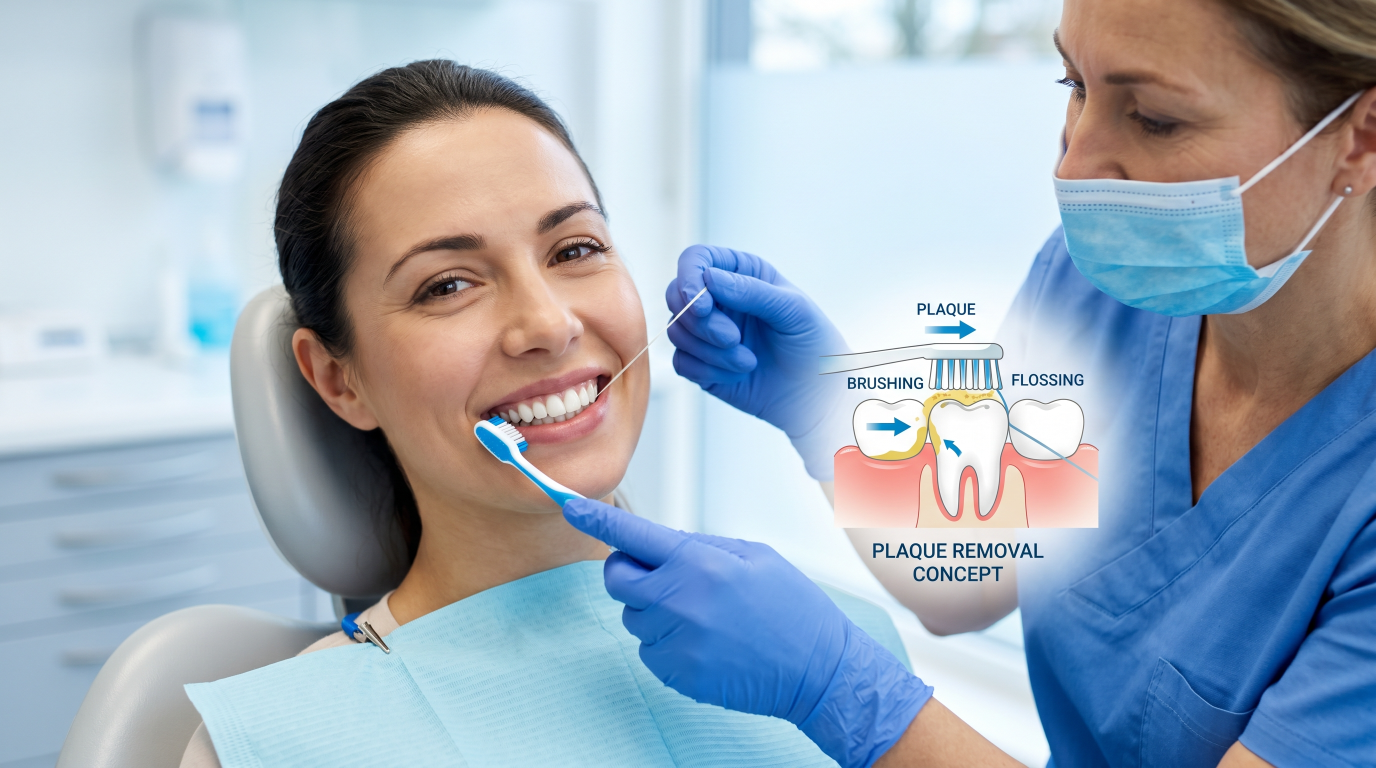
Improves Overall Oral Health: When your teeth are properly aligned, brushing and flossing become more effective, helping prevent cavities, gum disease, and plaque buildup. Straight teeth are simply easier to keep clean.
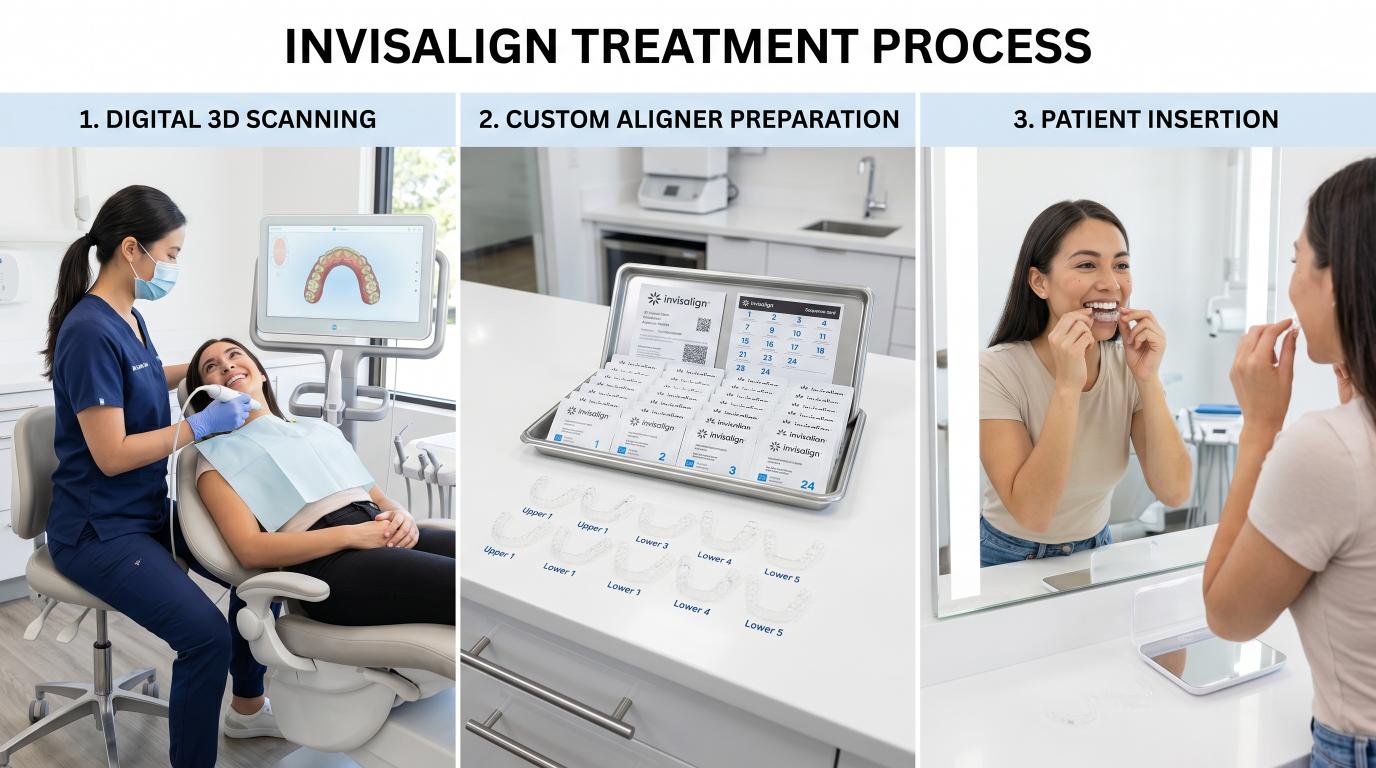
How Does Invisalign Work Step by Step?
Learn how Invisalign moves your teeth step by step, from your first consultation to your final results.
Digital Scan and Treatment Planning
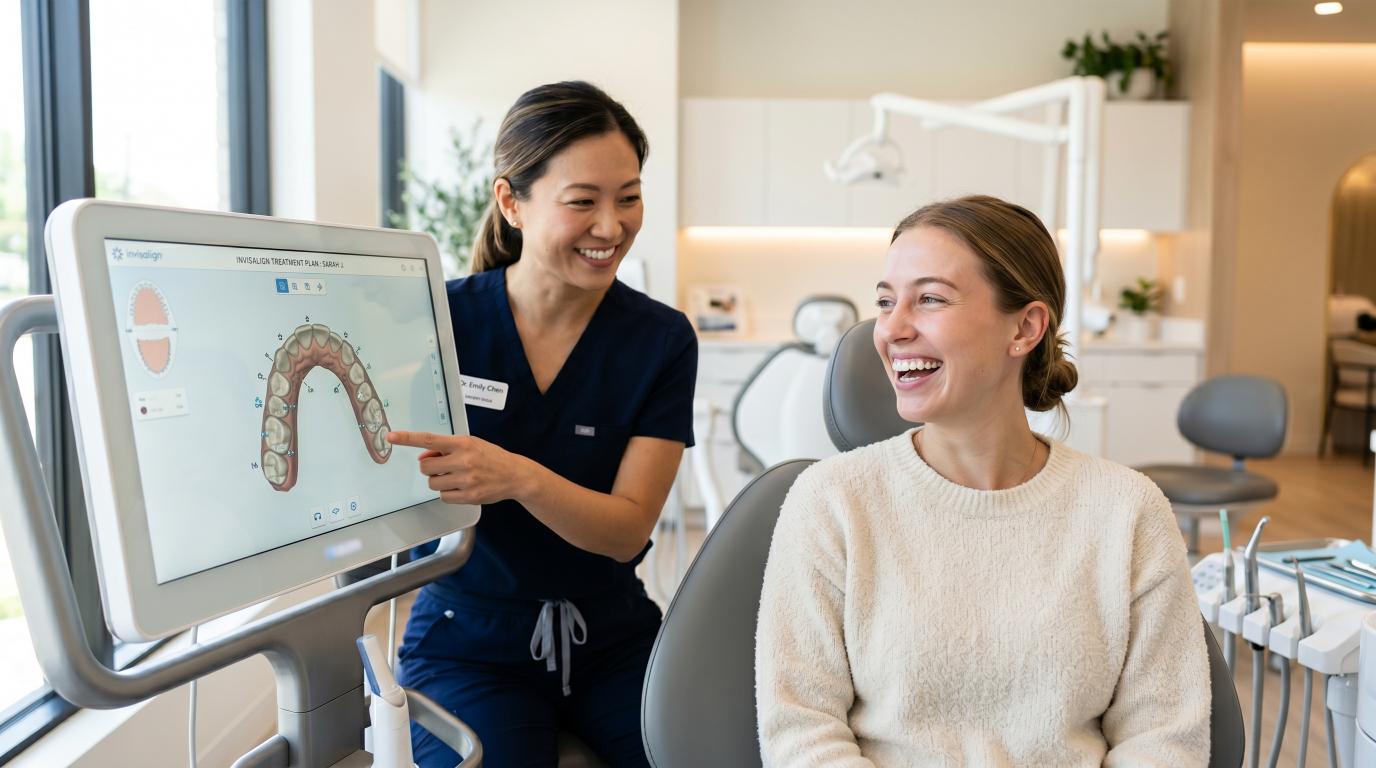
Everything starts with a consultation. Your dentist or orthodontist examines your teeth and takes a detailed 3D scan of your mouth using a digital scanner. Using a state-of-the-art iTero scanner, your doctor will quickly and precisely create a detailed 3D scan of your current smile and map out the custom treatment plan for your new one, so you will know what to expect at every step.
Custom Aligners Are Made
Once your treatment plan is finalized, your aligners are created. Your digital scan travels to Align Technology laboratories where technicians create your custom aligners with SmartTrack material, a proprietary thermoplastic that delivers more predictable tooth movement. Each aligner in the series is slightly different, designed to move your teeth a little further along the planned path.
Wearing the Aligners
Guidelines suggest patients should wear their trays for 20 to 22 hours per day. That leaves two to four hours for eating, drinking anything other than water, and brushing your teeth. The more consistently you wear them, the better and faster your results will be. Skipping hours adds up quickly and can push your treatment timeline back.
Teeth Gradually Move
Each aligner applies gentle, controlled pressure to move specific teeth, and you switch to a new set every one to two weeks as your teeth progressively straighten. The movement per aligner is tiny, roughly a quarter of a millimeter, but over dozens of trays those small shifts add up to a completely transformed smile. This gentle, constant pressure causes the bone around your tooth roots to remodel, meaning the bone breaks down on one side and rebuilds on the other, allowing your teeth to move gradually and safely into new positions.
Retainers After Treatment
Once you finish your last aligner, the work is not completely done. Like all teeth straightening treatments, including braces, once you are done with your Invisalign treatment you will need to wear a retainer to keep your teeth straight. Retainers are worn full time for the first few months and then typically just at night. Skipping this step is the most common reason people see their teeth shift back after treatment.
What Dental Problems Can Invisalign Fix?
Invisalign is effective for a wide range of common orthodontic issues. These include crowded teeth that overlap each other, gaps between teeth, mild to moderate overbites and underbites, crossbites where upper and lower teeth do not line up properly, and open bites where the upper and lower front teeth do not touch when the mouth is closed.
It can also help people who had braces years ago and have seen some relapse in their alignment. For mild cases, Invisalign can sometimes deliver results faster than traditional braces. For more complex bite issues, your orthodontist will let you know whether Invisalign alone is enough or whether additional treatment is needed.

Benefits of Invisalign Treatment
The nearly invisible appearance means most people will not even notice you are in orthodontic treatment. This is a huge factor for working adults and teenagers who feel self-conscious about metal braces. The aligners are removable, so you eat whatever you want without worrying about breaking a bracket or getting food stuck in wires. Oral hygiene is much easier too since you simply take the trays out and brush normally.
Invisalign clear aligners have no metal brackets or wires that could break and irritate your mouth. Many patients find them significantly more comfortable than braces, especially in the first few days after getting a new set of aligners. And because your treatment is mapped out digitally from the start, you typically need fewer office visits compared to traditional braces where adjustments happen every few weeks.
Does Invisalign Really Work? Effectiveness Explained
Invisalign works but like any treatment, results depend on the patient and how well they follow the plan. It works by combining digital precision with consistent daily wear. People who wear their aligners the required 20 to 22 hours daily and switch to new trays on schedule see the best results. Those who frequently skip hours or leave aligners out for long periods will see slower progress and may need additional refinement trays at the end.
Invisalign works extremely well for mild to moderate alignment issues. For very complex cases, such as severely rotated teeth or major skeletal bite problems, traditional braces or even jaw surgery may still be needed. Your orthodontist will give you an honest assessment during your consultation.
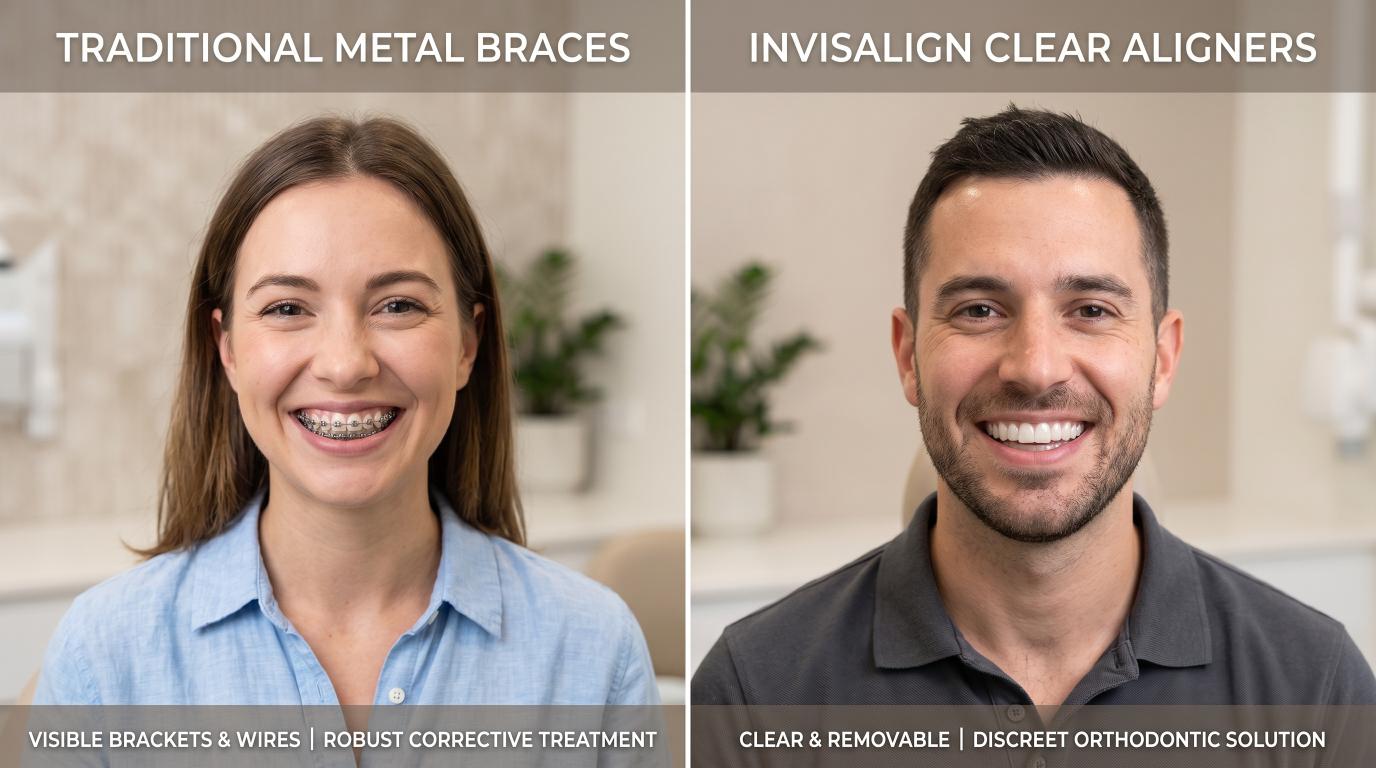
Invisalign vs Traditional Braces
The most common question people ask before starting treatment is whether Invisalign is better than braces.
The clear trays are nearly invisible while metal braces are very noticeable. For comfort, most patients find Invisalign easier to live with since there are no sharp brackets or wires. The Invisalign process is substantially shorter than the usual treatment period for traditional braces, with patients wearing trays for 6 to 18 months whereas traditional braces have an average treatment time of 2 years.
For oral hygiene, Invisalign is also simpler. You remove the trays and brush as normal. With braces, cleaning around brackets and wires takes significantly more time and effort. However, braces have one advantage: they work for complex cases that Invisalign cannot handle. Your orthodontist is the best person to tell you which option fits your specific needs.
How Long Does Invisalign Take to Work?
On average, treatment time is typically between 8 to 10 months, with some cases taking as little as 4 months. However, in more complex cases it may take up to 24 months to achieve the desired results.
The main factors that affect how long treatment takes are how complex your alignment issues are, how consistently you wear your aligners, and whether you need refinement trays after the initial series. Simple cases with minor crowding or small gaps tend to finish faster. Cases involving bite correction or more significant tooth movement take longer.
What to Expect During Invisalign Treatment
Your first consultation is straightforward. The dentist checks your teeth, takes a 3D scan, and walks you through what treatment will involve for your specific case. You will see a digital preview of your expected results before committing to anything.
Once your aligners arrive, the first few days of wearing them can feel strange. Your mouth is adjusting to having something new sitting over your teeth. When you first start Invisalign treatment, your aligners apply pressure to your teeth. This can cause slight discomfort at first, with many people noting a feeling of tightness. However, it usually only lasts a day or two.
Regular checkups every 6 to 8 weeks allow your dentist to monitor tooth movement progress and distribute new aligner sets. Some patients also need small tooth-colored attachments bonded to certain teeth to help the aligner grip better and guide more precise movement. These are barely noticeable and are removed at the end of treatment.
Are There Any Disadvantages of Invisalign?
Invisalign is not perfect for everyone. The biggest challenge is discipline. Because the aligners are removable, some people take them out too often and do not get the full 20 to 22 hours of daily wear. This directly slows results and can extend treatment time significantly.
Invisalign also costs more than traditional braces in many cases, though the gap has narrowed over the years. And it is not suitable for every orthodontic problem. Severe cases involving major bite corrections or significant tooth rotation may still require traditional braces or other orthodontic appliances.
How Much Does Invisalign Cost?
The cost of Invisalign varies depending on several factors. These include how complex your case is, how many aligners you need, where you live, and which dental practice you visit. Simple cases with minimal correction cost less than complex cases that require more aligners and longer treatment.
In most cases, the cost of Invisalign treatment is comparable to the cost of braces, and your doctor will determine the cost based on how complex your case is and how many aligners you need. Many dental insurance plans cover Invisalign the same way they cover braces. Flexible spending accounts and health savings accounts can also be used to pay for treatment.
Who Is a Good Candidate for Invisalign?
Invisalign works well for both teenagers and adults. The ideal candidate has mild to moderate alignment issues, is committed to wearing the aligners consistently, and maintains good overall oral hygiene. People with severe gum disease or active cavities typically need those issues addressed before starting Invisalign.
If you have had braces before and your teeth have shifted back slightly, Invisalign is often a great solution for correcting that relapse without going through a full round of metal braces again. Adults who feel self-conscious about wearing visible braces in professional settings are also excellent candidates.
Ready to Start Your Invisalign Journey in Santa Ana?
At Santan Dentist in San Tan Valley AZ, we make the Invisalign process simple, comfortable, and completely tailored to your smile. From your very first 3D scan to your final retainer, our team walks with you every step of the way. You do not have to keep hiding your smile in photos or skipping the front row at events. Book your Invisalign consultation at Santan Dentist today, visit us at santandentist.com, and let us show you exactly what your new smile could look like before treatment even begins. Santa Ana patients deserve a smile they are proud of, and we are here to help you get there.
Conclusion
Invisalign is absolutely worth it for most people who qualify. It straightens teeth, corrects bite problems, and improves oral health without the appearance and discomfort of metal braces, fitting into real life in a way that traditional braces simply cannot match. The key is commitment. Wear the aligners the required hours, attend your regular checkups, and the results will follow.
If you have been putting off fixing your teeth because braces felt like too much to deal with, Invisalign may be exactly the solution you have been waiting for. Book a consultation with a certified provider, find out if your case is a good fit, and take the first step toward the smile you deserve.
Frequently Asked Questions
Does Invisalign hurt?
Invisalign does not hurt the way people fear it will. You may feel some tightness or mild pressure for the first day or two after switching to a new aligner, but that feeling is actually a sign the aligners are working. Most patients adjust quickly and find Invisalign much more comfortable than traditional braces.
Can I eat and drink with Invisalign in?
You should remove your aligners before eating or drinking anything other than plain water. Food and colored drinks can stain the trays and trap bacteria against your teeth. The good news is that unlike braces, there are zero food restrictions. You can eat whatever you want, just take the aligners out first and brush before putting them back in.
What happens if I do not wear my aligners enough?
If you wear your aligners less than the recommended 20 to 22 hours per day, your teeth will not move on schedule. This can extend your treatment time and may require additional refinement trays at the end. Consistency is the single biggest factor in getting good results with Invisalign.
Is Invisalign suitable for teenagers?
Invisalign works very well for teenagers. There is even a version called Invisalign Teen that is designed specifically for younger patients whose teeth are still developing. It includes features like compliance indicators that show whether the aligners are being worn enough each day.
Will Invisalign affect my speech?
Some patients notice a slight lisp or change in speech during the first week or two of wearing aligners. This happens because your tongue needs time to adjust to the trays taking up space in your mouth. For most people this goes away completely within two weeks as they get used to wearing them.