









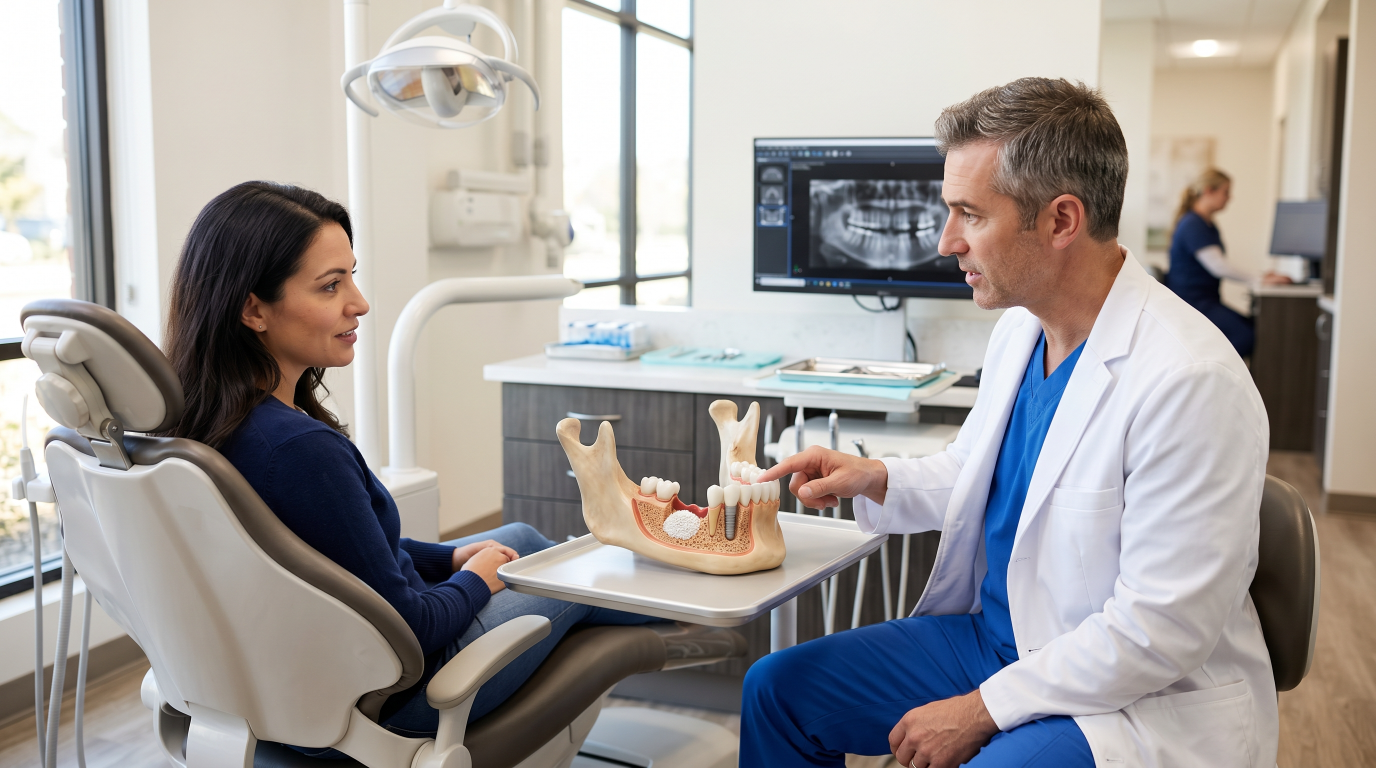


Choosing between braces vs aligners depends on your dental needs, lifestyle, appearance preferences, and ability to follow the treatment plan. Braces are fixed to the teeth and often provide greater control for severe crowding, difficult tooth movements, and complex bite problems. Clear aligners are removable and less noticeable, making them a convenient option for many mild to moderate alignment concerns.
At Ocotillo Trails Family Dentistry in San Tan Valley, AZ, we help patients compare both treatments based on their teeth, bite, daily routine, and smile goals. Aligners make eating, brushing, and flossing easier, but they must usually be worn for 20 to 22 hours each day. Braces require more care around brackets and wires, but they continue working without relying on the patient to remember to wear them.
Both treatments can produce lasting results when used correctly. This guide compares braces and aligners based on comfort, cost, treatment time, appearance, oral hygiene, effectiveness, and the types of dental problems each option can correct.
Understanding Your Orthodontic Treatment Options
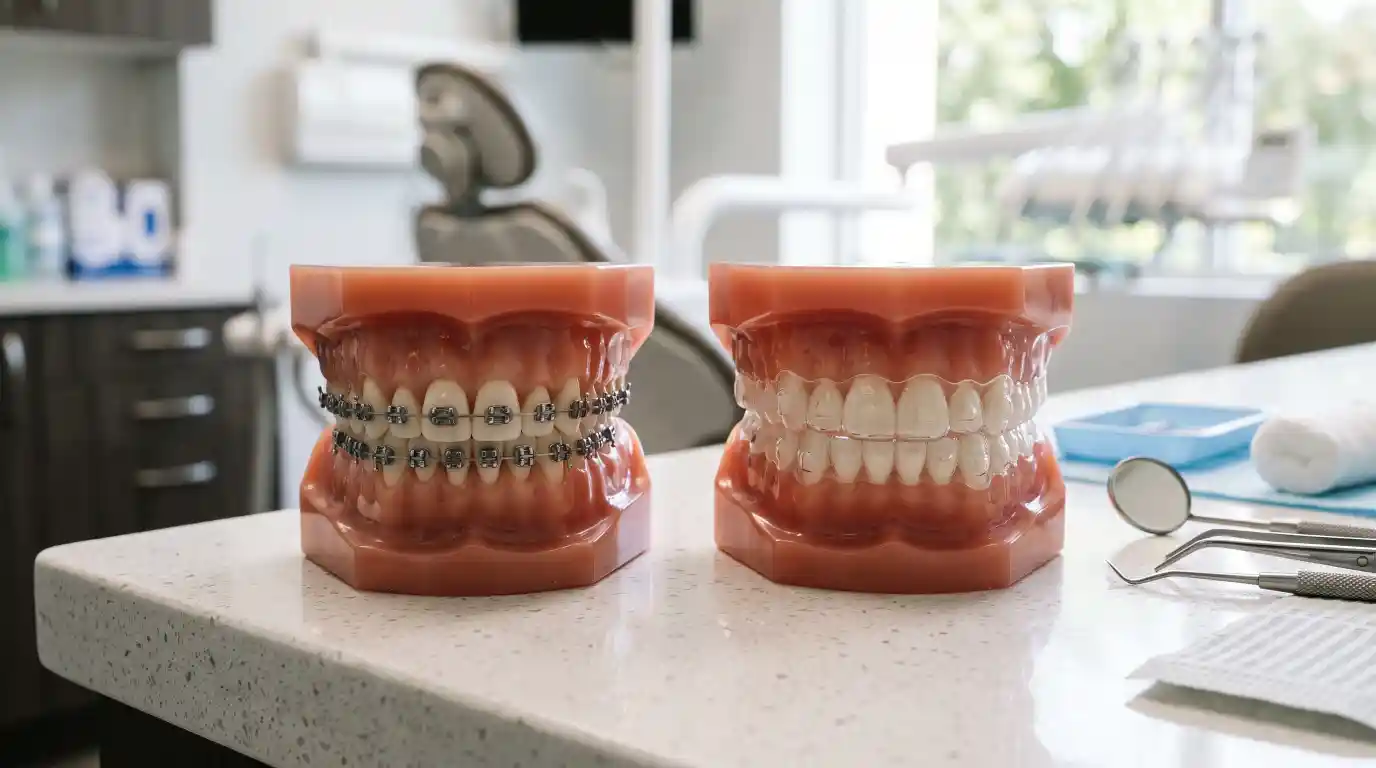
Before comparing the two side by side, it helps to understand what each option actually is and how it works. Both treatments share the same basic goal, moving teeth into a healthier, straighter position, but they go about it in very different ways.
What Are Braces?
Braces are small brackets attached to each tooth, connected by a thin metal wire. The wire applies steady pressure over time, which slowly guides teeth into their correct position. As teeth shift, the wire is tightened or adjusted at each visit to keep the movement going in the right direction.
Braces can be made of metal, ceramic, or placed behind the teeth, depending on the look a patient wants. Metal braces are the most common and often the most affordable, while ceramic braces blend in more with the natural color of teeth, and lingual braces sit behind the teeth so they cannot be seen at all.
What Are Clear Aligners?
Clear aligners are custom made, see through trays that fit snugly over your teeth. Instead of one continuous treatment like braces, aligners come in a series of sets, each one slightly different from the last. Every one to two weeks, you switch to a new set that gently shifts your teeth a little closer to their final position.
Each tray is designed using a digital scan or mold of your teeth, so the entire treatment is mapped out in advance, giving both you and your dentist a clear picture of what your smile will look like at every stage.
How Braces and Aligners Work
Both treatments move teeth using gentle, constant pressure, but the method and daily experience are quite different. Braces stay fixed in the mouth the entire time, applying pressure around the clock without any effort needed from the patient. Aligners, on the other hand, are removed for eating, drinking, and brushing, which means their success depends on how consistently they are worn each day.
Braces are adjusted by an orthodontist every few weeks, with small changes made to the wire to continue guiding the teeth. Aligners are usually changed at home following a set schedule and are checked less often in the office, typically every six to eight weeks, since much of the movement is already planned out in the series of trays.
Braces vs Aligners: Key Differences at a Glance

Here is a quick comparison of how the two options stack up.
|
Factor |
Braces |
Aligners |
|
Appearance |
Visible metal or ceramic brackets |
Clear and hard to notice |
|
Comfort |
Can cause soreness after adjustments |
Smooth plastic, less irritation |
|
Removability |
Fixed in place, cannot be removed | Removable for eating and cleaning |
| Eating and Drinking | Some food restrictions apply |
No restrictions since trays come out |
|
Oral Hygiene |
Harder to floss around brackets |
Easier since trays are removed to brush |
|
Treatment Time |
Often longer for complex cases |
Can be faster for mild to moderate cases |
|
Office Visits |
Every four to six weeks |
Every six to eight weeks |
|
Cost |
Often lower upfront cost | Often higher, though prices vary |
|
Compliance |
No patient effort needed daily | Requires wearing trays 20 to 22 hours a day |
| Best for Complex Cases | Handles severe cases well |
Better suited for mild to moderate cases |
Pros and Cons of Braces
Braces have been the standard orthodontic treatment for decades, and for good reason. Understanding both their strengths and their limitations can help you decide if they are the right fit for your smile.
Benefits of Braces
Braces are effective for nearly every type of alignment issue, including severe crowding and complex bite problems, which makes them one of the most reliable options available. They do not rely on patient compliance, since they cannot be removed, which makes them a dependable option for people who might forget to wear removable trays or struggle with the discipline aligners require.
Braces are also often more affordable upfront compared to aligners, which can make them a more accessible option for many families and budgets. Because an orthodontist adjusts the wire at each visit, braces also allow for very precise, hands on control over how and when teeth move.
Drawbacks of Braces
Braces are more visible than aligners, which some patients find less appealing, especially teens and adults who are self conscious about their appearance during treatment. They can also cause discomfort after adjustments, since tightening the wire puts new pressure on the teeth each time, leading to soreness for a few days afterward.
Braces also make brushing, flossing, and eating certain foods more difficult throughout treatment, since brackets and wires create extra places for food to get stuck and require more careful cleaning to avoid cavities or gum irritation.
Pros and Cons of Clear Aligners
Clear aligners have grown in popularity in recent years, largely because of the flexibility and discretion they offer. Like braces, they come with real benefits as well as some tradeoffs worth considering.
Benefits of Clear Aligners
Aligners are nearly invisible, which appeals to many teens and adults who want a more discreet treatment without the look of traditional metal brackets. They are removable, so eating and cleaning your teeth stays simple, since you can take them out for meals and brush normally without navigating around wires.
Many patients also find them more comfortable than traditional braces, since the smooth plastic trays are less likely to irritate the cheeks and gums compared to metal brackets and wires.
Drawbacks of Clear Aligners
Aligners require strong discipline, since they only work if worn for most of the day and night, typically 20 to 22 hours, which means the treatment depends heavily on the patient’s own consistency. They also tend to cost more than braces in many cases, which can be a deciding factor for patients working within a specific budget.
On top of that, aligners are not always the best option for very complex dental problems, since severe crowding or bite issues often still respond more reliably to the fixed, continuous pressure that braces provide.
Which Treatment Is Better for Your Dental Problem?

The right treatment often depends on the specific dental issue being corrected, since braces and aligners are not equally effective for every case. Mild to moderate problems like small gaps, minor crowding, or slight bite issues can often be treated well with either option, giving patients more freedom to choose based on lifestyle and appearance.
More severe problems, such as significant crowding, underbites, or complex bite misalignments, tend to respond better to braces, since they allow for more precise, continuous control over tooth movement. The best way to know which treatment fits your specific case is through a professional evaluation, since every mouth and every dental issue is a little different.
Braces vs Aligners for Adults
Many adults prefer aligners because they are harder to notice at work or in social settings.
Aligners also fit more easily into a busy adult schedule, since there are no food restrictions and fewer office visits. That said, some adults with more complex dental issues may still need braces for the best results, especially if there is significant crowding or a bite problem involved. Adults also tend to be more consistent with wearing aligners as directed, since they are often more motivated to follow through with a treatment plan they are personally investing in.
Braces vs Aligners for Teens
Braces remain a common choice for teens, especially since they do not depend on the teen remembering to wear anything, which can be a challenge at this age. Aligners can work well for responsible teens who are comfortable following a daily routine, but success depends heavily on consistent wear.
Parents and orthodontists often work together to decide which option fits a teen’s personality and daily habits best. Many orthodontists also recommend starting with a trial period for aligners, so both the teen and their family can see firsthand how well they stick to the wear schedule before committing to a full treatment plan.
What Is the Treatment Process Like?
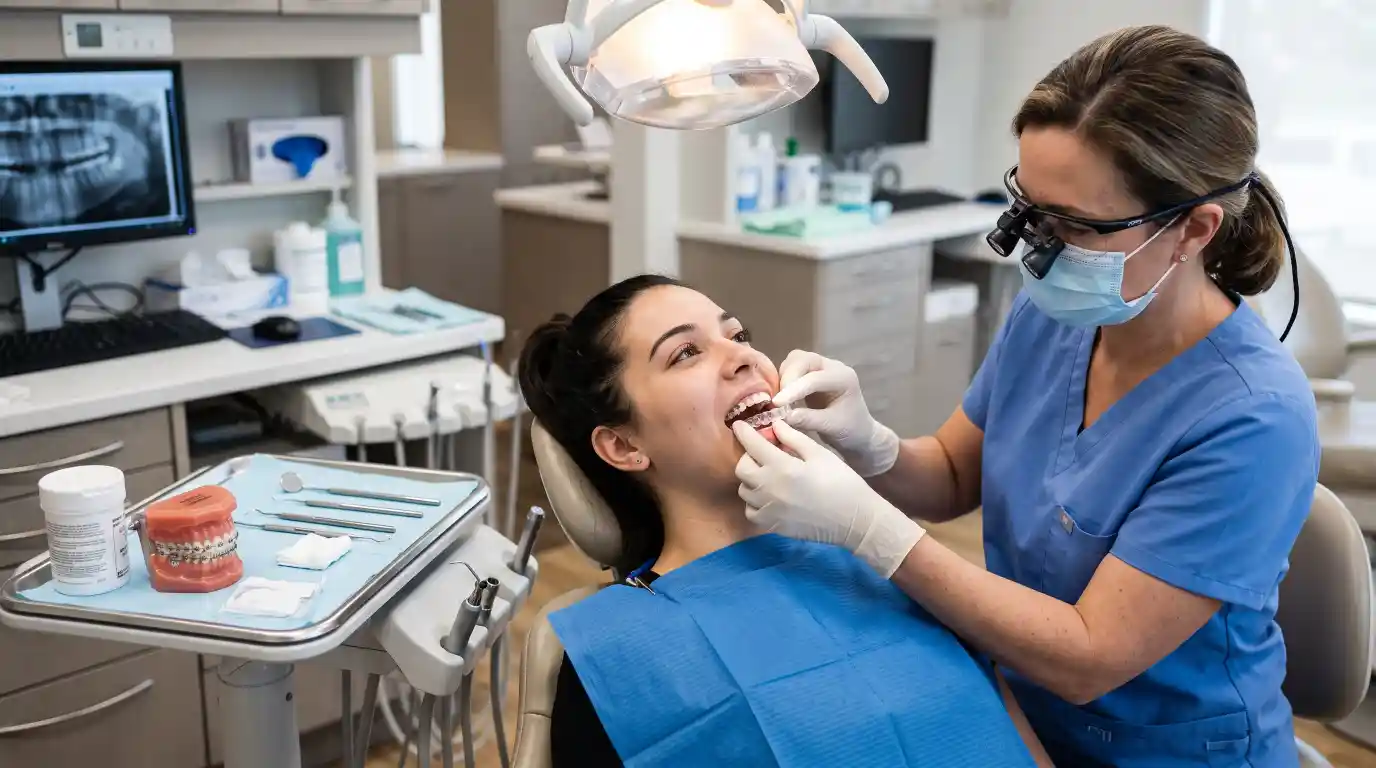
Understanding what actually happens during treatment can make the decision feel less overwhelming.
Getting Started
Treatment begins with an evaluation, including X-rays, photos, and a discussion about your goals. From there, a treatment plan is created, whether that means designing a series of aligner trays or mapping out where brackets should be placed.
Wearing Braces or Aligners
With braces, brackets are bonded to the teeth and connected with a wire, which stays in place until treatment ends. With aligners, you receive a set of trays to wear, switching to a new one every one to two weeks as instructed.
Checkups and Adjustments
Braces need regular adjustments to tighten the wire and keep teeth moving as planned. Aligners are checked periodically to make sure teeth are tracking correctly with the treatment plan.
Finishing Treatment
Once teeth reach their final position, braces are removed, or the last set of aligners is completed. At this point, most patients move into the retention phase to help keep their new smile in place.
Wearing Retainers
After either treatment, retainers are used to hold teeth in their new position. Skipping retainer wear is one of the most common reasons teeth shift back over time, so this step matters just as much as the active treatment itself.
Treatment Results and Long-Term Success
Both braces and aligners are effective when used as directed, though each has its own strengths. Braces tend to have a slight edge for very complex cases, since they offer more consistent, hands on control throughout treatment. Aligners perform very well for mild to moderate issues, especially when worn consistently for the recommended hours each day. Research generally shows similar success rates between the two options for suitable cases, which means the right choice often comes down to your specific dental needs rather than one option being better overall.
Long term success depends heavily on what happens after treatment ends. Teeth can shift back after either braces or aligners if retainers are not worn as recommended, which is why this step matters just as much as the active treatment itself. The biggest factor in lasting results is usually patient compliance, whether that means wearing aligners enough hours a day during treatment or keeping up with retainer use for years afterward.
How to Choose Between Braces and Aligners

Choosing between braces and aligners comes down to a few personal factors. If you want the freedom to remove your treatment for meals, sports, or events, aligners may fit your lifestyle better, especially if appearance matters to you as well. If you prefer a hands off treatment that requires no daily effort, or if cost is a bigger concern, braces might be the better match, since they often come with a lower starting price and do not rely on you remembering to wear anything.
Honesty about your own habits also plays a big role in this decision. Aligners only work if worn consistently, so if you know you might forget or feel tempted to skip wearing them, braces remove that risk entirely. In the end, the severity of your case matters most, which is why a professional evaluation is the most reliable way to know which treatment will actually give you the results you want.
Common Myths About Braces and Aligners
Many people believe braces are only for kids, but adults make up a large share of orthodontic patients today. It is never too late to straighten your teeth, and more adults are choosing braces or aligners than ever before to fix issues that were never treated earlier in life. Another common myth is that aligners cannot fix serious dental problems. While this used to be more true in the past, newer aligner systems have expanded significantly and can now treat cases that once required braces.
Some also believe braces are painful the entire time, when in reality most discomfort is mild and only lasts a few days after each adjustment. Once teeth adjust to the new pressure, most patients feel little to no ongoing pain. There is also a myth that aligners require no real commitment since they are removable, but the opposite is often true. Aligners only work as planned if they are worn consistently for close to the full day, which takes just as much discipline as caring for braces day to day.
Conclusion
There is no single winner in the braces vs aligners comparison. Braces are often the more dependable option for severe crowding, significant bite problems, and complex tooth movements. They also work continuously without requiring patients to remove, replace, or remember their treatment.
Clear aligners may be better for patients who want a discreet, removable, and flexible treatment. They can effectively correct many mild to moderate alignment problems, but their success depends on wearing the trays consistently for the recommended number of hours.
Treatment time and cost can vary with either option, depending on the condition of your teeth and the amount of correction needed. Regardless of which treatment you choose, wearing a retainer afterward is essential because teeth can shift after both braces and aligners.
A professional dental evaluation is the most reliable way to determine which option can safely and effectively achieve your desired results.
Find the Right Braces vs Aligners Option in San Tan Valley
Choosing orthodontic treatment does not have to feel confusing. The team at Ocotillo Trails Family Dentistry in San Tan Valley, AZ, can evaluate your teeth, bite, lifestyle, and treatment goals to help you decide between braces vs aligners. Schedule your consultation today and take the next step toward a straighter, healthier smile.
Frequently Asked Questions
Are Aligners Better Than Braces?
Neither option is universally better, since it depends on your specific dental needs. Aligners work well for mild to moderate cases and offer more flexibility, while braces are often more reliable for complex issues. A dental evaluation is the best way to know which one fits your smile.
Which Is Faster?
Aligners can sometimes work faster for mild to moderate cases, but treatment time really depends on the complexity of the case rather than the type of treatment alone. Wearing aligners as instructed also plays a big role in staying on schedule.
Are Aligners More Painful?
Aligners are generally considered more comfortable than braces, though new sets can cause mild pressure for a day or two as teeth adjust. This discomfort usually fades quickly and rarely requires more than mild pain relief.
Can Aligners Fix Severe Cases?
Some newer aligner systems can treat more complex cases than older versions could, but very severe bite or crowding issues often still respond best to braces. Your orthodontist can help determine which system fits your case.
Do Aligners Change Face Shape?
Aligners are designed to move teeth, not reshape the face. Any changes in appearance usually come from improved tooth alignment rather than any shift in facial structure. Most patients simply notice a straighter, more even smile.
Are Braces Cheaper Than Aligners?
In many cases, yes, braces tend to have a lower starting cost, though pricing varies based on your specific treatment needs and provider. It is worth asking for a full cost comparison before deciding.
Can Adults Wear Braces?
Yes, adults can absolutely wear braces, and many choose them, especially for more complex dental issues that need precise correction. Age is rarely a barrier to successful orthodontic treatment.
What Happens If I Don’t Wear My Aligners?
Skipping aligner wear can slow down treatment or cause teeth to stop tracking with the planned movement, which may require new trays to get back on schedule. Consistent wear is the single biggest factor in aligner success.
Which Option Is Easier to Clean?
Aligners are generally easier to clean around, since they are removed for brushing and flossing, unlike braces which require extra care around brackets and wires. This can make daily hygiene feel simpler overall.
Will I Need a Retainer After Treatment?
Yes, retainers are needed after both braces and aligners to keep teeth from shifting back to their original position. Wearing your retainer as directed helps protect your results for years to come.