









To remove soft plaque from your teeth, brush for a full two minutes twice a day with fluoride toothpaste and floss once daily to clean between teeth. This routine clears the sticky bacterial film before it has a chance to harden. Once plaque turns into tartar, though, it can no longer be brushed away at home and needs a dentist to remove it with professional scaling.
Plaque forms on everyone’s teeth throughout the day, so having it isn’t a sign you’re doing something wrong. The real risk comes from letting it sit. Left untreated, plaque quietly wears down enamel, irritates the gums, and can eventually lead to cavities, gum disease, and even tooth loss if it’s ignored for too long.
Whether you’re a patient near Ocotillo Trails Family Dentistry in San Tan Valley looking for answers after a checkup, or you simply noticed a fuzzy coating on your teeth for the first time, this guide covers everything you need. You’ll find the best home methods for removing plaque, the warning signs that tartar has already built up, and when it’s time to bring in a professional for a deeper clean.
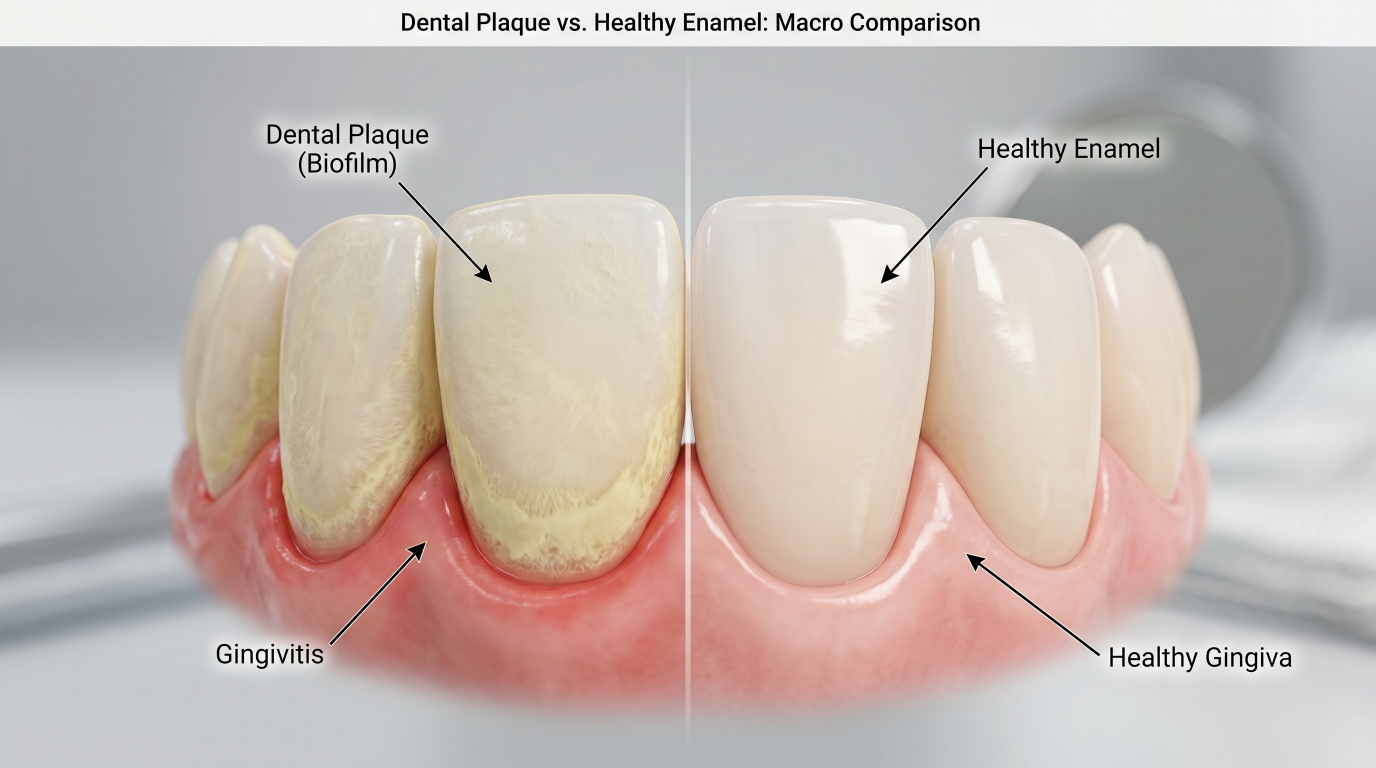
What Is a Dental Plaque?
Dental plaque is a soft, sticky film of bacteria that forms on your teeth throughout the day. Every time you eat or drink, bacteria in your mouth break down sugars and starches and produce acids that mix with saliva and food particles to create this colorless coating. If it is not removed through regular brushing and flossing, it hardens into tartar, which can only be removed by a dentist and can lead to cavities, gum disease, and bad breath.
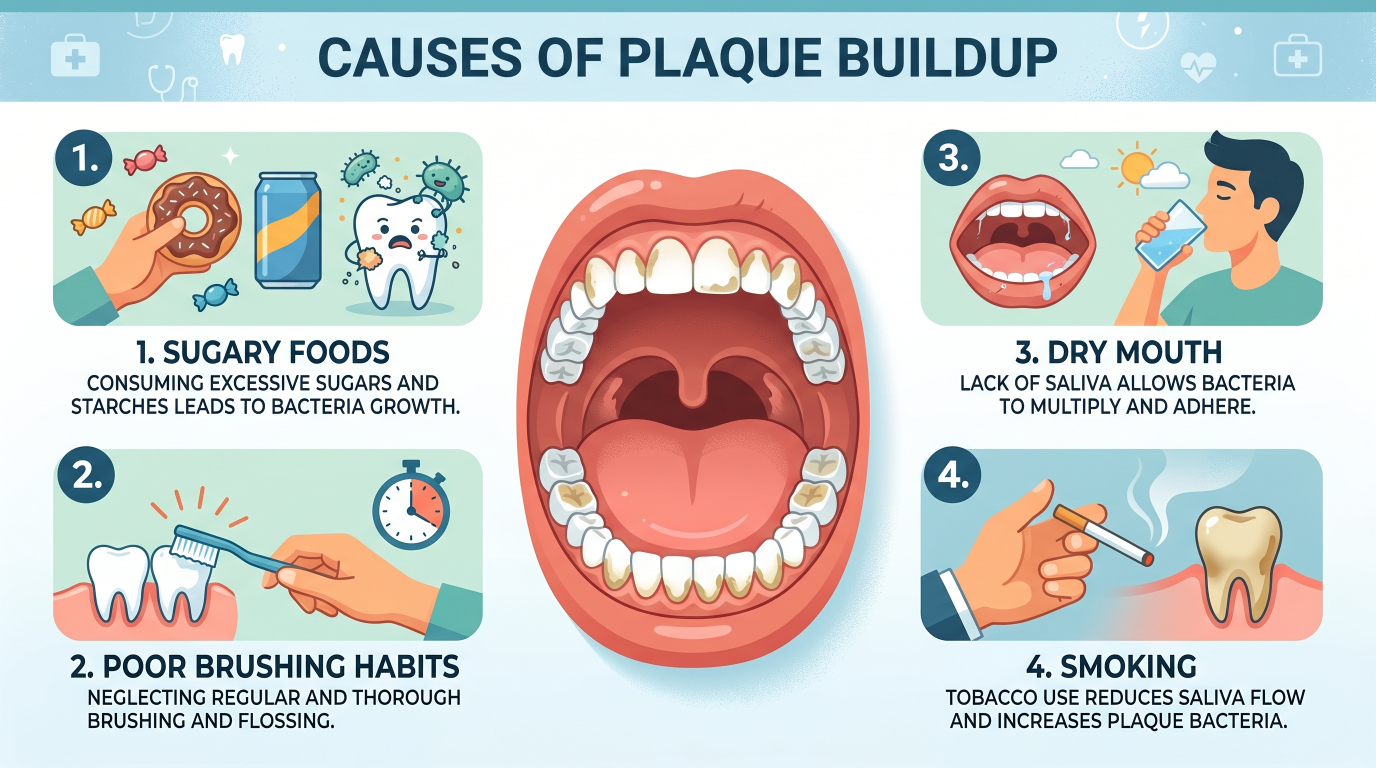
What Causes Dental Plaque?
Dental plaque forms when bacteria in your mouth mix with food particles and sugars, creating a sticky layer that builds up on your teeth and gums.
Poor Oral Hygiene
Skipping brushing, brushing too quickly, or not flossing allows plaque to sit on the teeth and build up day after day. Even one missed session gives bacteria more time to grow and produce the acids that damage your enamel.
Sugary and Starchy Foods
Bacteria love sugar. Every time you eat candy, drink a soda, snack on crackers, or have white bread, you are giving the bacteria in your mouth exactly what they need to thrive. The more often you eat these foods throughout the day, the more acid is being produced and the faster plaque builds up.
Dry Mouth and Bacteria Growth
Saliva is your mouth’s natural defense against plaque. It washes away food particles and neutralizes some of the acids bacteria produce. When your mouth is dry, whether from medication, dehydration, or a medical condition, bacteria multiply faster and plaque builds up more quickly than normal.
Smoking and Tobacco Use
Smoking reduces saliva flow and creates an environment in the mouth where harmful bacteria grow easily. Smokers tend to have more plaque buildup, more tartar, and a significantly higher risk of gum disease than non-smokers.
Skipping Dental Checkups
Even the most disciplined brusher and flosser cannot remove everything. Professional dental cleanings reach the areas your toothbrush cannot and remove any tartar that has already formed. Skipping these visits allows buildup to accumulate unchecked over time.
Signs You Have Dental Plaque
Most people do not need a dentist to tell them plaque is there. Your mouth will give you the clues. A fuzzy or rough feeling on the teeth when you run your tongue across them is one of the first signs. Persistent bad breath that does not go away after brushing is another, because the bacteria in plaque release odor-causing compounds as they break down food.
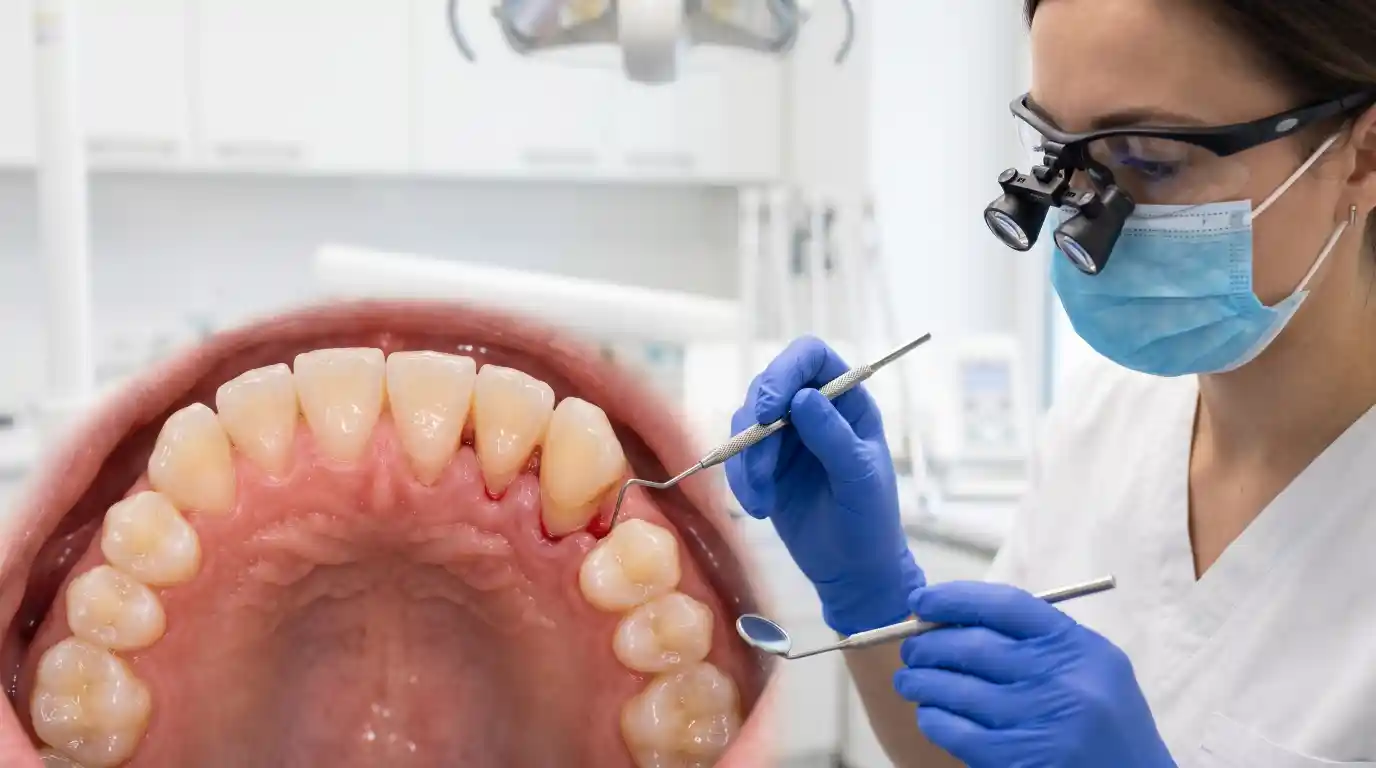
If your gums bleed when you brush or floss, that is a sign that plaque near the gumline is irritating the tissue. Tooth sensitivity to hot, cold, or sweet foods can also be a sign that plaque has started to damage the enamel. Visible yellow or white buildup along the gumline, especially on the back of the lower front teeth, is a sign that tartar may already be forming.
Why It Is Important to Remove Dental Plaque
Left alone, plaque causes real damage. The acids it produces eat into tooth enamel and cause cavities. When plaque builds up along the gumline, it triggers inflammation and leads to gingivitis, which is the earliest stage of gum disease. If gingivitis is not treated, it progresses to periodontitis, a more serious infection that destroys the bone and tissue holding your teeth in place. Research has also linked chronic gum disease to heart disease, diabetes complications, and other systemic health issues. Removing plaque daily is not just about having a clean smile.
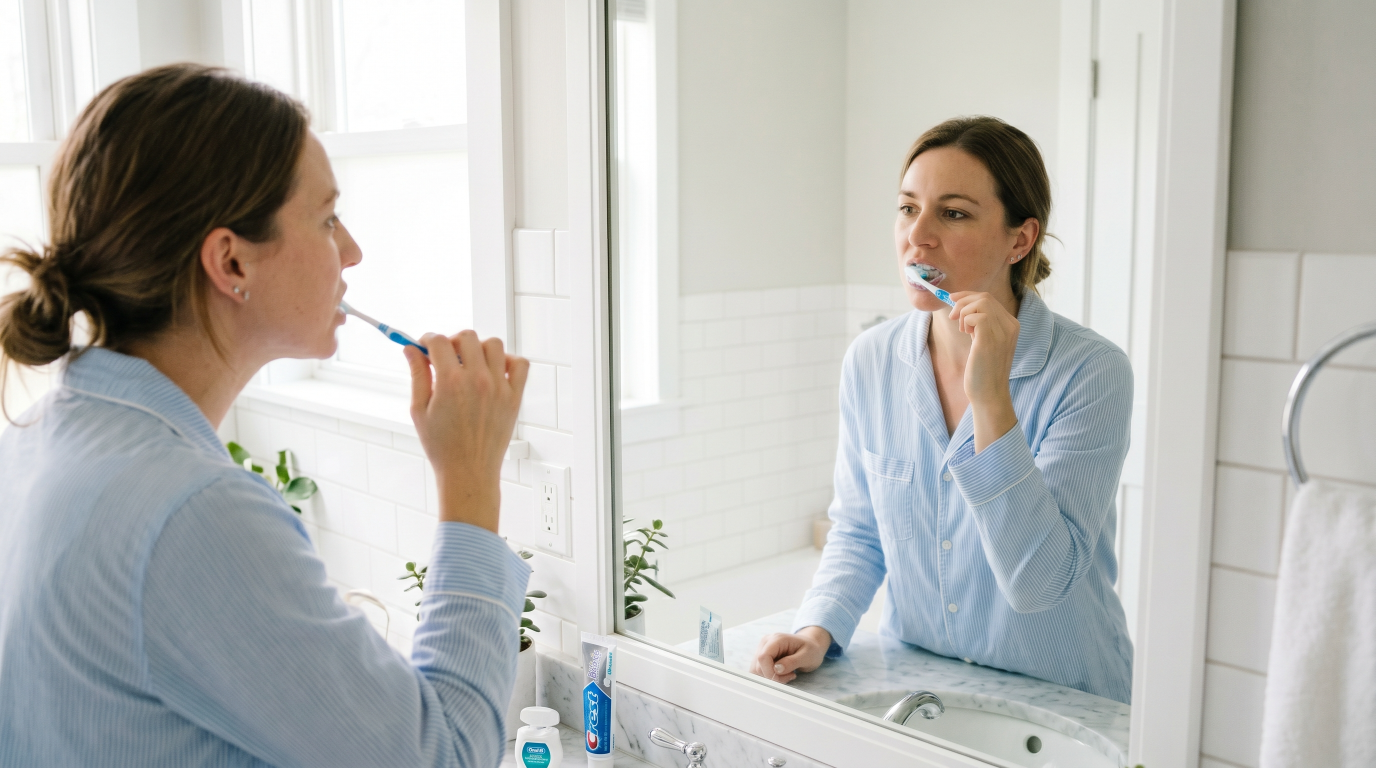
How to Remove Dental Plaque at Home
There are several simple ways to remove dental plaque at home, including proper brushing, flossing, and using the right oral care products every day.
Brush Your Teeth Properly Twice a Day
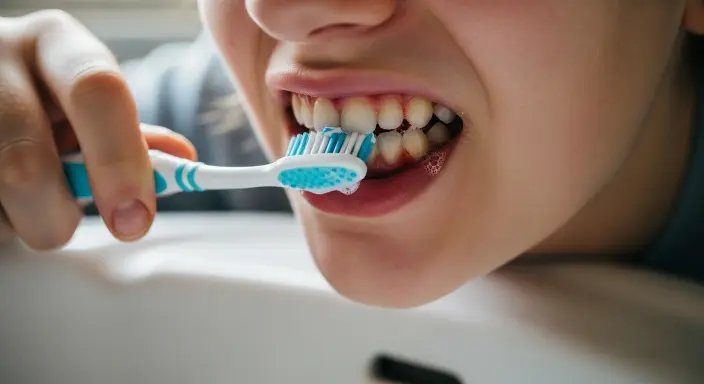
Brushing twice a day is the foundation of plaque removal at home. The key word is properly. A quick 30-second scrub is not enough. You need to spend at least two full minutes brushing every surface of every tooth, including the front, back, and chewing surfaces. Hold the brush at a 45-degree angle toward the gumline so the bristles can reach under the edge of the gum where plaque collects.
Use Fluoride Toothpaste
Fluoride strengthens tooth enamel and makes it more resistant to the acids that plaque bacteria produce. It also helps repair early enamel damage before it becomes a full cavity. There is a reason fluoride toothpaste is recommended by every major dental organization. It works. Baking soda toothpaste is another solid option, as studies show it can be more effective at reducing plaque than some traditional toothpastes because of its gentle abrasive properties.
Clean Between Teeth With Floss
Your toothbrush cannot reach between teeth. That space is where plaque hides and where cavities and gum disease often start. Flossing once a day removes the plaque from those contact points before it has a chance to harden into tartar. Slide the floss gently between teeth and curve it around each tooth in a C shape, going just below the gumline. If regular floss is difficult to use, floss picks or a water flosser work just as well.
Try Interdental Brushes
Interdental brushes are tiny brushes designed to fit between teeth and clean the gaps that regular floss can miss, especially for people with wider spaces between teeth or dental work like bridges. They come in different sizes and are easy to use once you find the right fit.
Clean Your Tongue Daily
Bacteria do not just live on your teeth. The surface of your tongue is covered in tiny grooves that trap bacteria and food particles. Cleaning your tongue with a tongue scraper or the back of your toothbrush every day reduces the overall bacterial load in your mouth and helps control plaque formation.
Best Toothbrushing Techniques for Plaque Removal
Brushing for two minutes is the standard recommendation, and for good reason. Most people who think they brush for two minutes are actually brushing for less than 45 seconds. Use a timer or an electric toothbrush with a built-in timer to keep yourself honest.
Electric toothbrushes outperform manual ones in clinical studies when it comes to plaque removal. The oscillating or sonic movement of the brush head does more work in less time and tends to be gentler on gums as well. That said, a manual toothbrush used correctly still does a very good job.
Natural Ways to Help Reduce Plaque
Drinking more water throughout the day is one of the simplest things you can do. Water rinses food particles from the mouth and keeps saliva production up, which naturally fights bacteria. Crunchy fruits and vegetables like apples, carrots, and celery act as natural tooth scrubbers as you chew, helping to physically dislodge plaque from tooth surfaces.
Reducing sugary snacks and drinks between meals gives bacteria less fuel to feed on. Chewing sugar-free gum after meals stimulates saliva flow and helps clear food debris from around the teeth. Baking soda mixed with a little water to form a paste can also be used occasionally as a gentle scrub to help lift plaque from the surface of teeth.
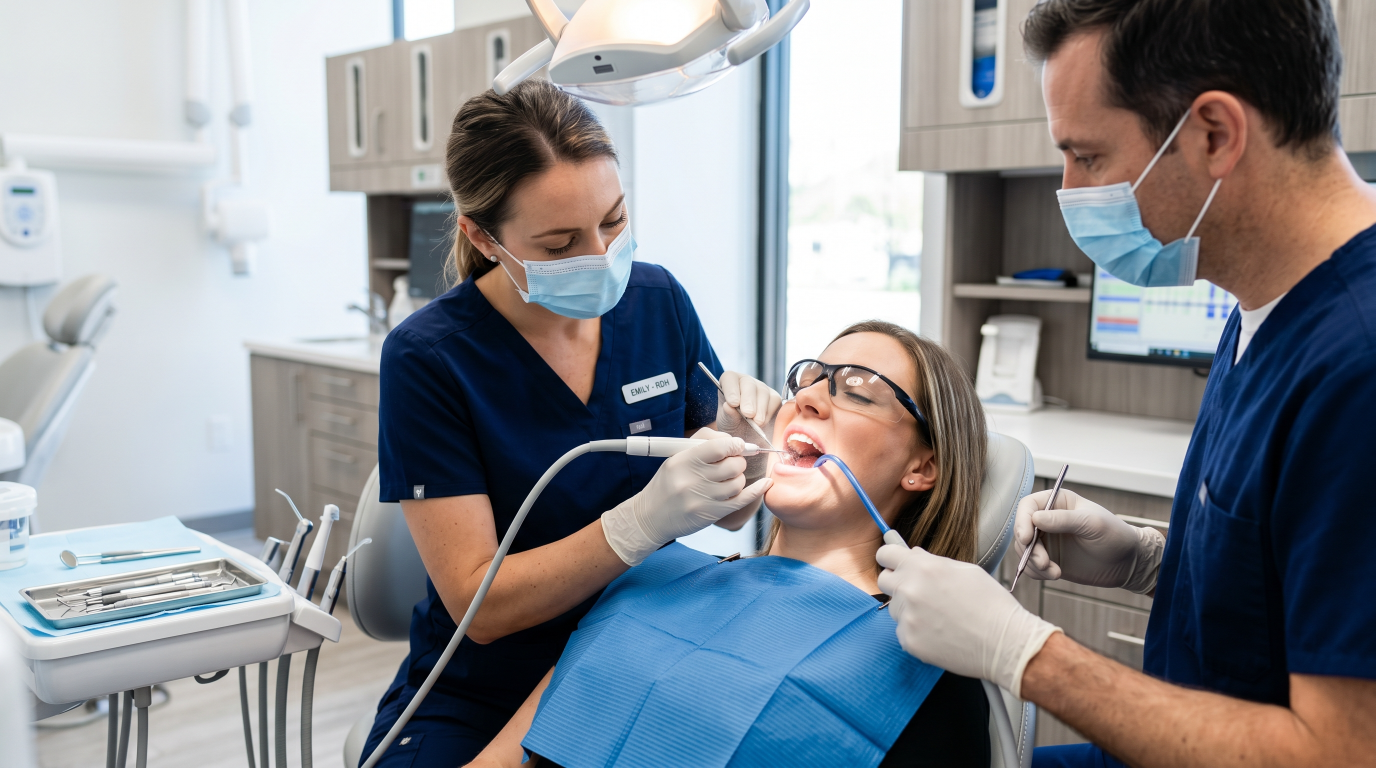
Professional Dental Plaque Removal
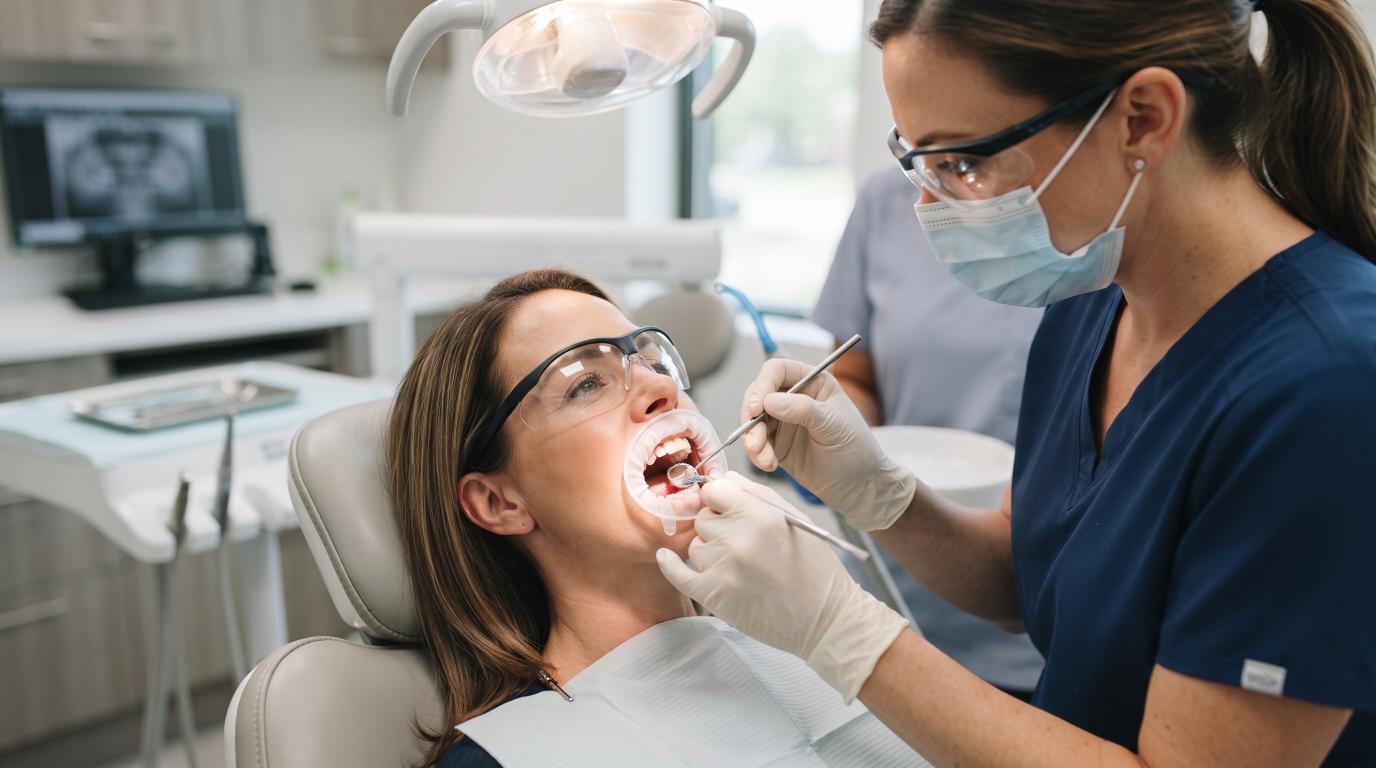
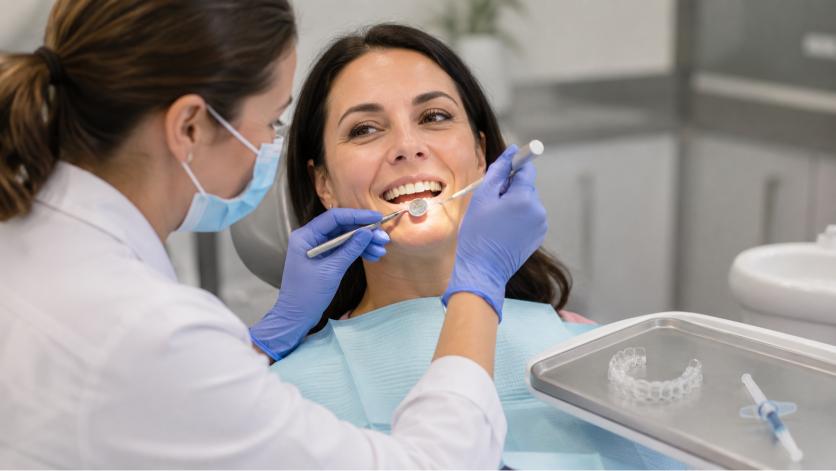
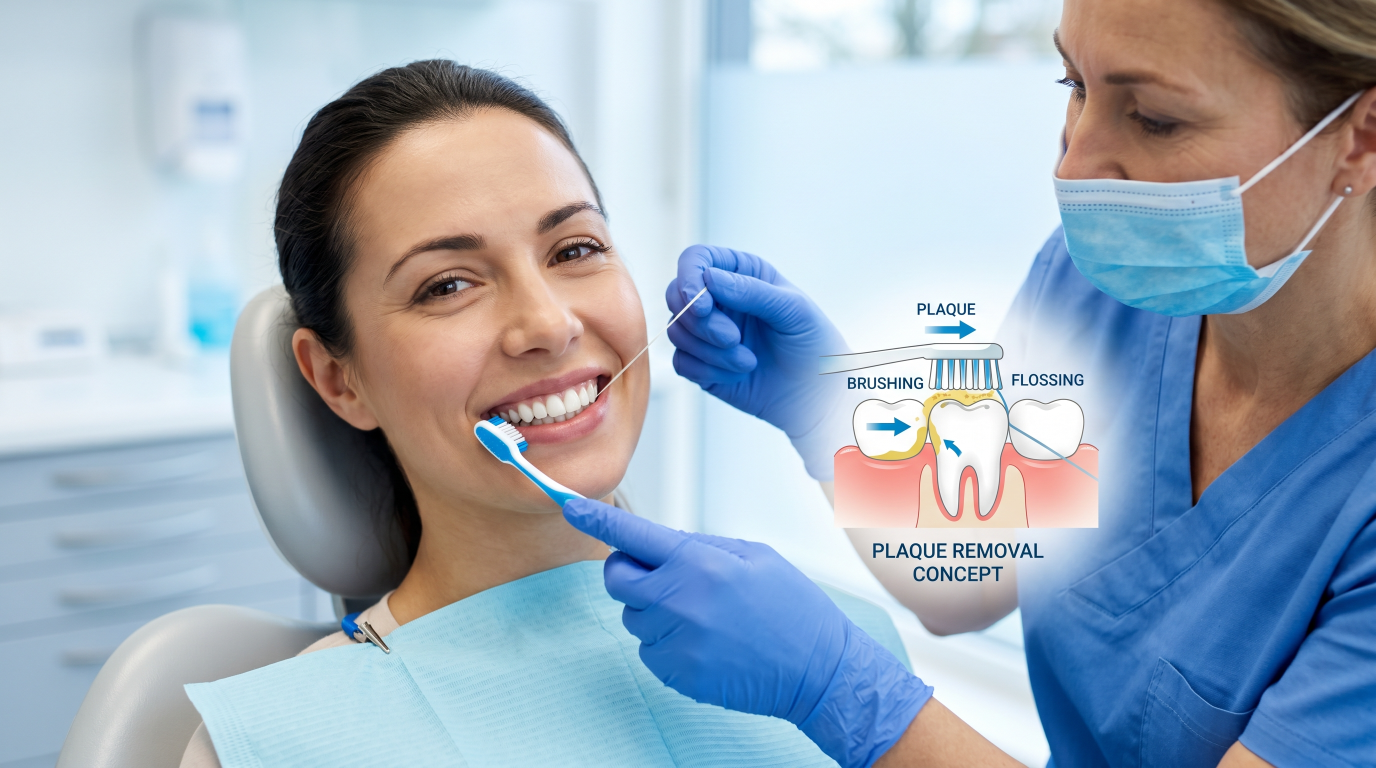
A professional dental cleaning does things that no toothbrush can. The dental hygienist uses a process called scaling to scrape tartar from the surfaces of your teeth, including below the gumline where brushing cannot reach. After scaling, the teeth are polished to smooth the surfaces, which makes it harder for plaque to stick and accumulate between visits. If you have deeper buildup around the roots of the teeth, a deeper cleaning called root planing may be recommended.
Most adults should visit the dentist for a cleaning every six months. If you have a history of gum disease, heavy tartar buildup, or other risk factors, your dentist may recommend more frequent visits, sometimes every three to four months.
Tools That Help Remove Plaque
Electric toothbrushes are the single biggest upgrade most people can make to their home routine. Water flossers are excellent for flushing plaque and food debris from between teeth and below the gumline, particularly for people who struggle with traditional floss.
Dental picks can help dislodge food from between teeth after meals. Ultrasonic plaque removers are handheld devices sometimes marketed for home use, but these are not recommended as a replacement for professional dental cleaning and can cause damage if used incorrectly.
Foods and Habits That Increase Plaque Buildup
Sugary snacks, soft drinks, fruit juices, and anything sticky or starchy all feed the bacteria that produce plaque. Smoking reduces saliva and creates conditions where bacteria thrive. Alcohol can dry out the mouth and have a similar effect. Skipping your nighttime brushing is one of the worst habits you can have, because saliva production drops significantly during sleep, giving bacteria hours to sit undisturbed on your teeth and produce acid through the night.
How to Prevent Dental Plaque in the Future
Building a daily oral care routine is the single most effective thing you can do. Brush twice, floss once, rinse with mouthwash, and clean your tongue. Schedule professional cleanings every six months and keep those appointments. Replace your toothbrush every three to four months or sooner if the bristles are frayed, because worn bristles do not clean effectively. Eat a balanced diet, drink water regularly, and limit the frequency of sugary snacks throughout the day.
When to See a Dentist
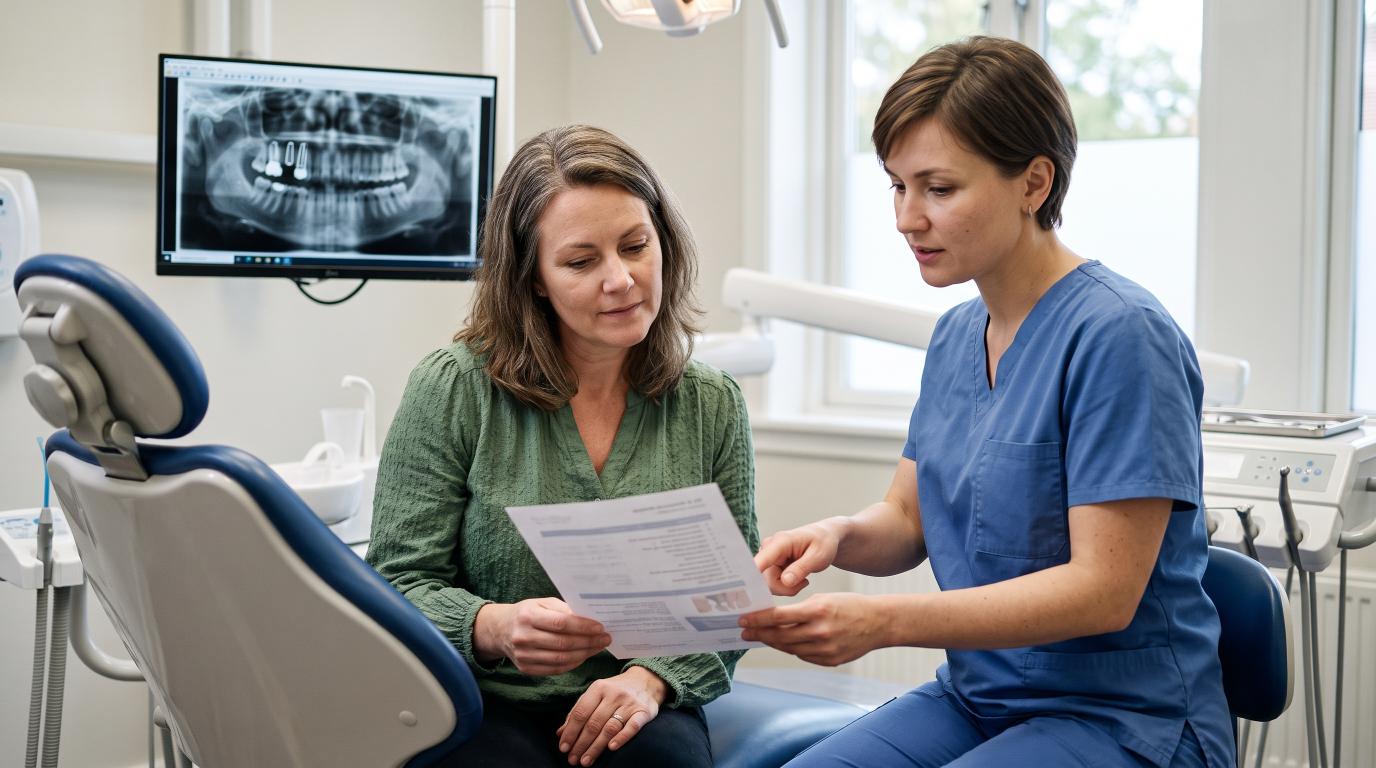
Some situations call for professional attention rather than home care. If you have bad breath that does not improve no matter how well you brush, that is worth a dental evaluation. If your gums are swollen, tender, or bleed regularly during brushing, you may already have gingivitis and need professional treatment. Visible brown or yellow deposits along the gumline that do not come off with brushing are tartar and need to be professionally removed. Tooth pain or sensitivity that is new or getting worse should never be ignored.
Ready for a Professional Plaque Removal in San Tan Valley?
At Ocotillo Trails Family Dentistry in San Tan Valley our team removes built-up plaque and tartar, checks for early signs of gum disease, and helps you build a daily routine that actually works for your lifestyle. Do not wait until there is a problem. A clean mouth starts with one simple appointment. Book your appointment . Your smile deserves more than just a quick brush.
Conclusion
Plaque isn’t a sign that something is wrong with you. It’s simply part of having a mouth, and it forms on everyone’s teeth every single day. What separates people who keep healthy teeth for life from those who end up with cavities and gum disease usually comes down to one simple habit: staying consistent. Brushing twice a day, flossing daily, drinking enough water, and visiting the dentist twice a year aren’t complicated or expensive steps, but done regularly, they make a real difference.
There’s no need to wait for pain or visible damage before taking plaque seriously. The soft plaque sitting on your teeth today can turn into tartar within just a day or two, and once that happens, only a professional cleaning can remove it. Building better habits now is always easier than treating a bigger problem later.
If you’re due for a cleaning or noticing buildup you can’t brush away, Ocotillo Trails Family Dentistry in San Tan Valley is ready to help. Our team removes stubborn plaque and tartar, checks for early signs of gum disease, and helps you build a routine that actually fits your daily life. Book your visit today and give your smile the clean start it deserves.
Frequently Asked Questions About Dental Plaque
Can plaque damage teeth permanently?
If plaque is left on the teeth long enough, the acid it produces erodes enamel and causes cavities. Enamel does not grow back once it is gone. That damage is permanent, though it can be treated with fillings or other dental work.
How long does plaque take to form?
Plaque starts forming within a few hours of brushing. It can begin to harden into tartar within 24 to 72 hours if it is not removed. This is why daily brushing and flossing are so important.
Does mouthwash remove plaque?
Mouthwash helps reduce bacteria and can slow plaque formation, but it does not remove existing plaque on its own. It works best as part of a complete routine that includes brushing and flossing.
Is plaque removal painful?
Brushing and flossing to remove soft plaque should not be painful. Professional dental cleanings may cause mild sensitivity, especially if there is significant buildup or early gum disease, but most patients find it manageable and feel much better after ward.
Can children get plaque buildup?
Children are just as susceptible to plaque as adults, and the consequences are the same. Teaching children proper brushing and flossing habits early is one of the best investments you can make in their long-term dental health.