









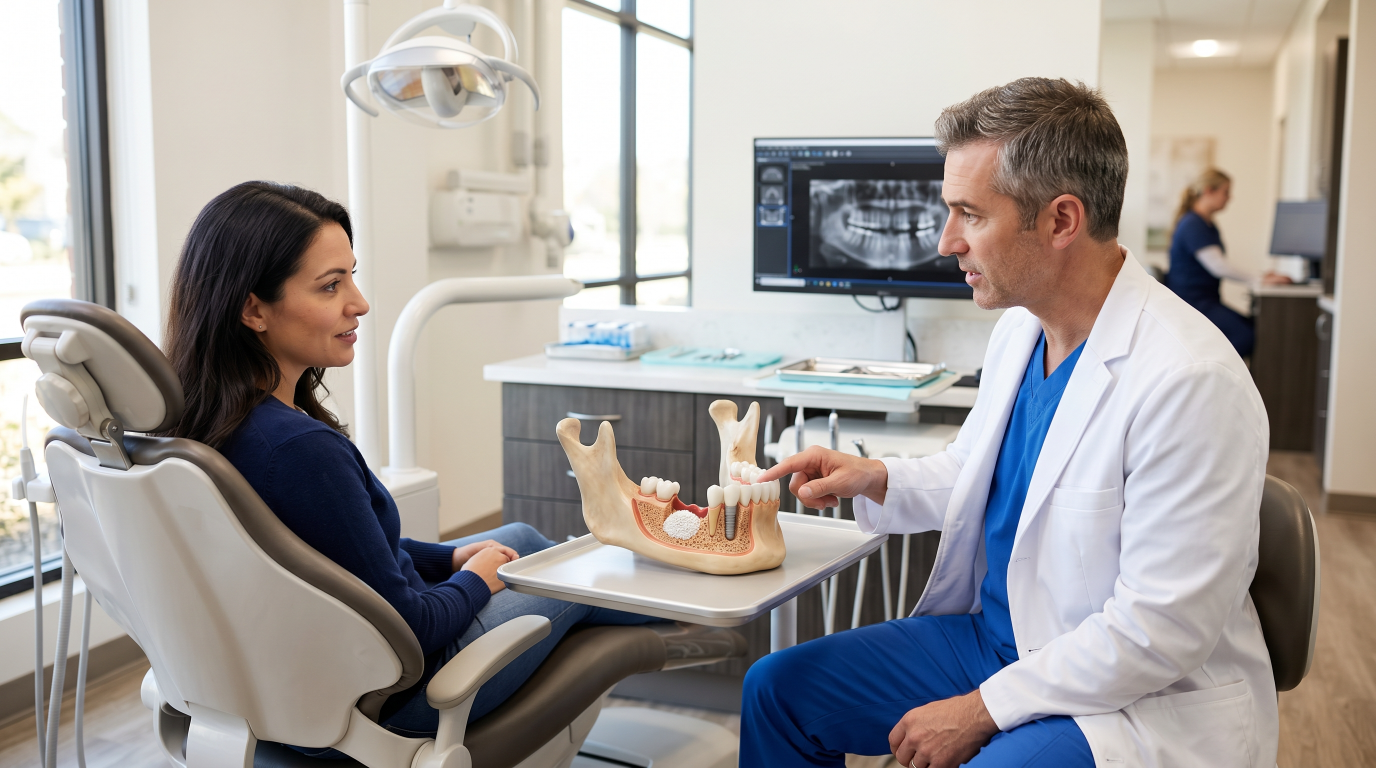
A bone graft for teeth is a procedure that adds bone or bone-like material to an area of the jaw where bone has become too thin or has been lost. The graft gives the body a structure around which new bone can form. It may be recommended after tooth loss, because of gum disease, or when there is not enough bone to support a dental implant.
At Ocotillo Trails Family Dentistry in San Tan Valley, AZ, patients may hear about bone grafting when discussing missing teeth, tooth extraction, or dental implant treatment. Needing a graft does not mean that a large piece of bone must always be taken from another part of your body. Several types of graft materials are available.
This guide explains why dental bone grafts are used, how the procedure works, what grafts are made from, how recovery happens, and when grafting may be needed before a dental implant.
How a Dental Bone Graft Rebuilds Jawbone
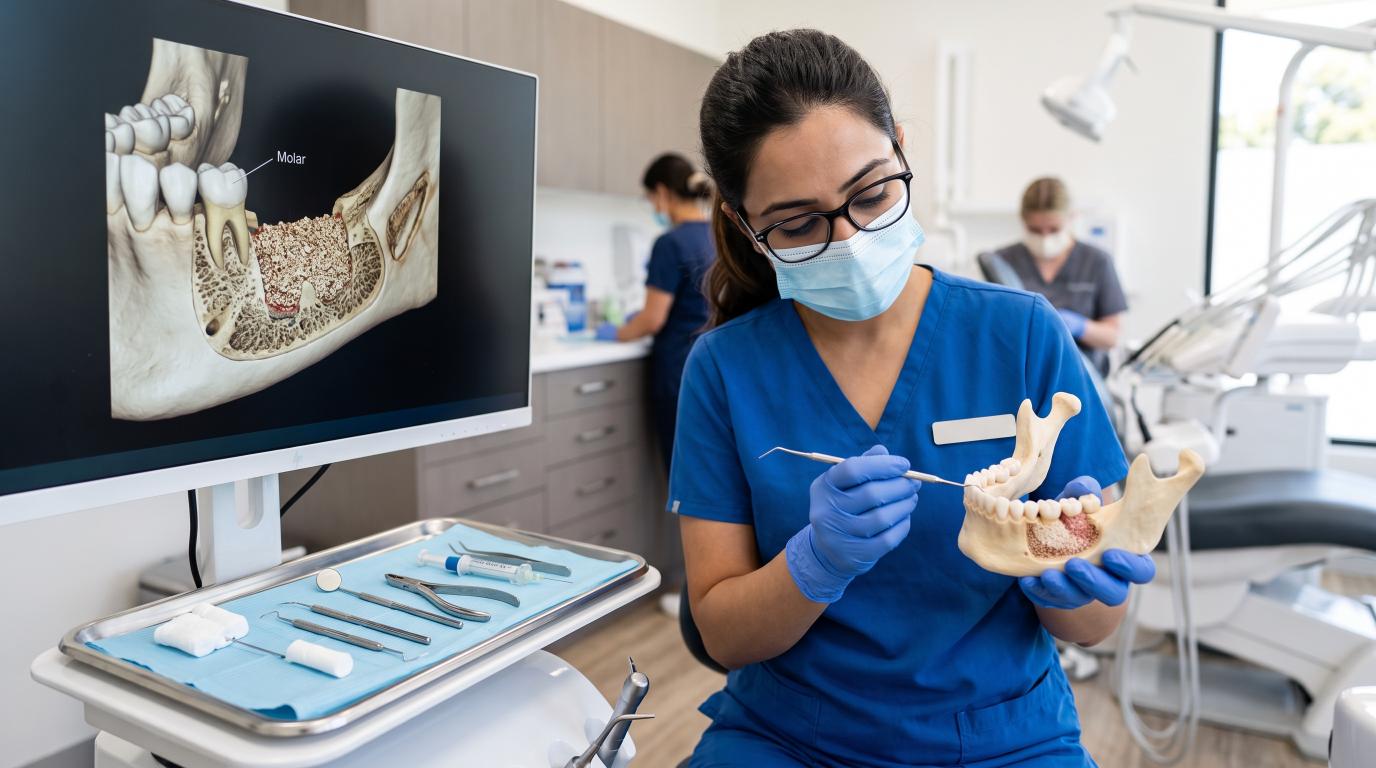
A dental bone graft is used to increase or maintain bone in part of the jaw. The dentist places grafting material in an area where natural bone is missing, too narrow, or too thin. You can think of the graft as a framework. Your body begins healing around that framework and gradually forms new bones in the area. Some graft materials are slowly replaced as natural bone develops, while others may remain partly in place and become integrated with the surrounding bone.
Håvard Jostein Haugen and researchers from the University of Oslo and collaborating universities explain that graft materials can provide a structure that supports cell movement, blood vessel growth, and new bone formation. The way this happens depends on the type of graft material used.
A graft also does not always involve removing a large amount of bone from another area of your body. Depending on the treatment plan, dentists may use processed donor bone, animal-derived material, synthetic materials, or bone taken from the patient’s own body.
Why Would You Need a Bone Graft for Teeth?
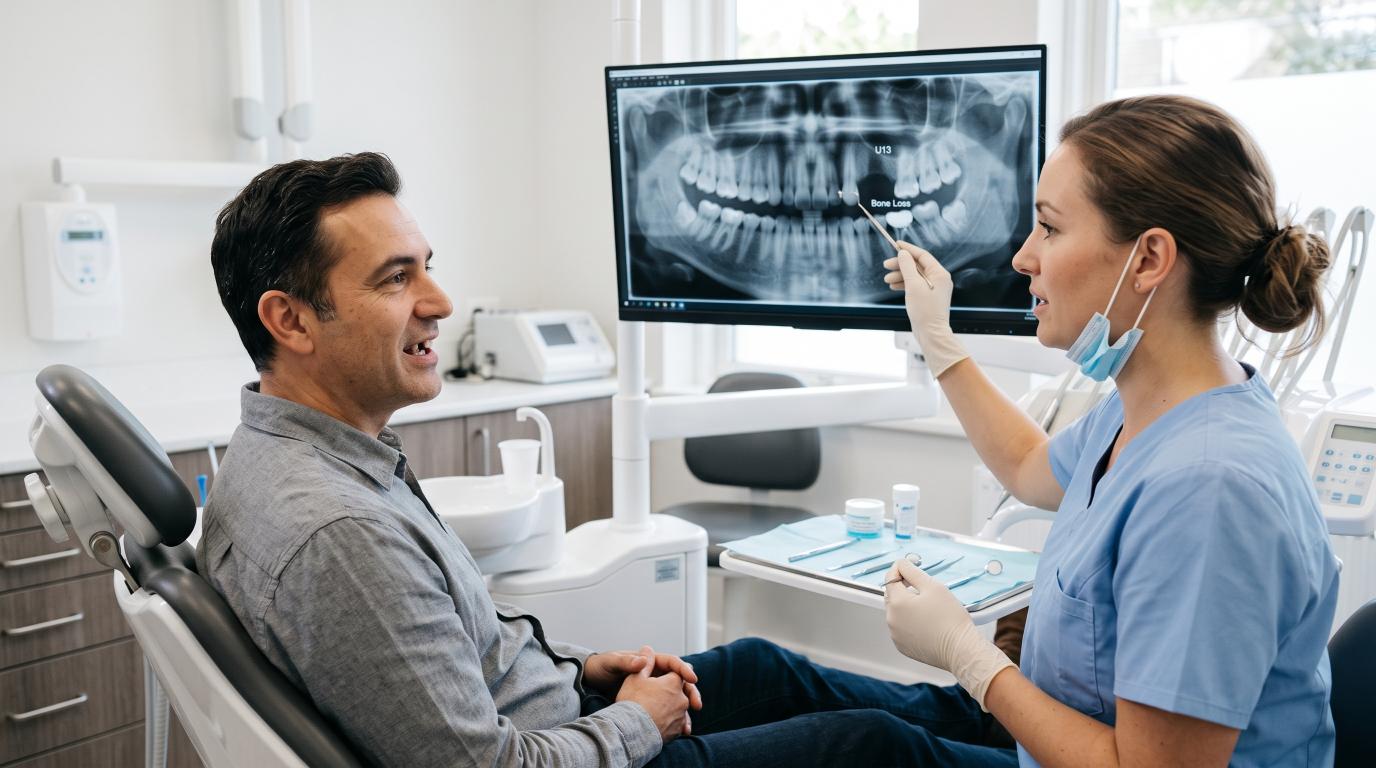
Bone grafting may be recommended when the jaw no longer has enough bone for its normal shape, for support around existing teeth, or for planned treatment such as a dental implant. Several conditions can lead to this type of bone loss.
Tooth Loss or Tooth Extraction
The bone around a natural tooth receives stimulation from the tooth and its surrounding structures. Once a tooth is removed, the jawbone in that area begins to change. Some of this bone loss is a normal part of healing after an extraction. However, losing too much width or height can make later tooth replacement more difficult.
A graft placed around the time of an extraction may help preserve more of the shape of the socket and surrounding ridge. This can be important if a dental implant is being considered later. Håvard Jostein Haugen and colleagues note that bone changes after extraction cannot be completely prevented, but socket preservation with grafting materials may reduce the amount of ridge change that occurs.
Bone Loss From Gum Disease
Advanced gum disease can damage more than the gums. It can also affect the bone that surrounds and supports the teeth. As the disease progresses, areas of supporting bone may be lost.
In selected cases, regenerative procedures that include bone grafting may be used to help rebuild certain bone defects. Whether this treatment is appropriate depends on the location and shape of the bone loss, the health of the tooth, and the condition of the surrounding tissues.
Bone Loss From Injury or Infection
An injury to the mouth or jaw may damage both a tooth and the bone around it. Severe dental infections can also cause bone destruction near the affected tooth. After the source of the problem is treated, grafting may sometimes be used to rebuild the damaged area. The amount of grafting needed can vary greatly. A small defect near one tooth is different from a larger area that has lost a significant jawbone.
Not Enough Bone for a Dental Implant
Dental implants are placed in the jawbone, so there must be enough bone in the correct location to support the planned implant. A jaw may be too narrow, too short, or have an uneven shape after a tooth has been missing for some time. In these situations, grafting may be considered before implant placement.
This does not mean every person getting an implant requires a graft. Dental imaging helps the dentist determine how much bone is available and whether it is suitable for the planned implant.
How Does a Dental Bone Graft Work?
The details of a bone graft depend on where the bone is missing and what treatment is planned afterward. However, most procedures follow the same general process.
Before the Procedure
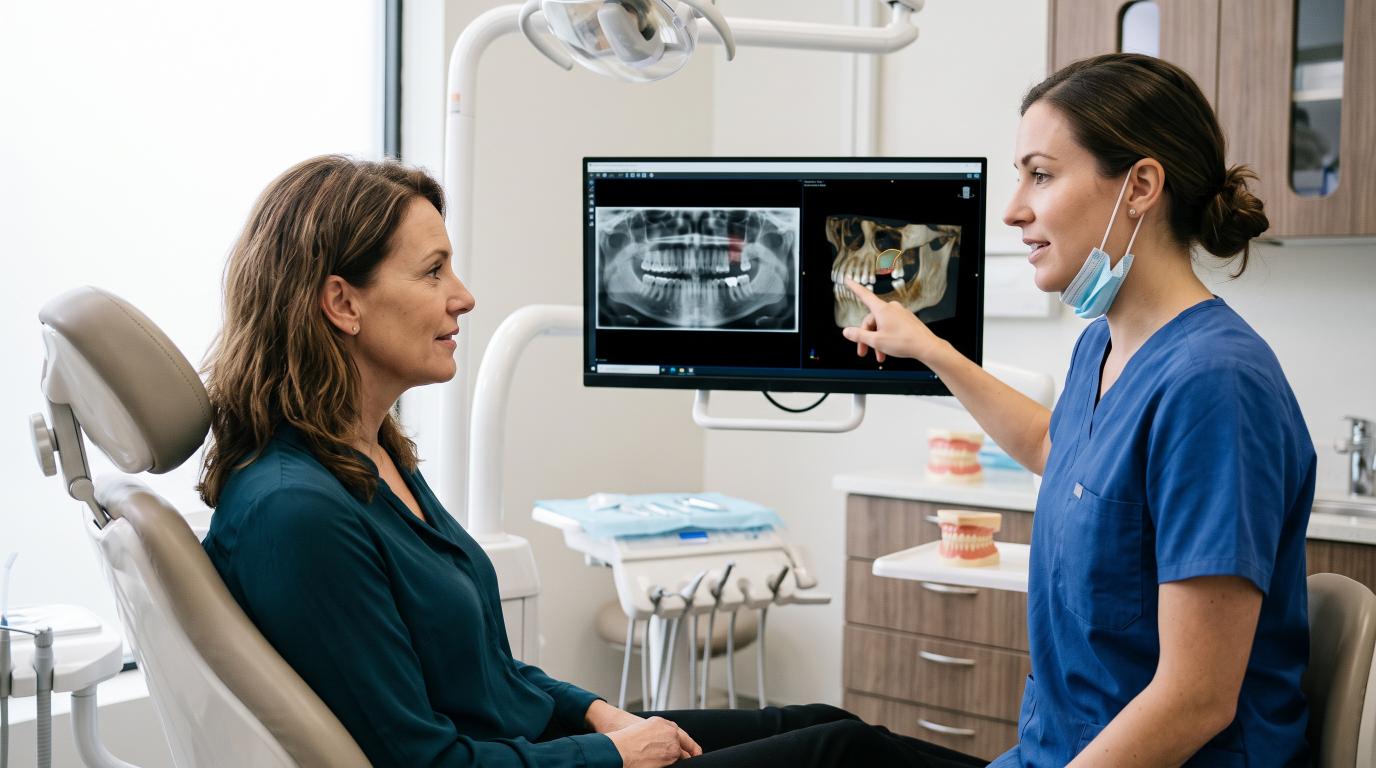
The dentist first examines your teeth, gums, and jaw. Dental X-rays and other imaging may be used to see the amount and shape of available bone.
The dentist can then determine where additional bone may be needed and what type of graft could be appropriate. Your medical history is also important because certain health conditions, medications, and habits such as smoking may affect healing.
During the Procedure
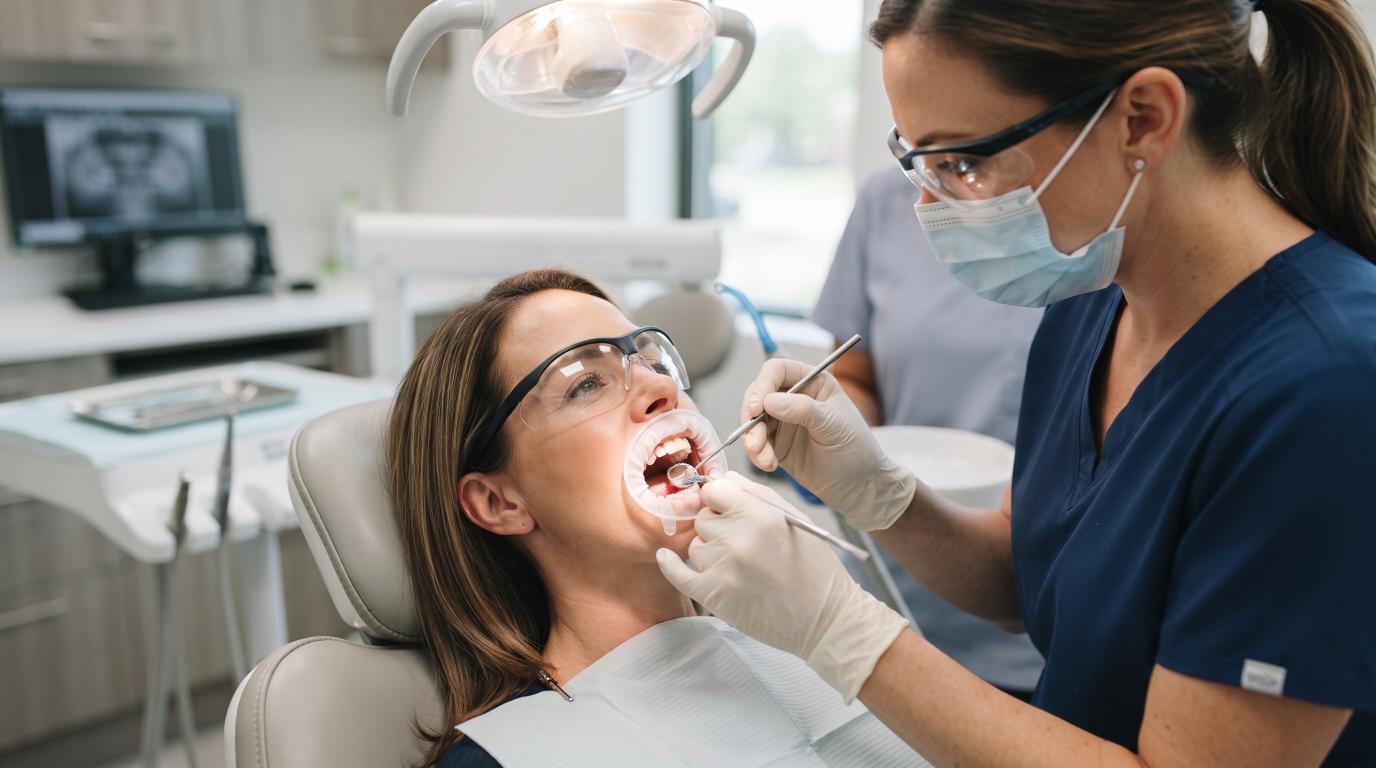
The treatment area is usually numbed with local anesthesia. The dentist or oral surgery professional then accesses the area where bone is needed.
The site is prepared, and the selected graft material is placed into the bone defect. In some procedures, a protective membrane may be placed over the graft to help keep it stable while healing begins.
The gums are then placed back into position and usually closed with stitches. This general sequence is also described in Cleveland Clinic’s medically reviewed dental bone graft guidance, although the exact procedure can vary according to the type and location of the graft.
After the Procedure
The gum tissue usually begins healing first. Underneath the gums, bone healing continues much longer. Cells and blood vessels gradually enter the grafted area, and new bone develops around or within the graft material. This process does not happen overnight.
Follow-up visits allow the dentist to check healing. If the graft was completed in preparation for a dental implant, additional imaging may be used before moving to implant placement.
What Is a Dental Bone Graft Made Of?
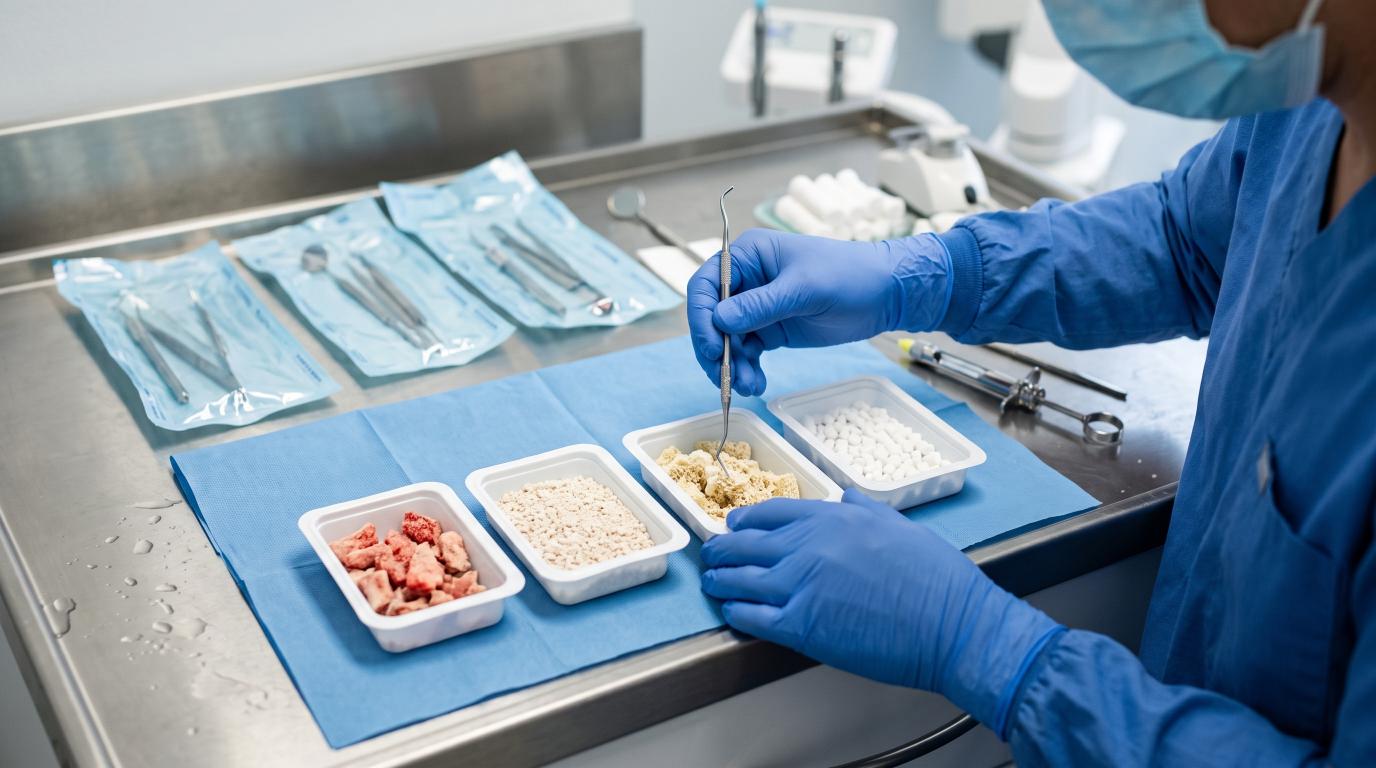
Dental bone grafting materials can come from several sources. The best choice depends on the size and location of the defect, treatment goals, patient health, and the dentist’s treatment plan.
|
Graft Type |
Where It Comes From |
Simple Explanation |
|
Autograft |
Your own body |
Bone is taken from another area of your own body and moved to the treatment site. |
|
Allograft |
Human donor |
Processed bone from a screened human donor is prepared for dental use. |
|
Xenograft |
Animal source |
Processed material, commonly from bovine or porcine sources, provides a framework for bone growth. |
|
Alloplast |
Synthetic material |
A manufactured bone substitute, such as certain calcium-based materials, is placed in the defect. |
Maria Pia Ferraz of the University of Porto reviewed autografts, allografts, and synthetic graft materials used in dental medicine. Her review explains that each type has different biological properties, benefits, and limitations.
Similarly, Rusin Zhao, Ruijia Yang, Paul Cooper, Zohaib Khurshid, Armin Shavandi, and Jithendra Ratnayake, including researchers from the University of Otago, reviewed natural and synthetic bone substitutes used in dentistry. Their work shows why graft selection is based on the clinical situation rather than one material being right for every patient.
What Types of Dental Bone Grafts Are Used?
The name of a grafting procedure often describes where the bone is being rebuilt or why the treatment is being performed.
Socket Preservation Graft
Socket preservation is performed around the time a tooth is removed. After extraction, graft material is placed into the empty socket to help maintain more of the area’s shape as it heals. This can be useful when a future dental implant is being considered.
Socket preservation does not completely stop the natural changes that happen after tooth removal, but it may reduce the amount of bone loss.
Ridge Augmentation
The alveolar ridge is the part of the jaw that supports the teeth. If this ridge becomes too narrow or loses height after tooth loss, ridge augmentation may be performed to rebuild its shape. The amount of grafting required depends on how much bone has been lost and where the future tooth or implant needs to be positioned.
Sinus Lift With Bone Grafting
The maxillary sinuses are located above the upper back teeth. In some people, there is not enough bone height between the mouth and the sinus for a planned implant. A sinus lift raises the sinus membrane and places grafting material beneath it.
This creates additional space for bone formation. Not every upper implant requires a sinus lift. It is used only when the available bone and sinus position make the procedure necessary.
Larger Bone Defect Grafting
More extensive bone loss may require a different grafting technique than a small extraction socket. These procedures may be considered after significant bone loss, trauma, long-term tooth loss, or other conditions that have changed the shape of the jaw.
Treatment planning is especially important because larger defects can require different graft materials, membranes, or surgical approaches.
Do You Always Need a Bone Graft Before Dental Implants?
Not everyone needs a bone graft before getting a dental implant. If there is enough healthy bone in the correct location, an implant may be placed without grafting. The dentist considers bone width, height, density, and the planned position of the implant.
Dental imaging is an important part of this decision. It allows the dentist to look at the shape of the jaw instead of deciding based only on what can be seen during a regular examination.
When additional bone is needed, the graft may be completed before implant placement. In some selected cases, grafting and implant treatment may be performed as part of the same treatment stage.
The decision depends on the amount of existing bone, the size of the defect, implant stability, and the overall treatment plan.
What Is Recovery Like After a Bone Graft?

Healing happens in stages. The gums may feel much better before the bone underneath has finished developing.
The First Few Days
Some swelling, tenderness, and mild discomfort can occur after a dental bone graft. These effects are usually strongest during the early healing period and should gradually improve. The grafted area needs to remain protected. Avoid disturbing the site unless your dentist has instructed you to clean it in a specific way.
The First Few Weeks
The gum tissue continues closing and becoming stronger during the following weeks. Your dentist may schedule a follow-up visit to check the area, examine the stitches if necessary, and make sure there are no signs of infection or unusual healing. Even when the gums appear healed, the bone underneath may still be developing.
The Following Months
Bone formation and maturation continue below the gumline for months. There is no single healing time that applies to every patient. The size and location of the graft, grafting material, general health, smoking, and planned future treatment can all affect the timeline.
Cleveland Clinic’s dental bone graft guidance explains that initial recovery may take about a week, while the graft itself generally needs much longer to mature. Larger grafts may require many months of healing.
For this reason, it is better to follow the timeline given for your individual case rather than expecting one fixed recovery period.
How Can You Help a Bone Graft Heal Properly?
Good aftercare helps protect the graft during the early stages of healing.
- Follow all aftercare instructions provided by your dentist.
- Keep the area clean in the way you were instructed.
- Avoid smoking and vaping because tobacco can interfere with healing.
- Eat soft or recommended foods during early recovery.
- Avoid disturbing the grafted area with your fingers or tongue.
- Take prescribed medication exactly as directed.
- Attend your scheduled follow-up appointments.
Smoking is especially important to discuss. Cleveland Clinic notes that tobacco use can reduce the body’s ability to heal properly after bone grafting.
What Are the Benefits of a Dental Bone Graft?
The main purpose of grafting is to rebuild or maintain the jawbone where additional support is needed. A graft may help restore bone lost after tooth removal, gum disease, trauma, or infection. It can also help maintain an extraction site when future tooth replacement is planned.
For implant treatment, grafting may create enough bone width or height to support an implant in a more appropriate position. Another benefit is preserving the shape of the jaw in an area where bone has been lost. However, results vary from person to person, and no graft can guarantee a specific amount of new bone.
The goal is to create better conditions for healing or future treatment based on the patient’s individual needs.
What Are the Risks of a Dental Bone Graft?
Bone grafting is a commonly performed dental procedure, but it still involves surgery. Temporary swelling, soreness, and tenderness can occur during early recovery. Less common problems may include infection, delayed healing, graft exposure, or failure of the graft to produce the amount of bone that was expected.
In some cases, additional treatment may be necessary. The level of risk depends on the type and size of the procedure, the treatment area, overall health, oral hygiene, smoking habits, and other individual factors.
Contact a dentist if pain or swelling becomes worse rather than better, if there is unusual drainage, or if you have other symptoms you were told to watch for after surgery.
When Should You Talk to a Dentist About a Bone Graft?
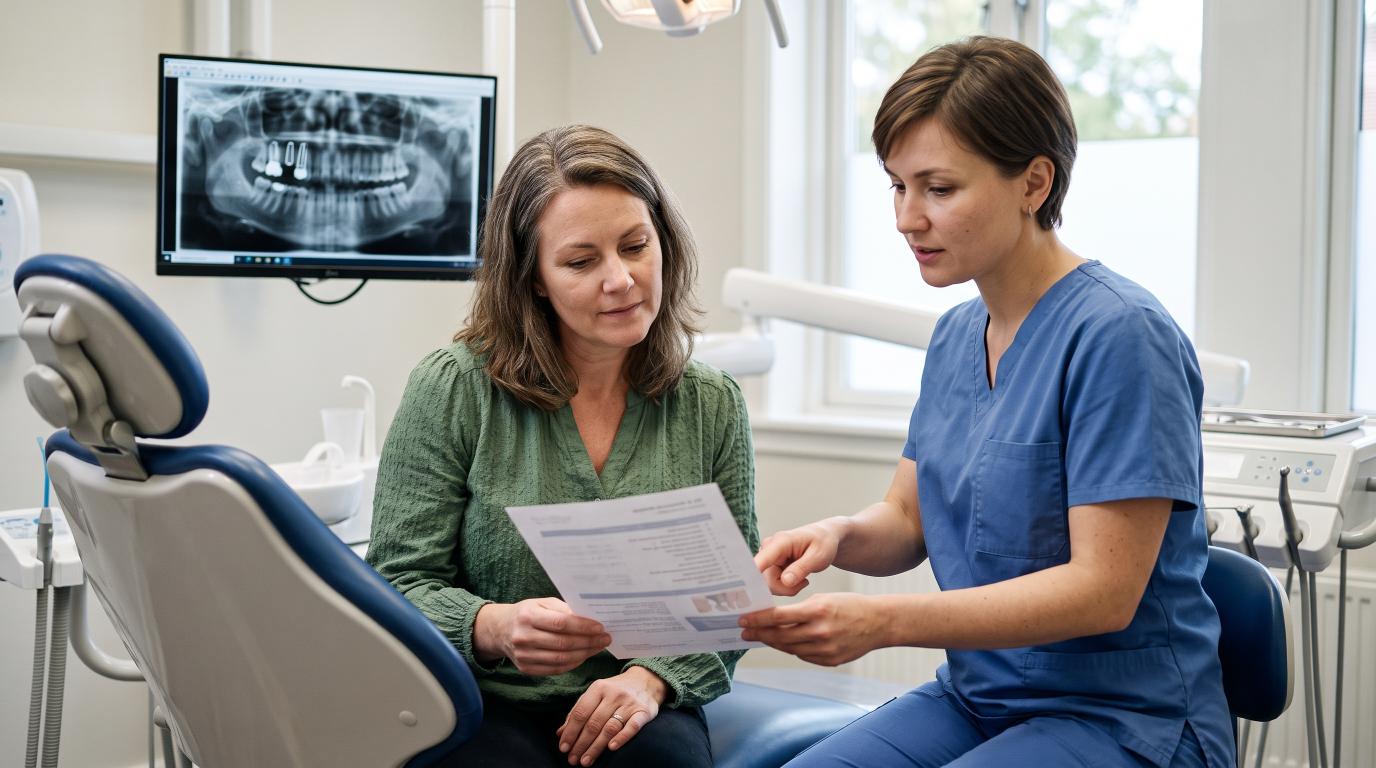
A discussion about bone grafting may be appropriate if you have been told there is not enough bone for a dental implant, recently lost a tooth, or are planning an extraction and want to understand future tooth replacement options.
It may also be worth asking about grafting if imaging has shown significant jawbone loss or if your dentist has recommended socket preservation or ridge augmentation. The important question is not simply whether bone grafting is available. It is whether it is necessary for your specific jaw and treatment plan.
A dental examination and imaging can show how much bone is present and help determine whether grafting would provide a useful benefit.
Conclusion
A bone graft for teeth adds bone or bone-like material to an area where the jawbone has been lost or is too thin. It may be recommended after tooth loss, gum disease, injury, infection, or when more bone is needed for a planned dental implant.
Different graft materials and procedures are available, and not every patient needs the same approach. The need for grafting depends on the amount of existing jawbone, the location of the missing bone, and what dental treatment is planned next.
Talk to Your Dentist About Your Bone Graft Options
If you have been told you may need a dental bone graft, a dental examination can help you understand why it is being recommended and what options are available. Ocotillo Trails Family Dentistry in San Tan Valley, AZ can evaluate your jawbone, missing teeth, and future treatment needs.
Talk with a dentist about whether bone grafting is necessary for your specific situation and what you can expect from treatment and recovery. Contact us to schedule a consultation and discuss your options.
Frequently Asked Questions
Is a bone graft the same as a dental implant?
A bone graft rebuilds or preserves jawbone. A dental implant is placed into the jaw to replace the root portion of a missing tooth. A graft may be needed before an implant, but they are separate treatments.
Does getting a dental bone graft hurt?
The treatment area is usually numbed during the procedure, so you should not feel normal surgical pain while the graft is being placed. Tenderness, swelling, or soreness can occur afterward and usually improves as the area heals.
Can a bone graft be done on the same day as a tooth extraction?
Yes, in some cases. Graft material can be placed in the socket immediately after a tooth is removed. Whether this is appropriate depends on the condition of the socket, surrounding bone, infection, and future treatment plan.
How long after a bone graft can you get a dental implant?
There is no single waiting period for every patient. The graft must develop enough healthy bone to support the planned implant. Your dentist may use follow-up imaging to decide when the area is ready.
What happens if a dental bone graft does not heal properly?
The area will need to be evaluated to determine why healing has not progressed as expected. Depending on the problem, treatment could involve managing an infection, allowing more healing time, or considering another grafting procedure.
Can you get a dental implant without a bone graft?
Many people have enough existing jawbone to receive an implant without grafting. A bone graft is considered when the amount or position of available bone is not suitable for the planned implant.
Can your body reject a dental bone graft?
True rejection is not the same as organ rejection. However, a graft can fail to integrate properly or may become exposed or infected. Your dentist can evaluate the area if healing does not appear to be progressing normally.